 Intellect Plus
Earth science and physical geography
36 cards. Each one is a 40-second story with a five-minute read behind it.
 Earth behaves like a giant magnet to shield life from spaceDeep beneath your feet, molten activity creates a massive invisible shield. This geomagnetic field acts as a planetary defense system, deflecting solar winds and cosmic radiation …
 Why your distance from the Sun doesn't actually change the seasonsMany people assume we have seasons because we move closer to or further from the Sun. In reality, the Earth's orbit is a secondary factor. The true driver of our changing climate …
 The Bishop who buckled a sword over his gownLeonidas Polk was a high-ranking Episcopal bishop who traded his pulpit for a Confederate general's uniform. Known as "Sewanee's Fighting Bishop," he famously argued that his reli…
 Did a universal ocean once cover the entire Earth, depositing all its rocks?Abraham Gottlob Werner, the father of German geology, believed so. His theory of Neptunism dominated early earth science, claiming a receding global ocean created the planet's cru…
 The geologist who defined Earth's ancient history while fighting the future of science.Adam Sedgwick was a titan of 19th-century geology who established the Cambrian and Devonian periods. Yet, this pioneer of deep time was a staunch conservative who rejected Darwini…
 How one man used fossilized shells to rewrite the history of the EarthAlexandre Brongniart was a polymath who managed a world-famous porcelain factory while simultaneously revolutionizing geology. By tracking specific fossils across different rock l…
 How a Croatian schoolteacher discovered the boundary between Earth's crust and its mantleIn 1909, a massive earthquake near Zagreb provided the data Andrija Mohorovičić needed to change geology forever. By analyzing how seismic waves traveled through the planet, he id…
 How a Scottish geologist mapped the hidden history of the Earth's shifting surfaceArchibald Geikie transformed our understanding of landscape evolution by championing the power of erosion. From the Scottish Highlands to the canyons of the American West, he prov…
 How one scientist’s obsession with air samples revealed the planet’s warming trajectoryCharles David Keeling transformed climate science by developing a precise method to measure atmospheric carbon dioxide. His work at Mauna Loa produced the Keeling Curve, a definit…
 Why the man who defined earthquake intensity hated the idea of predicting themCharles Richter revolutionized seismology by replacing subjective damage reports with an objective, logarithmic scale. Yet, the man whose name became synonymous with measuring the…
 How one geochemist calculated the Earth's age and saved millions from lead poisoningClair Patterson spent his career obsessing over tiny lead particles. By building the first clean room to date the Earth at 4.55 billion years, he discovered that industrial lead w…
 The volcanologist who stood at the edge of the 1980 Mount St. Helens eruption.David A. Johnston was a dedicated USGS scientist who monitored the volatile Mount St. Helens in 1980. Stationed just six miles from the summit, he became the first to report the c…
- The man who touched the ocean floor and lived to tell the taleIn 1960, Don Walsh descended nearly seven miles to the Challenger Deep, the ocean's lowest point. While many assumed his life ended with that historic dive, Walsh spent the next s…
- How a French lawyer turned the dark, unknown underworld into a rigorous scientific disciplineBefore Édouard-Alfred Martel, caves were largely mysterious voids. A lawyer by trade, Martel spent his holidays descending into the earth, eventually recording 1,500 caves. He tra…
 A failed diplomat became the father of catalysis and the master of crystalsEilhard Mitscherlich intended to study Persian and join a diplomatic mission to the East, but a political collapse changed his path. Instead, he became a titan of 19th-century che…
 Why Friedrich Mohs abandoned chemistry to rank minerals by their physical scratch resistanceBefore Friedrich Mohs, scientists classified minerals primarily by their chemical makeup. Mohs challenged this tradition by focusing on physical traits, specifically hardness. By …
- The 18th-century scientist who climbed mountains to measure the secrets of the EarthHorace Bénédict de Saussure was a polymath who treated the Alps as his laboratory. From inventing the first solar oven to pioneering modern meteorology, he spent his life measurin…
 Why a climatologist once described the fight against global warming as a Faustian bargainJames Hansen, a pioneer in climate modeling, identified a paradox: reducing atmospheric aerosols to improve public health could inadvertently accelerate global warming. By strippi…
 How a French botanist accidentally invented the modern geological map in 1746Jean-Étienne Guettard began his career studying plants, but his obsession with how soil types influenced vegetation led him to a groundbreaking discovery. By mapping the distribut…
 Can a climate scientist bridge the divide between evangelical faith and global warming?Katharine Hayhoe, a distinguished atmospheric scientist and evangelical Christian, has become a leading voice in climate communication. By framing environmental action through the…
 The French volcanologists who walked into the fire to save thousands of livesKatia and Maurice Krafft were pioneers who filmed volcanoes from within feet of lava flows. While their daring footage captured the world's imagination, their true legacy lies in …
 How a crippled naval officer mapped the invisible highways of the global oceanAfter a stagecoach accident ended his sea career, Matthew Fontaine Maury turned his focus to the archives of the U.S. Navy. By analyzing thousands of ship logs, he decoded the oce…
 How one man mapped the ocean floor and changed our understanding of EarthMaurice Doc Ewing was a titan of geophysics who transformed how we see the deep sea. From pioneering seismic studies to discovering the SOFAR channel, his relentless curiosity led…
- How a single graph of past temperatures became a lightning rod for climate controversy.In 1999, climatologist Michael E. Mann helped produce a reconstruction of Northern Hemisphere temperatures over the past millennium. Its distinct shape earned it the nickname the …
 How a Soviet scientist first predicted the melting of our polar ice capsMikhail Budyko transformed climatology from a qualitative field into a rigorous, quantitative science. By modeling the Earth's heat balance, he accurately forecasted global temper…
 Can the subtle wobbles of Earth’s orbit explain the mystery of the ice ages?Milutin Milanković, a Serbian engineer turned astronomer, proposed that slow, predictable changes in Earth's orbit redistribute sunlight enough to trigger global ice ages. While h…
 How a humble French teacher transformed our understanding of the Earth's volcanic historyBorn into humble circumstances, Nicolas Desmarest rose to become a pioneering geologist who fundamentally changed how we view the landscape. By walking across Europe and meticulou…
- How a 17th-century anatomist transformed our understanding of the Earth beneath our feetNicolas Steno began his career dissecting shark heads and questioning the origins of tears. His rigorous observational approach led him to realize that fossils were once-living or…
 The captain who sailed with Darwin and invented the modern weather forecastRobert FitzRoy was more than just the captain of the HMS Beagle. A brilliant hydrographer and meteorologist, he pioneered the daily weather forecast and created life-saving warnin…
 The Scottish soldier who mapped the world and became the self-styled King of Siluria.Roderick Murchison began his career as a young ensign in the Peninsular War, but he eventually traded his sword for a geologist's hammer. He became a titan of Victorian science, d…
- How Thomas Chrowder Chamberlin revolutionized science by refusing to pick a favorite theoryGeologist Thomas Chrowder Chamberlin transformed modern scientific inquiry by championing the method of multiple working hypotheses. Rather than clinging to a single ruling theory…
 How a Norwegian mineralogist decoded the chemical architecture of the entire planetVictor Goldschmidt transformed geology from a descriptive field into a rigorous science. By applying thermodynamic principles to minerals, he unlocked the rules governing how elem…
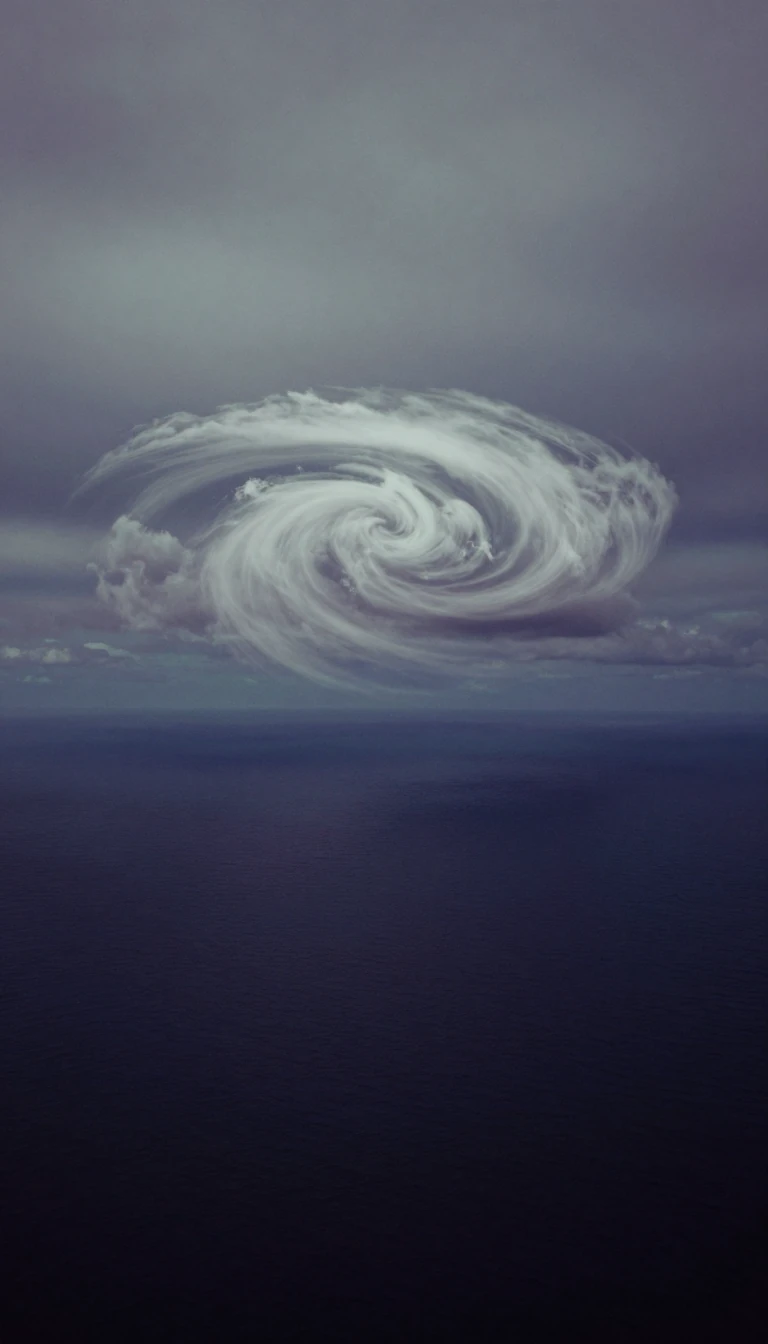 How a Norwegian physicist transformed weather forecasting from guesswork into a mathematical scienceVilhelm Bjerknes did not just study the sky; he decoded it. By applying fluid dynamics to the atmosphere, he created the primitive equations that underpin modern climate modeling.…
 The father of American geography who shaped our view of the changing EarthWilliam Morris Davis transformed how we understand landscapes, proposing that rivers and valleys evolve through an orderly cycle of erosion. Yet, his legacy is complex, marked by …
 How a self-taught canal surveyor mapped the hidden skeleton of an entire nationWilliam Smith was a humble surveyor who realized that rock layers could be identified by the fossils they contained. By applying this principle of faunal succession, he created th…
- How a Russian-German scientist mapped the world's climate using plants and balloonsWladimir Köppen transformed meteorology by linking global vegetation to temperature zones. From studying ship winds to pioneering upper-atmosphere research with balloons, his clas…