 Intellect Plus
Geometry
527 cards. Each one is a 40-second story with a five-minute read behind it. Page 7 of 9.
 How mathematicians classify the fundamental shapes of topological surfacesStep into a third-year Oxford Mathematics lecture to explore the foundational principles of topological surfaces and the mathematical journey toward their ultimate classification.
 How to build complex surfaces by gluing simple polygonsExplore the fundamental methods used to construct topological surfaces. This lecture demonstrates how mathematicians assemble intricate shapes by joining the edges of polygons tog…
 How mathematicians classify the fundamental shapes of our worldExplore the mathematical foundations of topology in this lecture from Oxford University. Learn how complex surfaces can be broken down into simpler, manageable components.
 How mathematicians classify every possible topological surfaceExplore the final chapter of Dominic Joyce's Geometry of Surfaces course, where complex shapes are organized into a definitive, unified classification.
 Can every compact surface be classified into just three fundamental geometric shapes?Andre Henriques demonstrates the classification theorem for compact two-dimensional manifolds in this Oxford mathematics lecture. By exploring the structure of surfaces, the sessi…
 How every imaginable surface can be built from a simple sphereTopology professor Andre Henriques demonstrates how complex surfaces are constructed using just two fundamental building blocks. This lecture provides a visual and mathematical br…
 How do mathematicians measure the shape of the universe?Riemannian geometry provides the framework for understanding curved spaces. This lecture introduces the fundamental definition of Riemannian manifolds, demonstrating how local geo…
- What is the shortest path between two points on a curved surface?Derek Moulton introduces the concept of geodesics in this Oxford Mathematics lecture. By exploring the geometry of shortest paths on surfaces, the video provides foundational intu…
 How mathematicians use local geometry to understand the shape of the entire universe.This lecture explores Riemannian geometry, the study of curved spaces. By examining how local geometric data reveals global properties, you will see why this framework is essentia…
 How do mathematicians define transformations that keep distances exactly the same?This lecture from Derek Moulton's first-year geometry course at Oxford introduces isometries. It explains how these distance-preserving maps between vector spaces function and rev…
 Can the sound of a drum reveal its physical shape to the listener?Oxford mathematician Jon Chapman explores the mathematical relationship between sound and geometry. This presentation, part of a series blending music and science, investigates wh…
- Inside an Oxford graduate supervision: exploring geometry and physics in seven dimensionsEver wondered how advanced mathematical research actually happens? This video offers a rare look at a graduate supervision session at Oxford, featuring Professor Jason Lotay and s…
- How cutting a cone reveals the fundamental curves of mathematics, physics, and engineering.Alain Goriely introduces the study of conic sections in this first-year Oxford Mathematics lecture. The session explores how these curves are formed, defined, and applied, providi…
 How intersecting a plane with a cone reveals the fundamental curves of mathematicsAlain Goriely explains the geometry of conic sections in this lecture. You will learn how these curves are defined by planes intersecting cones, quadratic functions, and specific …
- Why the classical derivative fails when you move beyond a single dimensionIn single-variable calculus, the derivative is a simple ratio. But in 3D space, you cannot divide by a vector. This lecture explores how the derivative evolves into a linear map, …
 Why the classical derivative fails when moving beyond a single dimensionIn single-variable calculus, the derivative is a simple ratio. But in three-dimensional space, that definition breaks down because you cannot divide by a vector. This lecture expl…
 What makes the superflip position on a Rubik's Cube so mathematically unique?This video explores the superflip, a specific configuration of the Rubik's Cube with distinct properties. It clarifies the precise sequence of moves required to achieve this state…
 How long is a mile of Pi?Witness the ambitious attempt to unroll a runway of digits, exploring the physical scale of the mathematical constant Pi.
 How Ricci Flow solved one of the most difficult problems in mathematicsRicci flow is the geometric tool that finally cracked the long-standing Poincaré Conjecture. This video explores the origins of this mathematical technique, featuring insights fro…
 Prime knots are the fundamental building blocks of all possible mathematical knots.Mathematical knots are not just loops of string. This video explores the concept of prime knots, explaining how they function as the basic components from which all other complex …
 Can the geometry of a pizza explain the curvature of our world?Cliff Stoll uses the humble pizza to illustrate the Remarkable Theorem of Gaussian curvature. This exploration bridges the gap between culinary habits and complex mathematical pri…
 The Chaos Game reveals how simple rules create complex, repeating geometric patterns.This video explores the Chaos Game, a mathematical process where basic iterative rules generate intricate fractal structures. It is worth watching to see how randomness and simple…
- Is the golden ratio a fundamental law of nature or just a mathematical myth?The golden ratio is frequently cited as the secret code behind everything from natural patterns to human beauty. This video investigates whether this famous number is truly a univ…
 Visualising the geometric intuition behind linear algebraLinear algebra is often taught through abstract equations, but what if you could see the underlying geometry? This video introduces a series designed to animate the fundamental co…
 Why the dot product formula matches our geometric intuitionExplore the profound connection between the numerical computation of dot products and their geometric interpretation. This video examines how linear transformations provide a deep…
 Why the cross product produces a vector instead of a numberWhile the dot product collapses two vectors into a single scalar, the cross product does something entirely different. It generates a new vector, perpendicular to the original pai…
 Why the cross product formula actually matches our geometric intuitionThe cross product formula can feel like a rote calculation, but there is a deeper logic at play. This video explores how the cross product relates to a specific linear transformat…
 Visualizing the hidden stability within linear transformationsExplore the geometric intuition behind eigenvectors and eigenvalues. This video uses animation to move beyond abstract formulas, offering a visual understanding of how certain vec…
 Visualizing the calculus of trigonometric functions through geometryMove beyond rote memorization of calculus rules. This video explores the geometric intuition behind common derivative formulas, specifically focusing on how the derivative of sin(…
- How complex numbers reveal the pattern behind Pythagorean triplesEver wondered how to find every set of integers that satisfies the Pythagorean theorem? This visualization explores the underlying connection between geometry and complex numbers …
 Can we visualize the geometry of high-dimensional spheres?Explore the complexities of high-dimensional space through a visual lens. This video uses a specialized, custom-built tool to navigate the counterintuitive puzzles found within sp…
 How light reveals the hidden geometry of the Basel problemWhy does the square of pi appear in the sum of reciprocal squares? This video explores a beautiful geometric proof that uses the behavior of light to solve a classic mathematical …
- Visualising the Wallis product: a geometric approach to piDiscover a geometric proof of the famous Wallis product for pi. This video moves beyond algebraic manipulation to show how the mathematical relationship can be understood through …
- The geometric elegance behind the formation of an ellipseDiscover the visual brilliance of the Dandelin spheres proof. This video explores how slicing a cone at specific angles creates conic sections, offering a profound look at the mat…
 Why a sphere's surface area is exactly four times its shadowExplore the geometric elegance behind one of the most striking relationships in mathematics. This video examines the ancient proof that connects the surface area of a sphere to it…
 How to construct perfect Platonic and Archimedean shapes using mirrorsExplore the geometric precision required to create efficient Platonic and Archimedean solids within a kaleidoscope. This video examines the mathematical principles behind deltoida…
 How do you calculate the average shadow area of a cube?Determining the average shadow area of a cube presents a fascinating geometric puzzle. This video explores the mathematical logic behind the problem, investigating the relationshi…
 Can Pythagoras’s theorem help protect whales from shipping lanes?In this episode of Stand-up Maths, Matt Parker explores how mathematical principles are being applied to marine conservation. Discover how an unexpected use of geometry serves as …
 Is it possible for a single flat net to fold into two different shapes?Explore the geometric puzzle of whether one paper pattern can create multiple distinct 3D forms. This video examines the complex mathematics behind folding nets and the research e…
- Is there a mathematical error hidden in the Las Vegas Sphere?Explore the curious case of 'Vegas Pi,' a mathematical anomaly linked to one of the world's most famous modern structures. This video investigates a potential mistake in the calcu…
 Beyond the basics: exploring the five compound Platonic solidsWhile most are familiar with the five regular polyhedra, this video explores the more complex world of compound Platonic solids, bringing mathematical symmetry to life through a v…
- Can a mathematically impossible ball actually exist?In this Stand-up Maths special, mathematician Matt Parker explores a geometric paradox. Discover the logic behind a shape that defies conventional mathematical expectations throug…
- Is there a shape for every possible angle?Mathematicians are currently chasing a conjecture regarding single-angle polyhedra. This video explores a geometric mystery that remains unsolved, despite having all the necessary…
 Can the mathematics of billiards predict a path home?In this Stand-up Maths presentation, Matt Parker explores the intersection of geometry and gameplay. Discover how the physics of a billiard table relates to complex mathematical p…
- Why nature prefers curves over sharp cornersIn this Oxford Mathematics Public Lecture, Gábor Domokos explores the geometric preference for rounded edges and non-flat surfaces. Discover how these principles manifest in every…
- How mathematicians use algebra to decode the fundamental shapes of spaceIn this lecture from Oxford University, André Henriques explores how algebraic invariants allow us to distinguish between different topological spaces by translating geometric pro…
- Uncovering the hidden connections within the smallest exceptional Lie GroupExplore the mathematical elegance of G2. This lecture from Jason Lotay’s Oxford Mathematics course demonstrates how the smallest exceptional Lie Group links the seemingly disparat…
 Can mathematics determine a truly fair way to divide a cake?In this exploration of fair partitions, Professor Günter Ziegler examines the complex geometry of division. Watch to understand how mathematicians use approximations to approach t…
- How combinatorial patterns reveal the secrets of higher dimensionsExplore the complex relationship between discrete mathematics and multidimensional geometry. This video features mathematician Federico Ardila as he explains how counting structur…
- Why the Golden Ratio is the most irrational numberExplore the mathematical properties of the Golden Ratio through a visual demonstration of rotation. This video explains how specific fractional turns create unique patterns and wh…
- Can geometry help us measure one of football's most iconic free kicks?On 3 June 1997, Roberto Carlos scored a legendary goal for Brazil. This video explores how the mathematical concept of the cross ratio can be used to analyze the physics and posit…
- Can a shape possess five sides while remaining a square?In this Numberphile feature, Cliff Stoll explores the mathematical curiosity of the 5-sided square. Through engaging animation, the video investigates how geometric definitions ca…
- How many layers of tiles can surround a single shape?Explore the mathematical mystery of Heesch numbers. This video features Edmund Harriss from the University of Arkansas, investigating how certain shapes can be surrounded by multi…
- Can seventeen distinct Klein bottles merge into a single object?Explore the complex geometry of the Klein bottle through a visual demonstration. This video features Cliff Stoll and the intricate glasswork of Lucas Clarke to illustrate how mult…
- How to build a four-dimensional cube, one sliding step at a timeSlide a line segment sideways and it sweeps out a square. Push that square at right angles to itself and you get a cube. Now shove the cube along a fourth direction we cannot pict…
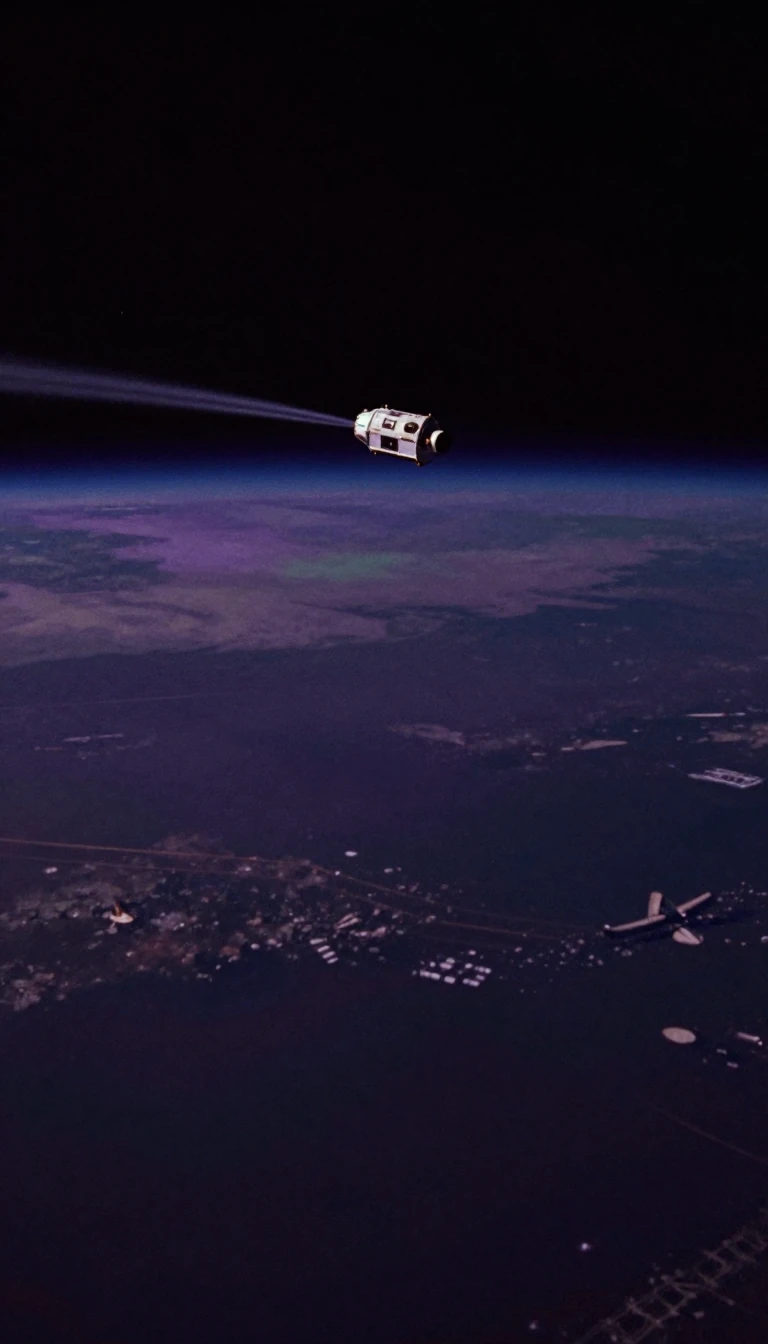 Six months on the space station leaves astronauts slightly younger than everyone elseOrbiting Earth at about 7,700 metres per second, an astronaut who spends six months aboard the International Space Station comes home roughly 5 milliseconds younger than people wh…
 To a topologist, a coffee cup and a doughnut are the same shapeSpin a circle around an axis lying in its own plane and you trace out a torus, the doughnut shape of swim rings and inner tubes. Topologists care only about holes, so they count t…
 Flipping a matrix across its diagonal reveals surprisingly deep propertiesTake a grid of numbers and mirror it across the line running from top left to bottom right, so rows become columns. That simple move, the transpose, was introduced by Arthur Cayle…
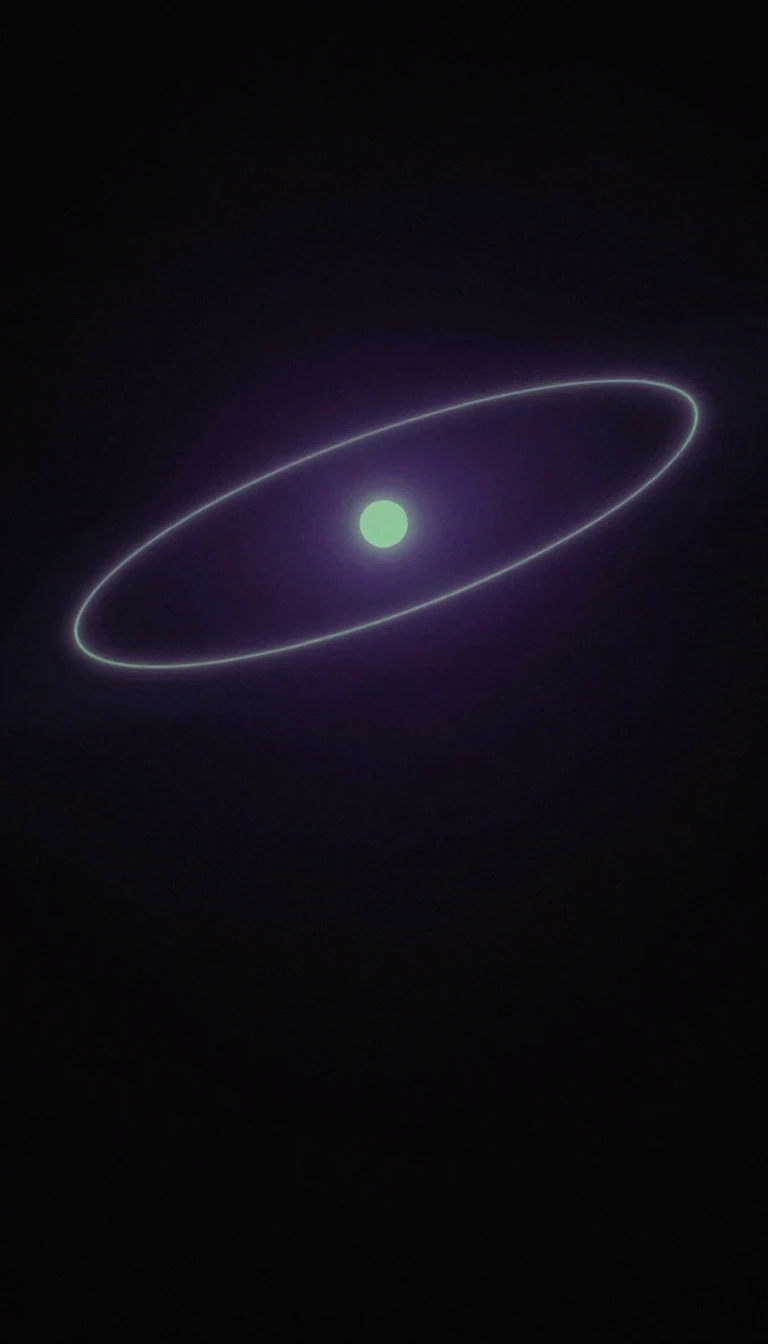 Two orbiting bodies can be solved exactly, but adding a third breaks everythingPredicting how two stars or a planet and its moon move around each other is a solved problem with a neat, complete answer. Add just one more body and no general solution exists ex…
 In taxicab geometry, circles are squares and pi equals exactly 4Measure distance the way a cab crosses Manhattan, block by block along the grid, and geometry turns strange. A circle becomes a tilted square. The ratio of its circumference to it…