 Intellect Plus
Geometry
527 cards. Each one is a 40-second story with a five-minute read behind it. Page 8 of 9.
 Some rectangles cross themselves, and some have no right angles at allEveryone knows a rectangle has four right angles. Geometers are less sure. A crossed rectangle folds over itself like a bow tie, and on curved surfaces the shapes called rectangle…
 The oldest trick in logic: assume the opposite and watch it collapseTo prove something is true, you can pretend it is false and follow the consequences until they fall apart. This move, reductio ad absurdum, runs from a satirical Greek poem about …
 The rhombus is named after an ancient spinning toyDiamond, lozenge, calisson: the four-sided shape with equal edges has a menu of names, one of them a French sweet. The word rhombus itself comes from a Greek term for something th…
 One infinite sum quietly encodes the pattern of every prime numberAdd one, a half squared, a third squared and so on forever, and you have touched the Riemann zeta function. Euler found it was secretly built from the primes. Riemann then pushed …
 The universe measures flat, yet it could still loop back on itselfDraw a giant triangle across space and add up its angles. Measurements so far say they total 180 degrees, meaning space is flat to within a fraction of a percent. That settles the…
 Shing-Tung Yau won the Fields Medal while holding no passport at allIn 1982 Shing-Tung Yau became the first ethnic Chinese mathematician to win the Fields Medal. He accepted it officially stateless, his Hong Kong residency revoked and American cit…
 The sinc function is the shape hiding inside every digital recordingDivide the sine of x by x and you get a wave that swells to a peak of 1 and then ripples away in both directions. That humble curve, the sinc function, is how engineers rebuild a …
 Squaring the circle took two thousand years to prove impossibleBuild a square with exactly the area of a given circle, using only compass and straightedge, in a finite number of steps. Greek geometers tried. So did prisoners, Jesuits and legi…
 A teenager on a ship to England worked out how heavy dead stars can getSailing to Cambridge in 1930, a young Indian graduate spent the voyage adding relativity to the physics of collapsed stars. The upshot, now called the Chandrasekhar limit, says no…
 A slanted box hides one of geometry's most stubborn unsolved puzzlesTake a cube and push it sideways so every face leans into a parallelogram. The result is a parallelepiped. In 2009 mathematicians found dozens whose edges and diagonals are all wh…
 The humble parallelogram depends on Euclid's most controversial assumptionEveryone learns that a parallelogram's opposite sides match in length. What schoolbooks rarely mention is that this cannot be proved without Euclid's contested parallel postulate.…
- Three lengths of chain in the ratio 3, 4, 5 make a right angleGardeners and surveyors have a low-tech way to mark out a square corner across a large field: lay three chains in the ratio 3:4:5 into a triangle. The corner opposite the longest …
 Piero della Francesca painted like a geometer because he was oneToday Piero della Francesca is celebrated for calm, luminous frescoes. In his own time he was also a serious mathematician who wrote treatises on perspective and on the five regul…
 From Pythagorean triples to Gauss, quadratic forms connect ancient puzzles and modern mathsWhich whole numbers can be written as the sum of two squares? That question, answered by Fermat, belongs to the theory of quadratic forms, polynomials where every term has degree …
 Give a paper strip one half-twist and it loses a sideTape the ends of a paper strip together after a single half-twist and you get a surface with just one side and one edge. Mathematicians described it in 1858, but Roman mosaic make…
- How many misses before the third six? The negative binomial knowsRoll a die and count every non-six until the third six appears. That tally follows the negative binomial distribution, a workhorse of statistics that also describes why a few infe…
 Why December means ten and a centipede never has a hundred legsDecember is the twelfth month, yet its name says tenth. Centipedes rarely have anywhere near a hundred legs. English is packed with number prefixes borrowed from Latin and Greek, …
 Right angles escaped geometry and now describe Wi-Fi, DNA and vinyl recordsOrthogonal started life as a Greek word for a rectangle. Today mathematicians use it for vectors that meet at right angles, but engineers, chemists, statisticians and philosophers…
 For two thousand years, mathematicians tried to prove Euclid's awkward fifth ruleEuclid's first four postulates are almost obviously true. The fifth, about when two lines must eventually meet, is long and clumsy, and generations of brilliant thinkers were sure…
 John Conway grew tired of being famous for the Game of LifeIn October 1970 Martin Gardner's Scientific American column described a pen-and-paper pastime in which cells on a grid live or die by simple rules. It became Gardner's most-read c…
 From body cells to chess games, real numbers get astonishingly bigYour body holds an estimated 37.2 trillion cells, and your brain around 100 trillion neural connections. Those figures are tiny next to the possible games of chess, estimated at a…
 The law of cosines is Pythagoras stretched to fit every trianglePythagoras's theorem works only when a triangle has a right angle. The law of cosines fixes that by adding a correction term that depends on the angle between two sides, and it be…
- The law of sines hides a circle behind every triangleDivide any side of a triangle by the sine of the angle facing it and you get the same answer for all three sides. That shared number is no coincidence: it equals the diameter of t…
 The world's oldest dated four-by-four magic square was a perfume recipeAround 550 CE the Indian scholar Varahamihira drew a four-by-four grid for blending perfumes. Each cell named an ingredient and its proportion, and any four picked along a row, co…
 Calculus took two thousand years and many countries before Newton and LeibnizThe word calculus means small pebble in Latin, after the stones once used for counting. The ideas it names were gathered almost as slowly as pebbles: Greek geometers, Chinese and …
- A horoscope is a geometric sky map, even though its predictions failStrip away the fortune-telling and a horoscope is a piece of geometry: a stylised map of the sky above one spot at one moment, with the planets and key angles plotted on a wheel. …
- Change one rule of Euclid and parallel lines multiply without endEuclid's geometry says that through a point off a line, exactly one parallel can be drawn. Hyperbolic geometry keeps every other rule but allows at least two, and therefore infini…
 Why arcsin is called arc, and why sin to the minus one confuses peopleSine turns an angle into a ratio; its inverse turns the ratio back into an angle. Naming that reverse step has caused two centuries of muddle, from John Herschel's 1813 superscrip…
 John Wheeler named black holes, wormholes and quantum foam, and taught FeynmanJohn Archibald Wheeler had a gift for names. He popularised black hole, coined wormhole, quantum foam and it from bit, and even renamed Enrico Fermi's slower downer the neutron mo…
 A 45-degree slope is a 100 percent grade, and a vertical wall is infiniteGrade is usually quoted as rise over run times 100, which leads to a quirk: a 45-degree hill is a 100 percent grade, and as the slope nears vertical the percentage races toward in…
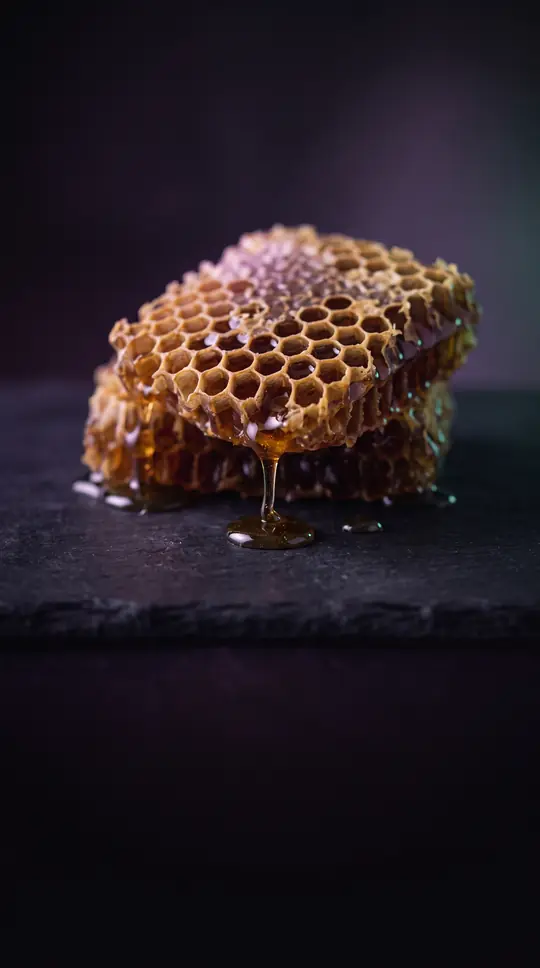 Bees build hexagons because six-sided cells tile a surface using the least wallRegular hexagons fit together with no gaps, three meeting at every corner, and a hexagonal grid keeps its lines as short as possible when filling a large area. That is why honeyco…
- Euclid never measured distance with numbers, only with matching line segmentsThe straight-line distance between two points is named after Euclid, yet in his Elements distances were not numbers at all. Two segments were simply equal or not. Linking distance…
 Three turns are always enough to point any object in any directionLeonhard Euler showed that any orientation of a rigid body, however twisted, can be reached with just three rotations about coordinate axes. His three angles remain a standard way…
- Calculus worked brilliantly for two centuries before anyone could justify itNewton and Leibniz built calculus on infinitesimals, numbers somehow infinitely close to zero, and used it to explain why planets move in ellipses. The philosopher George Berkeley…
- Proving four colours suffice for any map took 124 years and a computerIn October 1852 Francis Guthrie, colouring a map of English counties, noticed he never needed more than four colours to keep neighbouring counties distinct. His question baffled A…
 In four dimensions, you can untie any knot in a piece of stringAdd a fourth direction at right angles to the usual three and strange things happen. A knotted string can be slipped free by nudging it along the new axis, while flat surfaces suc…
- Asking whether a gram is bigger than an hour is physically meaninglessYou can compare metres with feet, or seconds with years, because each pair measures the same kind of thing. But grams and hours belong to different dimensions, so no conversion li…
 One number tells you what a polynomial's roots look like without solving itThe discriminant is built from a polynomial's coefficients alone, yet it reveals whether roots repeat and whether they are real. For a quadratic it is the familiar b squared minus…
 A Dutch cocoa tin gave its name to the picture inside a pictureIn 1904 Droste cocoa boxes showed a nurse bearing hot chocolate and a box of Droste cocoa on her tray, which showed the same nurse, carrying the same box, and so on. That endlessl…
 Measuring the edge of an ellipse needed a whole new family of functionsFinding the length of a circle's rim is easy, but squash it into an ellipse and ordinary formulas fail. The integrals that arise, first studied by Giulio Fagnano and Leonhard Eule…
 The error function got its name from the mathematics of measurement mistakesIn 1871 the mathematician J. W. L. Glaisher named a stubborn integral the error function, because it answered a practical question from the theory of errors: how likely is a measu…
- Archimedes wanted a sphere inside a cylinder carved on his tombAround 225 BCE Archimedes proved that a sphere holds exactly two-thirds the volume of the snugly fitting cylinder around it, and has two-thirds of its surface area too. He was so …
 Cinema screens went wide because Hollywood feared losing audiences to televisionUntil 1953 nearly every sound film was shot in the almost-square Academy ratio. Then television, with a very similar shape, began stealing moviegoers. Studios fought back by stret…
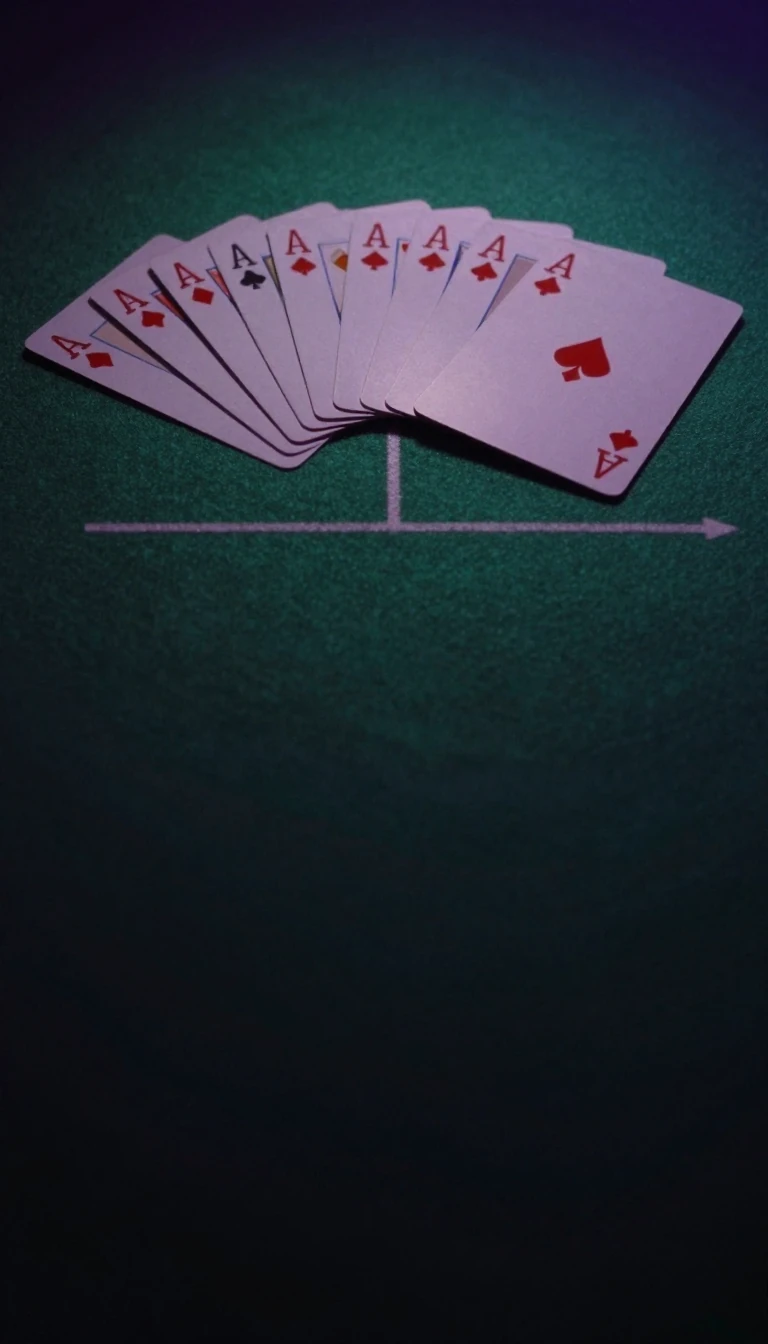 A deck of playing cards is a Cartesian product in disguiseTake the 13 card ranks from ace down to two and the four suits, then pair every rank with every suit. You get exactly 52 combinations, one for each card in a standard deck. Mathem…
 A cathedral is defined by a chair, not by its size or grandeurWhat makes a church a cathedral is not soaring towers or stained glass but a single piece of furniture: the bishop's seat, or cathedra. A tiny chapel holding that throne qualifies…
 Three chords can harmonise every note of a major scaleWild Thing by The Troggs gets by on just three chords, and it is hardly unusual. In any major key, the chords built on the first, fourth and fifth notes of the scale together cont…
- Mathematicians measure how sharply a curve bends by watching its tangent turnImagine driving along a winding road at a steady speed and noting how fast your steering direction swings. That rate of turning is exactly what mathematicians call curvature. A st…
 An affine space is geometry after you forget where the origin isTwo people add arrows on the same map, but each secretly believes a different point is the centre. Their sums disagree, except in one special case: when the weights add up to exac…
 Your ankle is built like a carpenter's mortise and tenon jointWoodworkers join timber by slotting a tongue into a snug rectangular socket. The human ankle uses the same trick, and it is the only joint in the body to do so. That design explai…
 Ancient volume puzzles still shape how we measure spaceVolume is how much room a three-dimensional region takes up, counted in cubic metres, litres, gallons, and kin. A container’s volume usually means how much fluid it can hold, not …
- Three angles always sum to a straight line—on a flat planeA triangle is the simplest polygon: three sides, three vertices, three interior angles. In Euclidean geometry those angles always add to 180 degrees, or π radians—a fact equivalen…
- Sine and cosine began on triangles, then owned the circleTrigonometric functions—also called circular or goniometric functions—tie an angle in a right triangle to ratios of two sides. Sine, cosine, and tangent dominate modern use; their…
 Hellenistic skies first forced triangles into numbersTrigonometry—from Greek words for triangle and measure—studies how angles and side lengths talk to each other. It grew in the Hellenistic world in the third century BC for astrono…
- A square is the only regular polygon with all right angles equalFour equal sides and four right angles make a square both rectangle and rhombus. Its interior, central, and exterior angles are all ninety degrees—the only regular polygon where t…
 Physics, said Anderson, is almost the study of symmetryEveryday talk of symmetry means pleasing balance. Mathematicians mean something sharper: a shape that stays itself under a move such as a flip, a turn, a slide, or a resize. Physi…
 Mathematical symmetry means a structure survives its own remixSymmetry in maths is invariance: an object stays the same under chosen operations. A plane figure's symmetry may be an isometry that keeps distances; a bare set's symmetries are j…
 Tensors keep geometry honest when coordinates changeA tensor is an algebraic object that encodes multilinear links among vectors, scalars, and other tensors on a vector space. Its components form a multi-way array once you pick a b…
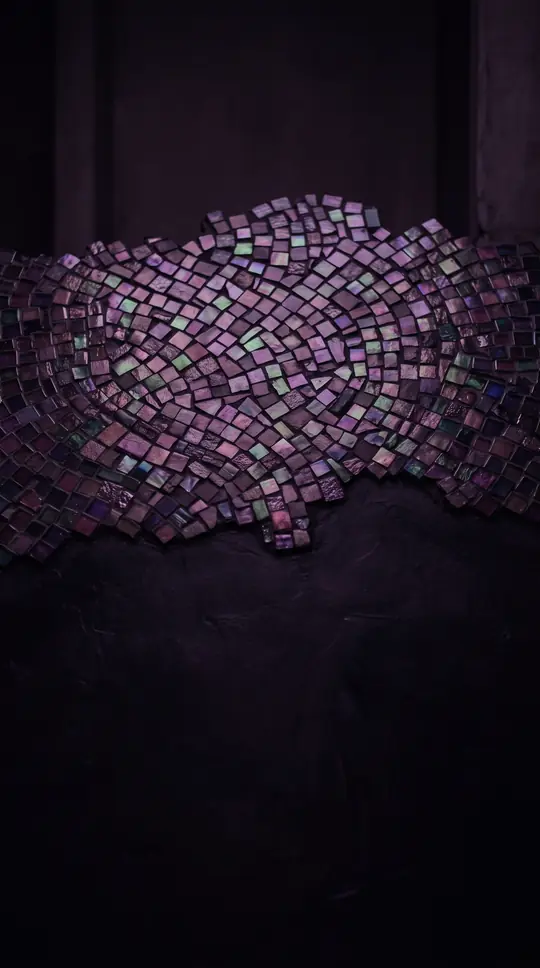 Only three regular polygons tile the plane foreverA tessellation covers a surface with tiles that neither overlap nor leave gaps. On the Euclidean plane, only equilateral triangles, squares, and regular hexagons can form a fully …
- Aristotle stopped at three dimensions; maths did notThree-dimensional space needs three coordinates to pin down a point. Classical physics treats Euclidean 3-space as the stage for all known matter, while relativity demotes it to a…
- Hausdorff defined spaces where closeness needs no rulerA topological space is a set of points plus a structure—a topology—that says what counts as nearby without requiring a numeric distance. Limits, continuity, and connectedness all …