 Intellect Plus
Physics
1,748 cards. Each one is a 40-second story with a five-minute read behind it. Page 25 of 30.
 Why do underwater explosions create complex, baffling patterns in fluid dynamics?This video explores the intricate physics of underwater explosions and shock-induced cavitation. By examining how fluids oscillate within a pipe, it highlights a phenomenon so com…
 Why do the best parts of your cereal always end up on top?Ever notice how the marshmallows in your cereal box seem to migrate to the surface? This phenomenon is not magic, but a result of specific physical principles that cause mixtures …
 Common astronomy myths: Why sound actually travels through space and Earth's orbit is complexMany popular beliefs about space are technically incorrect. This video explores common astronomical misconceptions, including the reality of sound propagation in space and the nua…
 Hollywood gets space death wrong: the reality is much stranger than fictionMovies frequently depict dramatic ways to perish in the vacuum of space. This video examines common cinematic tropes of space-related fatalities, contrasting them with the actual,…
 Can you reach temperatures colder than absolute zero?Absolute zero is defined as the lowest possible temperature, yet physics allows for negative absolute temperatures. This video explains the counterintuitive reality where heating …
 Could this iridescent metal be the secret ingredient for next-generation technology?Bismuth is famous for its striking, geometric crystals, but its potential goes far beyond aesthetics. Researchers are investigating how thin layers of this element exhibit the Ano…
 Is the newly discovered Quipu structure too massive for our current understanding of physics?Astronomers have identified a massive cosmic structure named Quipu, which challenges existing cosmological models. This video explores why such enormous formations force scientist…
 Did MIT physicist Aaron Leanhardt just change the physics of professional baseball forever?During the March 2025 opening weekend, the New York Yankees hit 15 home runs using new torpedo bats. This video examines the science behind these bats and evaluates their actual i…
 Can we shrink the world's most powerful particle accelerators to fit on a coin?Particle accelerators are typically associated with massive, miles-long underground tunnels. However, researchers are now developing miniature versions small enough to sit on a co…
 How tidal bores reveal the hidden mathematical physics of our natural worldA tidal bore occurs when an incoming high tide forces a river to reverse its flow, appearing as either a smooth, undulating jump or a crashing wave. Physicist Michael Berry explor…
 How does the deterministic world break down in the realm of quantum theory?This lecture introduces second-year Oxford mathematics students to the foundations of quantum theory. Fernando Alday explores the shift from deterministic physics to quantum reali…
 How waves and resonance shape everything from musical instruments to noise-canceling vacuum cleanersProfessor Jon Chapman explores the physics of waves and resonance. By examining everyday objects like guitars, whistles, and vacuum cleaners, he demonstrates how these principles …
 Stephen Hawking's final insights on the mysteries of black holesIn 2017, Stephen Hawking delivered the inaugural Roger Penrose Public Lecture at Oxford Mathematics. This video captures one of his final lectures, revisiting the profound work on…
 Why do bicycles and empanadas share the same mathematical secrets of wrinkling?Dominic Vella explores the complex mathematics behind how surfaces wrinkle. This seminar demonstrates how the same physical principles govern structures as diverse as bicycle comp…
- What does a quantum wave function actually mean for a physical particle?This lecture from James Sparks explores the Born interpretation of quantum mechanics. It addresses the historical uncertainty surrounding the physical meaning of the wave function…
 Why measuring a particle's position and momentum simultaneously is fundamentally impossibleThis lecture from the University of Oxford explores the mathematical foundations of the Heisenberg Uncertainty Principle. It provides a formal proof and examines the physical cons…
 Why frogs might see the universe as a series of individual light pulsesLight is not a continuous stream but a collection of discrete particles. If your eyes were sensitive enough, like those of a frog, you would perceive the sun not as a steady glow,…
 Can a perfect silicon sphere finally redefine how we measure the kilogram?The kilogram is currently defined by a physical artifact that is losing its stability. This video explores the Avogadro Project, an ambitious attempt to redefine mass by creating …
 Atoms are the building blocks of everything, yet they remain profoundly difficult to visualize.Atoms are fundamental to existence, yet their scale is so far removed from human experience that grasping their true nature is nearly impossible. This video explores the extreme s…
 What would happen if a coin-sized black hole appeared in your pocket?This video explores the hypothetical scenario of a black hole the size of a coin suddenly manifesting in your pocket. It examines the immediate physical consequences of such an ev…
 Is light just a simple wave, or is there more to the story?We often take light for granted, assuming it is merely a wavy phenomenon. This video explores the fundamental nature of light, encouraging us to look past our everyday assumptions…
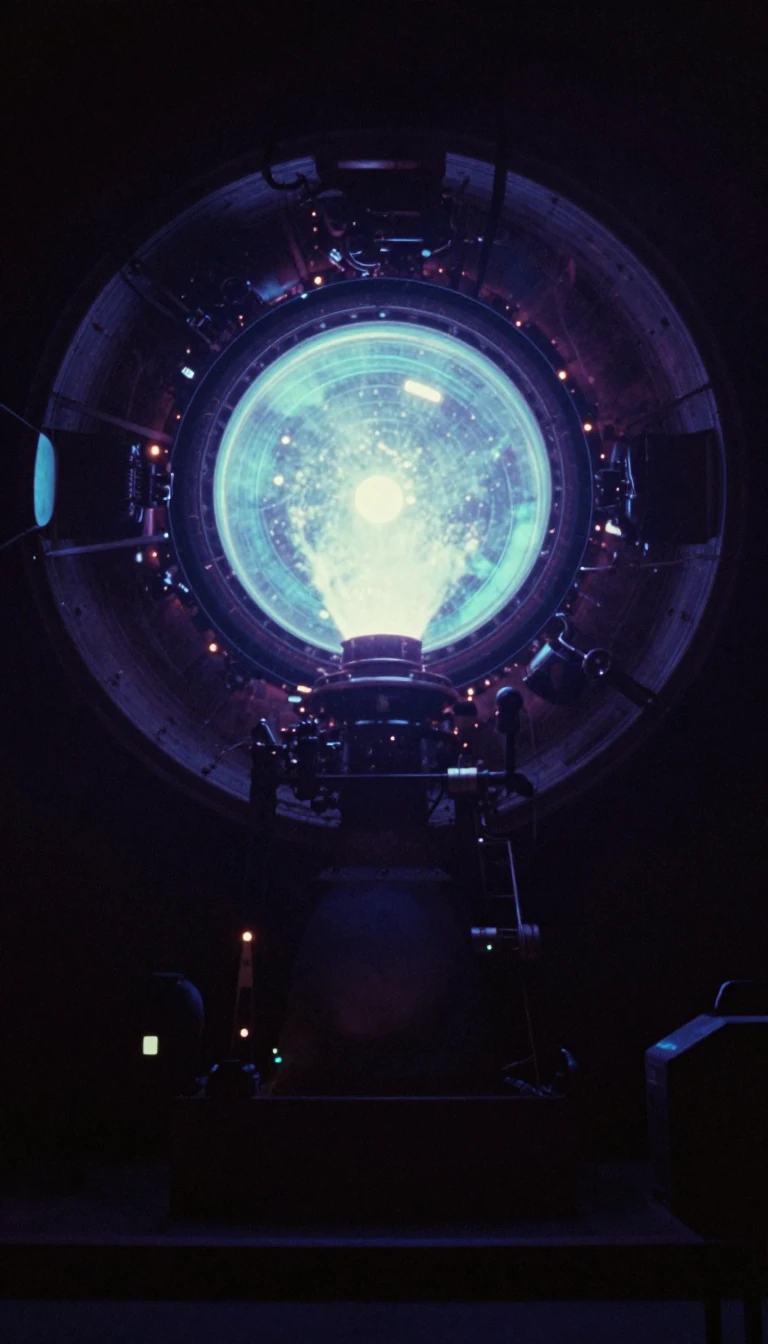
 Is fusion energy the ultimate solution for our future or a technological dead end?This video examines the mechanics of fusion energy and evaluates its potential as a viable power source. It provides a foundational look at how fusion works and asks whether it tr…
 Can quantum computing help us transcend the current physical limits of human technology?This video explores the potential of quantum computers to overcome the technological boundaries we face today. It examines whether these machines offer a path to bypass traditiona…
 Could a fundamental shift in the vacuum of space destroy the entire universe?This video explores the theoretical concept of a false vacuum, a state where the universe could be fundamentally altered, making life as we know it impossible forever. It examines…
- What is the true nature of time and its ultimate destiny?This video explores the history and future of time, examining its fundamental role in the universe. It offers a comprehensive look at how we perceive time and what scientific theo…
 Are wormholes genuine scientific phenomena or merely mathematical magic disguised as physics?This video investigates the nature of wormholes, questioning whether they exist as physical realities or remain theoretical constructs. It explores the mechanics behind these stru…
- The 19th-century mathematics behind holding a pizza sliceWhy does a folded slice of pizza stay upright while a flat one droops? This video explores the surprising physics and geometry that dictate how we interact with our favorite food.
- How scientifically accurate is the depiction of space warfare in your favorite science fiction?Science fiction often dramatizes space combat, but how does it hold up against the laws of physics? This video examines the realities of fighting in a vacuum, drawing on expert an…
- Why do massive, heavy clouds manage to stay afloat in the sky?Clouds can weigh millions of pounds, yet they appear to drift effortlessly above us. This video investigates the physics behind how these massive collections of water droplets and…
- Can science explain the mechanics behind Santa Claus and his legendary Christmas Eve journey?This video explores the scientific possibilities behind classic Christmas mysteries. From the physics required to deliver presents globally in one night to the biological secrets …
 Why cold is not a physical substance you can measureYou have felt cold, but science suggests it is not a real quantity. This video explores why cold is simply the absence of heat and explains the physics of how our bodies perceive …
 Is there a physical limit to how loud a sound can actually get?Sound is more than just volume; it is a physical wave moving through matter. This video explains the mechanics of sound, how we measure it using decibels, and the physical constra…
 How do hot air balloons defy gravity to stay afloat in the sky?This video explores the fundamental scientific principles that allow hot air balloons to rise and remain airborne. It provides a corrected explanation of the physics involved, ens…
- What you see in the sky might not be a rainbow after all.Atmospheric optics often produce spectacular light displays that are frequently misidentified. This video clarifies the specific phenomena captured in the footage, explaining why …
- Did Einstein predict the ripples in spacetime we now call gravitational waves?This video explores the scientific legacy of Albert Einstein regarding gravitational waves. It examines the theoretical framework he established and how modern observations confir…
- What physical principles allow hurricanes to reach such destructive, massive scales?This video examines the fundamental physics governing tropical cyclones, explaining the mechanisms that fuel these intense weather systems. It provides a scientific look at how at…
 Animals mastered physics to build their own sophisticated air conditioning systems long before humans.Humans often pride themselves on being nature's premier architects, yet we are far from the only species to master complex engineering. From ants and termites to prairie dogs, var…
- How ancient Egyptian engineering mastered the construction of the Great PyramidThe construction of the Egyptian pyramids was a monumental feat of engineering, not an impossibility. This video examines the mathematical knowledge, building techniques, and tool…
- At the most fundamental level of reality, what actually constitutes a thing?This video explores the nature of existence by asking why things are, what they are, and why they behave the way they do. It serves as a starting point for contemplating the funda…
- The physics of flight is often misunderstood by the publicThis video dismantles common misconceptions regarding how airplanes stay in the air. It explores the actual physics of lift, moving beyond simplified explanations to provide a tec…
 Is gravity really a force pulling objects together, or something else entirely?This video examines common misconceptions surrounding gravity. By breaking down how we perceive gravitational attraction, it invites viewers to reconsider the fundamental physics …
- How scientists at the National Institute of Standards and Technology measure nearly invisible forces.Dr. Gordon Shaw demonstrates the specialized laboratory techniques required to detect and quantify the smallest forces in the universe. This video offers a rare look at the precis…
 Can a bullet shatter the physics of a Prince Rupert's Drop?This high-speed test explores the limits of material resilience. By firing an AK-47 at a Prince Rupert's Drop, the video examines how internal stresses in glass react to extreme k…
 How high-speed cameras finally cracked the mystery of the exploding Prince Rupert's DropFor years, the physics behind the explosive failure of a Prince Rupert's Drop remained a scientific enigma. Only recently has high-speed camera technology advanced enough to captu…
 What happens when a golf ball travels at 500 miles per hour?Using a pressurized vacuum cannon, this video captures the extreme physics of a golf ball propelled to speeds exceeding 500 miles per hour.
- How a firearm suppressor manages high-pressure gases in extreme slow motionThis video captures the internal mechanics of a firearm suppressor at 110,000 frames per second. By visualizing the movement of gases and components during discharge, it offers a …
- Why unit vectors are the essential building blocks for measuring direction in complex systems.A unit vector is a mathematical tool with a length of exactly one, designed to isolate direction from magnitude. By stripping away scale, these vectors allow scientists to map eve…
 Nuclear fuel packs tens of thousands of times more energy than chemical alternativesEnergy density measures how much power a system stores within a specific volume. While gasoline and other hydrocarbons dominate our daily transport, they are dwarfed by the sheer …
- Why the drag coefficient is not a fixed number for any given objectYou might think an object has a single, inherent drag coefficient, but physics tells a more complex story. This dimensionless quantity is not a constant; it shifts based on speed,…
 Leonhard Euler’s 18th-century fluid equations still baffle modern mathematicians todayIn 1757, Leonhard Euler published a set of equations describing fluid motion that remain a cornerstone of physics. By stripping away viscosity and thermal conductivity, he created…
- How a 1820 discovery maps the invisible magnetic fields surrounding every electric currentIn 1820, Jean-Baptiste Biot and Félix Savart uncovered a fundamental relationship between electric currents and the magnetic fields they generate. This law remains a cornerstone o…
 Why do celestial bodies dance in perfect, synchronized mathematical ratios?Orbital resonance creates stable, repeating patterns across the solar system and beyond. This video explores the mechanics behind why moons and rings align in whole number ratios,…
 Can you calculate the value of pi using only colliding blocks?In this Stand-up Maths demonstration, Matt Parker explores a physical method for approximating pi through the mechanics of collisions.
- Capturing the violent destruction of a Prince Rupert's Drop at extreme high speedThis video utilizes high-speed cinematography, capturing footage at 456,522 frames per second, to observe the explosive shattering of a Prince Rupert's Drop when encased in epoxy …
- Can two bullets collide mid-air? Witness the physics of an impossible shot.This video captures the rare and complex phenomenon of bullets colliding in flight. By utilizing high-speed cinematography, it explores the mechanics behind a feat often considere…
- What happens when you drop molten glass into cold water?This video explores the physical properties of Prince Rupert's Drops, created by dripping molten glass into cold water. It examines the intense internal stresses that give these g…
- Witnessing the invisible precision of fuel injectors at 28,000 frames per secondThis video explores the intricate mechanics of fuel injectors by capturing their operation in extreme slow motion. By filming at 28,000 frames per second, the footage reveals the …
 Can a bullet strike a match? High-speed footage reveals the physics of ignition.This video explores whether a projectile can successfully ignite a matchstick. By capturing the event at 380,117 frames per second, the footage provides a detailed look at the int…
- A transparent look inside the mechanical heart of a combustion engineThis video provides a rare, clear view into the inner workings of an engine. By observing a transparent engine in action, viewers can better understand the mechanical processes th…
- Why do materials emit light when they are struck or deformed?This video explores the phenomenon of mechanoluminescence, where materials produce light during impact or deformation. It serves as an entry point into a complex scientific field,…