 Intellect Plus
Military technology
315 cards. Each one is a 40-second story with a five-minute read behind it. Page 6 of 6.
 The first bayonets plugged the barrel, so muskets could not fireEarly bayonets simply jammed into the muzzle of a musket, turning it into a spear but making it impossible to shoot. Soldiers had to wait until the last moment to fix them. At Kil…
 Divers found medieval Mongol bombs in a shipwreck off JapanWhen Mongol fleets attacked Japan in the 13th century, they brought thunder-crash bombs: iron shells packed with gunpowder. Centuries later, underwater archaeologists recovered so…
 The first air-dropped bombs were hand grenades nicknamed ballerinasOn 1 November 1911, over Libya, Italian second lieutenant Giulio Gavotti leaned out of a plane never meant for bombing and dropped four specially made grenades on Ottoman position…
 The oldest known boomerang was carved from mammoth tusk in PolandBoomerangs are icons of Australia, yet the oldest certain find comes from a cave in Poland's Carpathian Mountains. Carved from mammoth tusk, it is thought to be around 40,000 year…
 Arrowheads from an Uzbek cave push archery back 80,000 yearsIn Obi-Rakhmat Grotto in Uzbekistan, researchers found tiny stone points about 80,000 years old. They are too small for spears and too big for blowgun darts, yet just right for ar…
 A silk handkerchief in Tombstone inspired the first bulletproof fabricIn 1881 a Tombstone, Arizona doctor named George Goodfellow noticed something odd about a gunshot victim: one bullet had been stopped by a silk handkerchief in his breast pocket. …
 From tethered balloons to floating airbases: the aircraft carrier's riseThe first ships to carry aircraft were wooden vessels lofting single tethered observation balloons. A little over a century later, nuclear-powered supercarriers each hold dozens o…
 Why French and Belgian farmers still dig up First World War shellsMore than a century after the guns fell silent, farmers in France and Belgium keep turning up unexploded First World War ammunition in their fields, and it occasionally still kill…
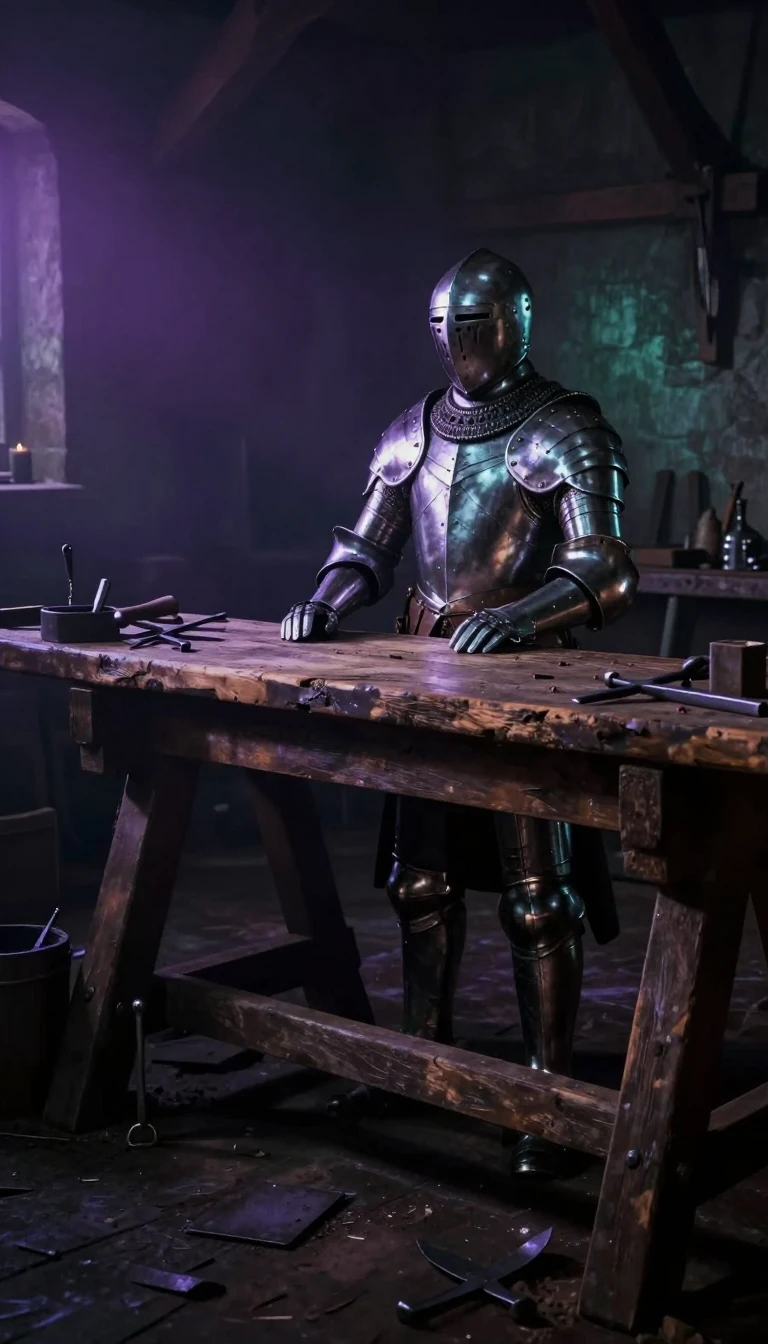 The Black Death helped make plate armour cheaper than chain mailFull plate armour looks like the luxury option, yet by the 15th century it cost less than mail. Linking thousands of iron rings by hand took enormous labour, and after the Black D…
 From Roman catapult to battleship gun, artillery's energy grew 20,000-foldA Roman catapult of the 1st century BC hurled a 6.55-kilogram stone with about 16 kilojoules of energy. A mid-19th-century 12-pounder cannon delivered around 240. The main guns of…
- Only one plane in the US Air Force wears a pure A for attackAmerican military aircraft carry letter codes, and A stands for attack. Yet only a single type in the current US Air Force inventory has a plain, unmixed A: the A-10 Thunderbolt I…
 The ballista stored its punch in twisted ropes, not a bowA crossbow gets its power from a bent bow. The ancient ballista worked differently: two separate arms slotted into tightly twisted bundles of rope made from animal sinew. Cranking…
- Why battering rams worked: stone walls crack under repeated blowsA battering ram is basically a heavy log with momentum, yet it toppled city walls for thousands of years. The secret lay in the walls themselves. Stone and brick resist being sque…
 The terrifying physics of the world's most destructive machinesFrom the 15-kiloton blast in Hiroshima to the 50-megaton Tsar Bomba, nuclear weapons harness the fundamental energy of the atom. Whether through fission or fusion, these devices c…
 From 'Water Carriers' to Modern War Machines: The Tank's Secret Naming HistoryThe armored fighting vehicle we know today has a surprisingly bureaucratic origin story. Before it was a symbol of modern warfare, its name was deliberately obscured by military c…