 Intellect Plus
Military technology
315 cards. Each one is a 40-second story with a five-minute read behind it. Page 3 of 6.
 Why the humble feather is the secret to an arrow flying straight and trueFletching is the aerodynamic stabilization that prevents a projectile from tumbling mid-flight. Whether using traditional feathers or modern plastic vanes, these fins are essentia…
 The silent guardian of modern warfare: how a tiny device decides when to explodeA fuze is far more than a simple trigger. It is a sophisticated gatekeeper, balancing the need for lethal precision with the absolute necessity of safety. From the high-speed spin…
 Why the most vulnerable part of a fortress became its most heavily armed feature.A gatehouse is the ultimate architectural paradox. Because it serves as the primary entry point to a castle or town, it is structurally the weakest link. To compensate, engineers …
 Why the sloped front of a tank is called a glacisThe term glacis originated in medieval military engineering, describing an artificial slope designed to deflect projectiles and thwart attackers. Today, the concept lives on in mo…
 Why the tube that fires your bullets is named after a storage containerThe gun barrel is a masterpiece of high-pressure engineering, yet its name is a historical accident. Early metalworking could not cast seamless tubes strong enough to withstand ex…
- Why modern gunships circle their targets instead of flying straight at themUnlike traditional attack aircraft that perform strafing runs, modern fixed-wing gunships operate by circling a target. By banking in a continuous orbit, they align their side-mou…
 The halberd was a lethal battlefield innovation that eventually became a mere fashion accessory.For centuries, the halberd was the Swiss army's secret weapon, capable of pulling knights from their horses and piercing plate armor. Yet, as gunpowder changed warfare, this versa…
 From bouncing bombs to nuclear delivery, how heavy bombers defined the 20th centuryHeavy bombers were once the ultimate projection of military power, evolving from converted airliners into massive, long-range platforms capable of carrying atomic payloads. While …
 Why tank armor is defeated by a focused jet of explosive energyThe high-explosive anti-tank shell, or HEAT, does not rely on brute force or sheer speed to punch through heavy plating. Instead, it uses a precisely shaped internal cavity to con…
 Beyond simple fortresses, ancient hillforts were complex hubs of power, trade, and community life.Across prehistoric Europe, hillforts served as more than just defensive refuges. These elevated sites functioned as tribal centers, ritual hubs, and economic engines. While often …
 Why the world’s most controversial bullet is actually a tool for precision and safetyHollow-point bullets are designed to expand upon impact, transforming kinetic energy into a wider wound cavity. While often associated with lethality, they are primarily used by p…
 Why the hunting knife is a masterclass in specialized mechanical engineering for the wildThe hunting knife is often mistaken for a weapon, yet its true purpose is far more surgical. Designed specifically for processing game, these tools prioritize cutting efficiency o…
 The infantry fighting vehicle: a hybrid machine designed to bridge the gap between transport and tank.An infantry fighting vehicle is more than just a troop carrier. It is a mobile combat platform designed to transport soldiers while providing direct fire support on the battlefiel…
- Why the dedicated interceptor aircraft became a relic of the Cold War eraDesigned for zero-notice scrambles against high-altitude bombers, the interceptor was once the ultimate defensive weapon. Yet, as strategic threats shifted from piloted aircraft t…
 Why the specialized interdictor aircraft vanished from the modern military lexiconDesigned to strike deep behind enemy lines, the interdictor was a specialized tactical bomber built to sever logistics and stall reinforcements. By flying at dangerously low altit…
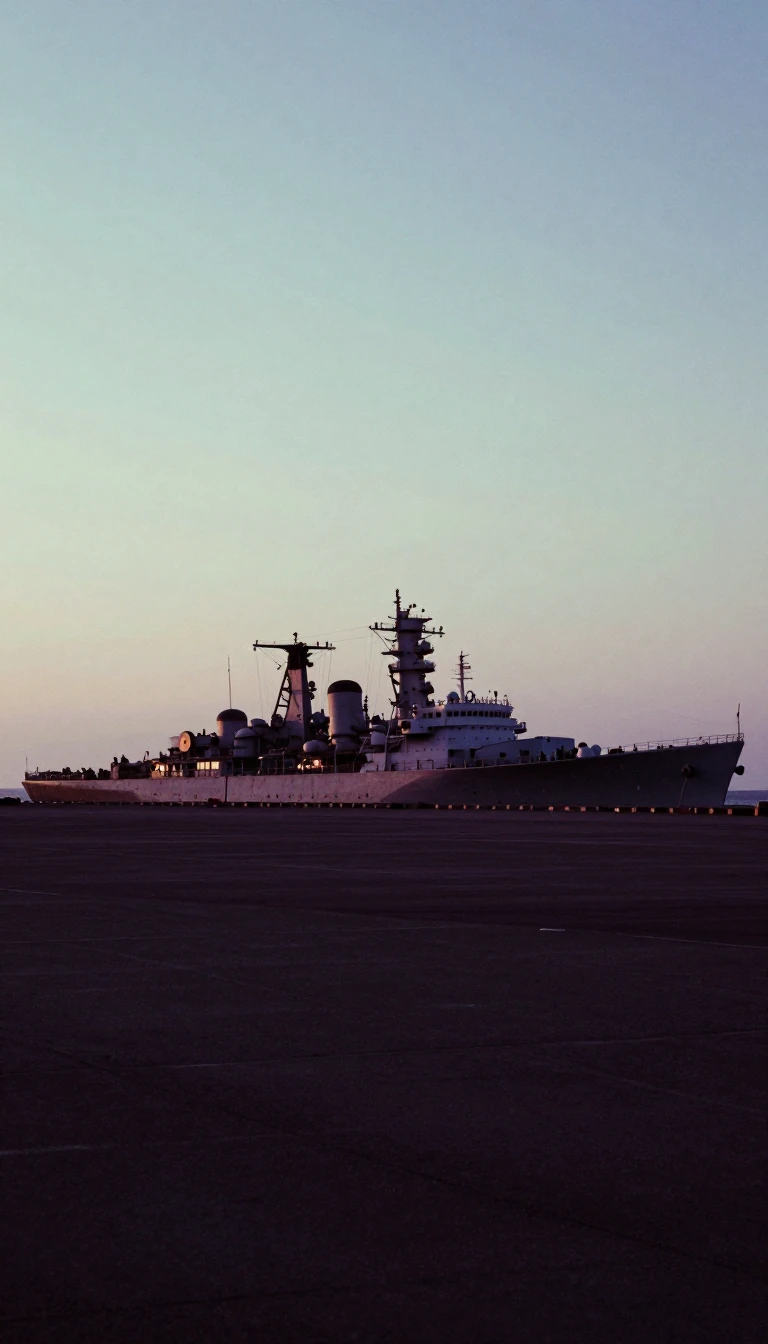 The Iowa-class battleships were designed to hunt fast capital ships across the Pacific Ocean.Born from the U.S. Navy's War Plan Orange, these six fast battleships were built to outrun and outgun Japanese adversaries. Though they arrived late in the Second World War, they …
- From Celtic Spear to Modern Sport: The Enduring Legacy of the Hand-Thrown JavelinThe javelin is a deceptively simple weapon that has evolved from a lethal battlefield tool into a refined athletic implement. While most ranged weapons rely on mechanical assistan…
 The Chinese ji: A three-millennium evolution from hybrid spear to legendary battlefield iconFor over 3,000 years, the ji served as a cornerstone of Chinese warfare. Initially a hybrid combining the reach of a spear with the cutting power of a dagger-axe, this versatile p…
 The medieval keep was less a military necessity and more a political statementWhile often viewed as the ultimate defensive refuge, the medieval keep was frequently a tool of power. These towers served as high-status residences and symbols of authority, with…
 The unsung two-wheeled carts that powered centuries of field artillery and military traditionBefore motorized tractors, moving heavy cannons required ingenious engineering. Limbers and caissons were the essential mobile support systems for field artillery, hauling ammunit…
 How a rejected transport plane became the longest-produced military aircraft in historyDesigned in 1951 to replace aging piston-engine transports, the Lockheed C-130 Hercules was initially dismissed by legendary engineer Kelly Johnson as a company-destroying mistake…
- Why the long gun remains the gold standard for precision and powerA long gun is defined by its barrel length and shoulder-braced design, offering stability that handguns simply cannot match. By transferring recoil directly into the body and allo…
 The longbow was Europe's dominant military technology for centuries before cannons changed everything.Longbows are deceptively simple, yet they defined medieval warfare for generations. From the ancient yew bows of Neolithic hunters to the massed archers at Agincourt, this weapon …
 The longsword was a versatile, lethal tool for both armored and unarmored combat.Often romanticized in fantasy, the longsword was a sophisticated military weapon of the late medieval period. Far from a clumsy heavy blade, it was a precision instrument designed…
- The M134 Minigun is a high-speed rotary weapon born from Vietnam War necessityEngineered to protect vulnerable helicopters from ground fire, the M134 Minigun delivers a blistering rate of fire that single-barrel weapons cannot match. While pop culture often…
- The M16 rifle: How a revolutionary design survived a disastrous combat debutThe M16 is the longest-serving rifle in U.S. military history, yet its introduction was marred by lethal reliability failures in Vietnam. Born from a bureaucratic battle between c…
 Why the M1911 pistol remained the standard U.S. sidearm for over 75 yearsDesigned by John Moses Browning, the M1911 pistol became a defining piece of military technology. Adopted in 1911, this semi-automatic firearm utilized recoil energy to cycle its …
- How a shortened rifle became the defining firearm of the twenty-first centuryDeveloped in the 1980s as a compact alternative to the M16, the M4 carbine transformed modern infantry combat. By prioritizing modularity and maneuverability, this platform became…
- The M4 Sherman was the reliable, mass-produced backbone of the Allied armored war effort.More than just a tank, the M4 Sherman was a triumph of industrial standardization and logistical foresight. While it faced limitations against heavier German armor, its mechanical…
 How the main battle tank evolved to replace every other armored vehicle typeDuring the Cold War, engineers combined the firepower of heavy tanks, the protection of armored behemoths, and the agility of light scouts into a single, versatile platform. This …
- Shoulder-launched missiles are a persistent, lethal threat to both military and civilian aviationMan-portable air-defense systems, or MANPADS, are compact, guided surface-to-air missiles designed to be carried and fired by a single soldier. While developed in the 1950s to pro…
 The mangonel was a human-powered siege engine that dominated medieval warfare for centuries.Long before counterweight trebuchets, armies relied on the mangonel—a traction-powered artillery piece operated by teams of men pulling ropes. Originating in ancient China, this v…
 From wooden flying boats to business jets: the evolution of maritime patrol aircraftMaritime patrol aircraft are the silent sentinels of the sea. Designed for long-endurance missions, these specialized platforms track submarines, monitor shipping, and conduct sea…
- How a Cold War fighter jet achieved over 100 victories without a single loss.The McDonnell Douglas F-15 Eagle remains one of history's most successful air superiority fighters. Born from a need to outclass Soviet designs during the Cold War, this twin-engi…
 The medium bomber: a vanished category of aircraft that defined World War IIBefore jet engines and modern strike aircraft, the medium bomber was the backbone of air forces worldwide. Designed to carry roughly two tons of ordnance over mid-range distances,…
 The Soviet flying tank that defied physics and redefined battlefield mobility in the 1970s.Designed as a flying infantry fighting vehicle, the Mil Mi-24 Hind combined heavy armor with troop transport capabilities. Soviet pilots nicknamed it the flying tank, and its aggr…
- From observation balloons to stealth fighters: the rapid evolution of aerial warfareMilitary aviation transformed from simple reconnaissance balloons into a decisive force that dictates the outcome of modern conflicts. What began as a risky experiment with early …
- Why silent, engineless gliders were the secret weapon of World War II combatDuring the Second World War, militaries deployed silent, engineless gliders to drop troops and heavy equipment directly into the heart of battle. These semi-expendable aircraft of…
 Military helicopters are far more than just flying trucks for moving troops aroundFrom anti-submarine warfare to high-stakes air assault, the military helicopter is a versatile force multiplier. By adapting modular airframes for specialized roles, modern forces…
- Why military transport aircraft are the unsung heroes of global logistics and combatMilitary transport aircraft are the backbone of modern operations, moving troops and equipment where ground routes fail. From strategic long-haul missions to tactical helicopter i…
 Intercepting a missile in flight requires choosing between three distinct, high-stakes tactical windows.Missile defense is not a single shield but a complex, layered architecture designed to track and destroy incoming threats. Whether intercepting a projectile during its fiery launc…
 How modern missiles use sensors and physics to strike targets with pinpoint precisionA missile is more than just a rocket; it is a sophisticated machine that navigates the chaos of flight to hit a target thousands of miles away. By blending inertial navigation, he…
 The improvised firebomb named after a Soviet minister who claimed he was dropping foodBorn from the black humor of Finnish soldiers in 1939, the Molotov cocktail is a crude incendiary weapon that became a global symbol of resistance. While its name mocks a Soviet f…
- The simple earth-and-timber fortress that defined medieval power across Western EuropeEmerging in 10th-century France, the motte-and-bailey castle was a masterclass in efficient military engineering. By combining a raised mound with a fortified courtyard, lords cre…
- From medieval fire-arrows to precision-guided missiles, the evolution of the multiple rocket launcher.Multiple rocket launchers have transformed from simple medieval fire-arrow arrays into sophisticated, GPS-guided systems capable of pinpoint accuracy. By firing volleys of self-pr…
- Why the ancient art of muzzleloading is thriving in the modern eraA muzzleloader is any firearm loaded through the barrel's open end, a design that predates modern breech-loading technology. While once the standard for military and civilian use,…
 The Naginata: From Battlefield Terror to Symbol of Noble FemininityOnce a fearsome polearm that forced Japanese armorers to invent greaves, the naginata evolved from a brutal anti-cavalry tool into a refined martial art. While its battlefield dom…
 Nerve agents were born from a failed search for better, cheaper agricultural insecticides.Originally synthesized in 1930s Germany as potential pesticides, nerve agents evolved into the deadliest chemical weapons in history. These organophosphorus compounds hijack the b…
 The Nimitz-class aircraft carriers are massive, nuclear-powered floating fortresses of the U.S. Navy.Spanning over 1,000 feet and displacing 100,000 tons, these ten nuclear-powered giants have defined American naval power since 1975. They are not just ships; they are mobile airba…
 Why the term non-lethal weapon is often considered a dangerous misnomer by expertsNon-lethal weapons are designed to incapacitate without killing, yet they frequently cause serious injury or death. Because these tools carry inherent risks, many organizations no…
 Can international treaties actually stop the spread of nuclear weapons to new nations?Nuclear proliferation involves the spread of fissile material and the technical expertise required to build weapons. While the Non-Proliferation Treaty aims to contain this risk, …
- The Nunchaku: A Martial Arts Icon Born from Ambiguous Origins and Modern MediaOften associated with Bruce Lee and pop culture icons like Michelangelo, the nunchaku remains a misunderstood tool. While frequently banned due to fears of criminal misuse, its tr…
 The Roman Onager: A Siege Engine So Violent It Could Not Stand On WallsNamed for the wild ass, this Roman torsion-powered catapult was notorious for its brutal recoil. While it could hurl massive stones to shatter enemy lines, the machine was so unst…
- Why the humble wooden stake remains a cornerstone of human defensive architectureFrom ancient Roman camps to the fortified villages of New Zealand, the palisade has served as a primary defensive barrier for millennia. Simple to construct from local timber, the…
- How a support vehicle became the backbone of the German armored fleetDesigned as a secondary infantry support tank, the Panzer IV was never intended to be Germany's primary weapon. Yet, it evolved through constant upgrades to become the only German…
- Is pepper spray a safe tool for self-defense or a dangerous chemical weapon?Marketed as a non-lethal tool for policing and personal protection, pepper spray relies on capsaicin to induce temporary blindness and respiratory distress. Yet, its safety remain…
- How a bird-hunting frustration revolutionized firearm technology and ended the era of misfiresBefore the percussion cap, shooters relied on flintlocks that often failed in damp weather and gave birds a warning puff of smoke. The invention of a simple copper cup filled with…
- Why the humble pike dominated European battlefields for centuries before vanishing into historyThe pike was a deceptively simple weapon—a long wooden shaft tipped with steel—that transformed common foot soldiers into a force capable of crushing elite cavalry. From the Maced…
- Is a revolver actually a pistol? The technical debate behind the handheld firearmWhile we use the word pistol to describe almost any handgun, the term is surprisingly contested. Experts often distinguish between the classic single-shot pistol, the multi-chambe…
 Why military engineers prefer explosives that feel like clay rather than solid blocksPlastic explosives are engineered to be molded by hand, allowing combat engineers to shape them perfectly for cutting through steel or concrete. Unlike standard blasting materials…