How a Greek Sculptor Used Mathematics to Define the Ideal Human Form
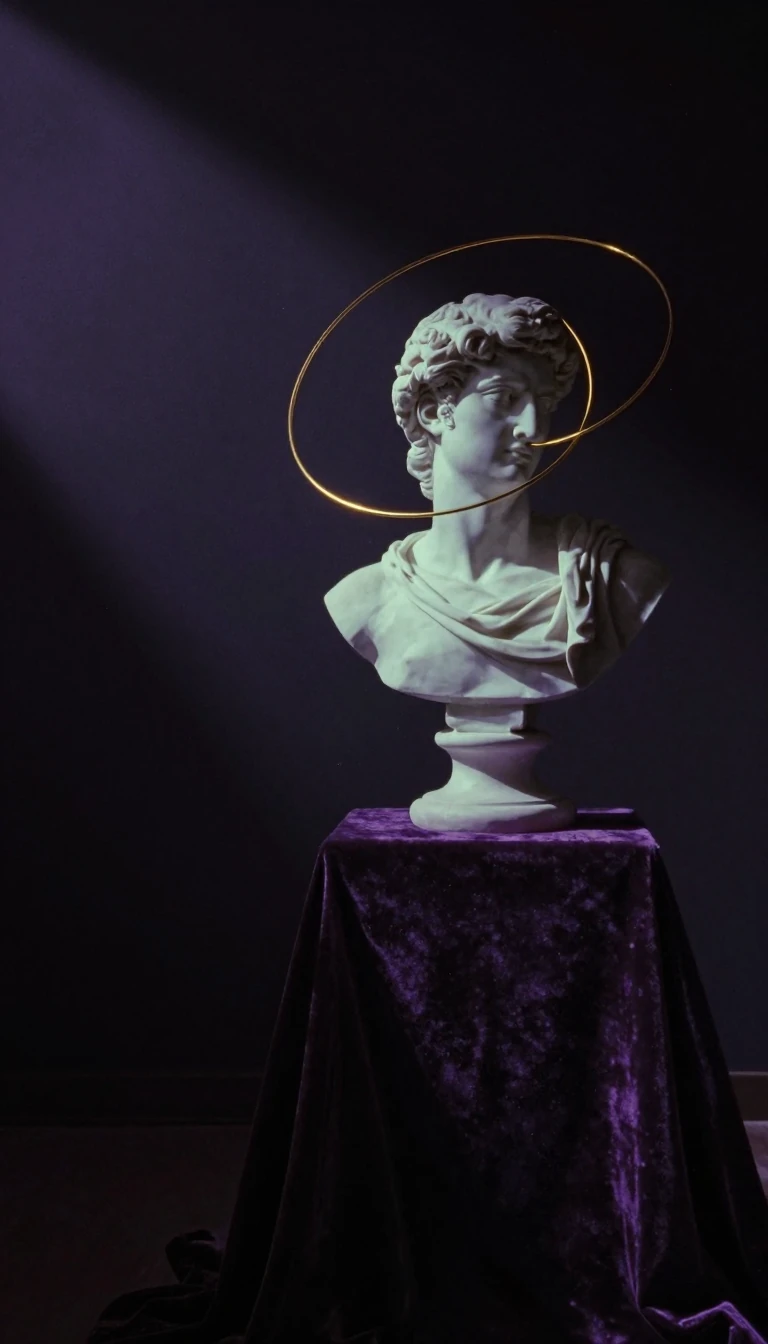
In short: Polykleitos, a master of the Argive school, revolutionized classical art by codifying beauty into a rigorous mathematical system. His lost treatise, the Canon, introduced the concept of symmetria, a dynamic balance of tension and relaxation that liberated sculpture from rigid, static poses and shaped Western art for centuries.
Active during the 5th century BCE, Polykleitos was a contemporary of the renowned sculptor Phidias. While no original bronze works by Polykleitos survive today, his influence persists through numerous Roman marble copies of his masterpieces, such as the Doryphoros (Spear Bearer) and the Diadumenus (Man Tying on a Fillet). These figures demonstrate his mastery of contrapposto, a technique where the body’s vertical axis twists as weight shifts to one leg, creating an impression of organic vitality and potential movement.
Central to his legacy was his theoretical work, the Canon. This text provided a mathematical framework for the ideal proportions of the human body, which the Greeks termed symmetria. By calculating precise ratios for body parts, Polykleitos achieved a harmonious counterbalance between tensed and relaxed muscles. This approach moved Greek sculpture away from the stiff, frontal traditions of the past, establishing a standard formula for the idealized male figure that would influence Greco-Roman and later Western art for generations.
Beyond his theoretical contributions, Polykleitos was a celebrated craftsman. He famously competed against Phidias to create a statue of an Amazon for the Temple of Artemis at Ephesos, ultimately winning the commission. He also crafted a colossal gold and ivory statue of Hera for the Heraion of Argos, which was held in high regard alongside Phidias’s famous works. His dedication to his craft was legendary; he once remarked that the most difficult part of the artistic process occurred when the clay was still under the fingernail, highlighting the intense, refined labor required to achieve his vision.
Opens the Intellect+ feed with this card first. Swipe up for the next one.
Sources
- Summary by Intellect · source: Polyclitus | Classical Greek Sculptor, Symmetria | Britannica
- Also: Polykleitos
To cite this card, link to https://intellectplus.co.uk/app/art-polykleitos.
How we source, check and correct cards: Editorial standards.
General information, not professional advice. Spotted an error? Flag the card or see corrections and complaints.
Intellect Plus is a visual educational discovery platform for exploring fascinating facts and ideas. Brain Food, Not Brain Rot. What is Intellect Plus?
Related
More in Visual artists · More in Art · Latest · A–Z · All topics
