Why artists have spent millennia obsessing over the perfect human body proportion
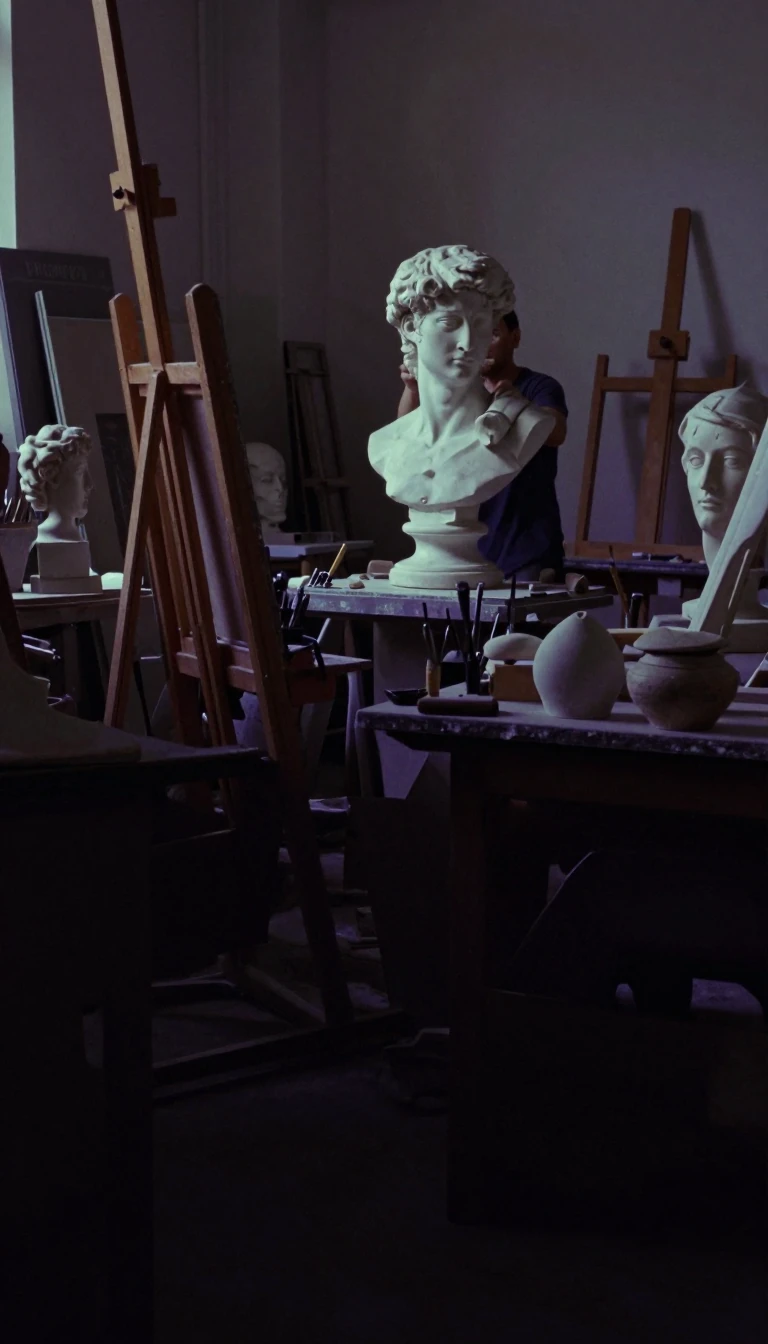
In short: From ancient Egyptian fists to the golden ratio, artists have long sought a universal mathematical key to the human form. While modern figure drawing relies on the head as a standard unit of measurement, these canons often reveal more about cultural ideals of nobility, grace, and survival than biological reality.
The study of body proportions, or artistic anatomy, explores the relationship between the human figure's elements and the whole. Ancient Egyptian art established a canon based on the fist, measured across the knuckles, which persisted for roughly 3,000 years starting around the 31st century BC. By the fifth century BCE, the Greek sculptor Polykleitos introduced the head as a primary unit of measurement. His lost work, the Canon, likely utilized geometric progressions—possibly scaling the distal phalanx of the little finger by the square root of two—to define the body's harmonious structure.
These systems are not merely descriptive; they are prescriptive. Renaissance artists and Classical Greeks often favored an eight-head-tall figure to convey dignity. In contrast, the average person is closer to 7.5 heads tall. While some modern teachers argue that mechanistic measurements hinder artistic intuition, others view these canons as essential tools that free the artist to focus on the work's deeper message. This approach echoes the philosophy of Indian art, where meditation on the form is considered superior to working directly from a model.
The search for an 'ideal' often leads to misconceptions. Leonardo da Vinci’s Vitruvian Man is frequently cited as evidence for the golden ratio, yet the figure’s navel divides the body at 0.604, not the 0.618 required by the ratio. Furthermore, ideals shift across time and geography. Paleolithic figures like the Venus of Willendorf, dating to 23,000–25,000 years ago, feature high waist-to-hip ratios, potentially symbolizing survival in successful communities. Modern research into attractiveness, such as studies on leg-to-body ratios, shows that while some proportions are judged as more appealing, excessive deviations are often perceived as indicative of disease.
Opens the Intellect+ feed with this card first. Swipe up for the next one.
Sources
- Summary by Intellect · source: Body proportions
- Also: Art Institute of Chicago — Proportion I · CC0 (data); description CC BY 4.0
To cite this card, link to https://intellectplus.co.uk/app/art-body-proportions.
How we source, check and correct cards: Editorial standards.
General information, not professional advice. Spotted an error? Flag the card or see corrections and complaints.
Intellect Plus is a visual educational discovery platform for exploring fascinating facts and ideas. Brain Food, Not Brain Rot. What is Intellect Plus?
Related
More in Visual arts · More in Art · Latest · A–Z · All topics
