Why did a disastrous 1958 play become a classic of the modern stage?
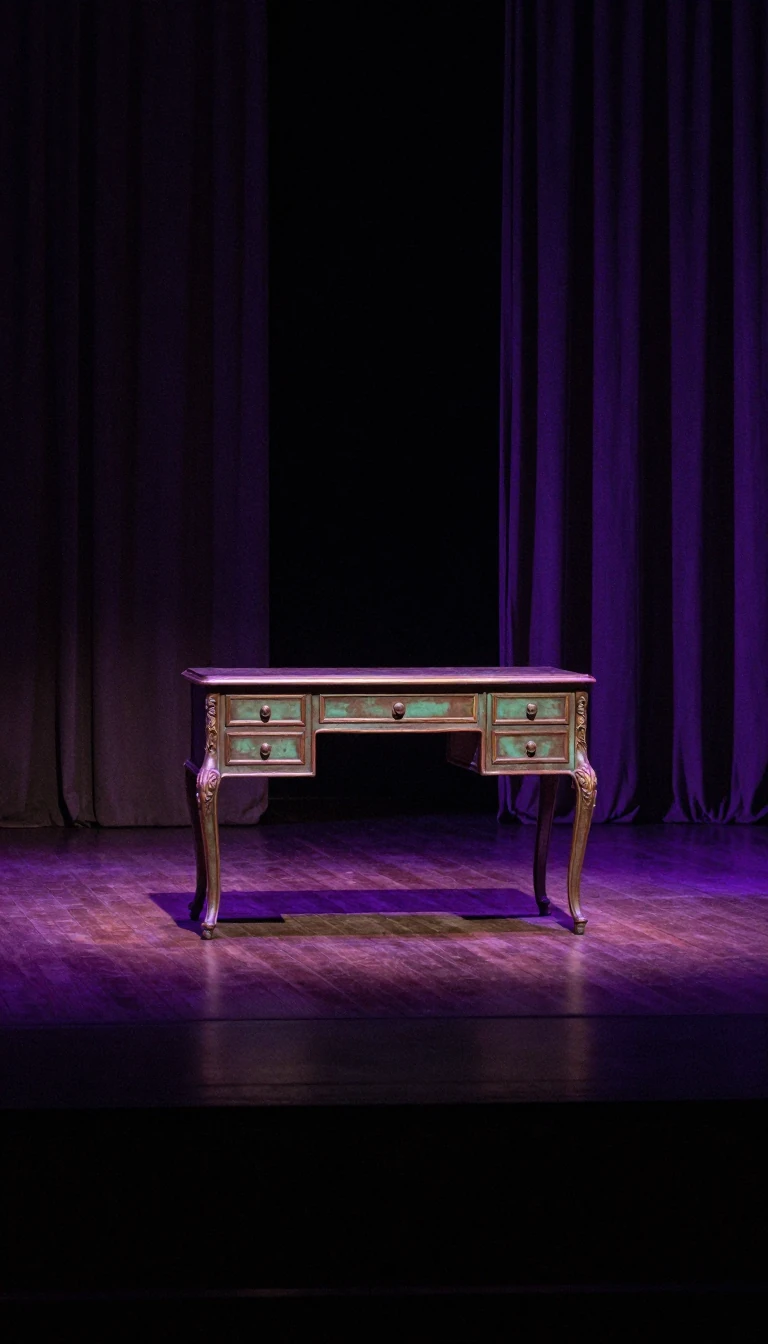
In short: Harold Pinter’s first full-length play, The Birthday Party, closed after just eight performances in London. Critics were bewildered, yet a single rave review rescued its reputation. Today, it is hailed as a masterpiece of the Theatre of the Absurd, exploring the terrifying destruction of an individual by unseen, bureaucratic forces.
The play centers on Stanley Webber, a dishevelled former pianist living in a rundown seaside boarding house. His quiet, stagnant life is shattered by the arrival of two sinister strangers, Goldberg and McCann, who claim it is Stanley’s birthday. What begins as a domestic comedy quickly descends into a nightmare of interrogation, psychological torment, and the eventual, forced removal of Stanley by his captors. Pinter’s dialogue is famously ambiguous; characters frequently contradict themselves, and the play’s expository details—including whether it is actually Stanley’s birthday or if the house is truly a boarding house—remain impossible to verify.
Pinter drew inspiration from a real-life experience in Eastbourne, where he stayed in filthy digs with a voracious landlady and a quiescent husband. These figures evolved into Meg and Petey Boles, the couple who run the house in the play. Pinter’s biographer, Michael Billington, notes that the characters resemble figures from a seaside postcard, yet they inhabit a world defined by political symbolism. Goldberg and McCann are often interpreted as agents of the state or religious apparatus, using bureaucratic clichés to strip Stanley of his identity and independence.
The play is frequently classified as a comedy of menace, a term coined by Irving Wardle. It explores themes of identity, the disintegration of language, and the individual's need for resistance against conformism. Pinter himself later linked the play’s themes of destruction to broader political realities, viewing the suppression of the individual voice as a universal horror. Despite its initial failure, the play’s enduring power lies in its ability to force the audience to confront the parts of themselves they usually hide, turning a simple birthday party into a metaphor for the fragility of life.
Opens the Intellect+ feed with this card first. Swipe up for the next one.
Sources
- Summary by Intellect · source: The Birthday Party (play)
- Also: Art Institute of Chicago — Birthday Party · CC0 (data); description CC BY 4.0
- Also: Art Institute of Chicago — birthday party I · CC0 (data); description CC BY 4.0
To cite this card, link to https://intellectplus.co.uk/app/art-the-birthday-party-play.
How we source, check and correct cards: Editorial standards.
General information, not professional advice. Spotted an error? Flag the card or see corrections and complaints.
Intellect Plus is a visual educational discovery platform for exploring fascinating facts and ideas. Brain Food, Not Brain Rot. What is Intellect Plus?
Related
More in Literature · More in Art · Latest · A–Z · All topics
