Unlike photographs, vector graphics are mathematical instructions that scale infinitely without losing any quality.
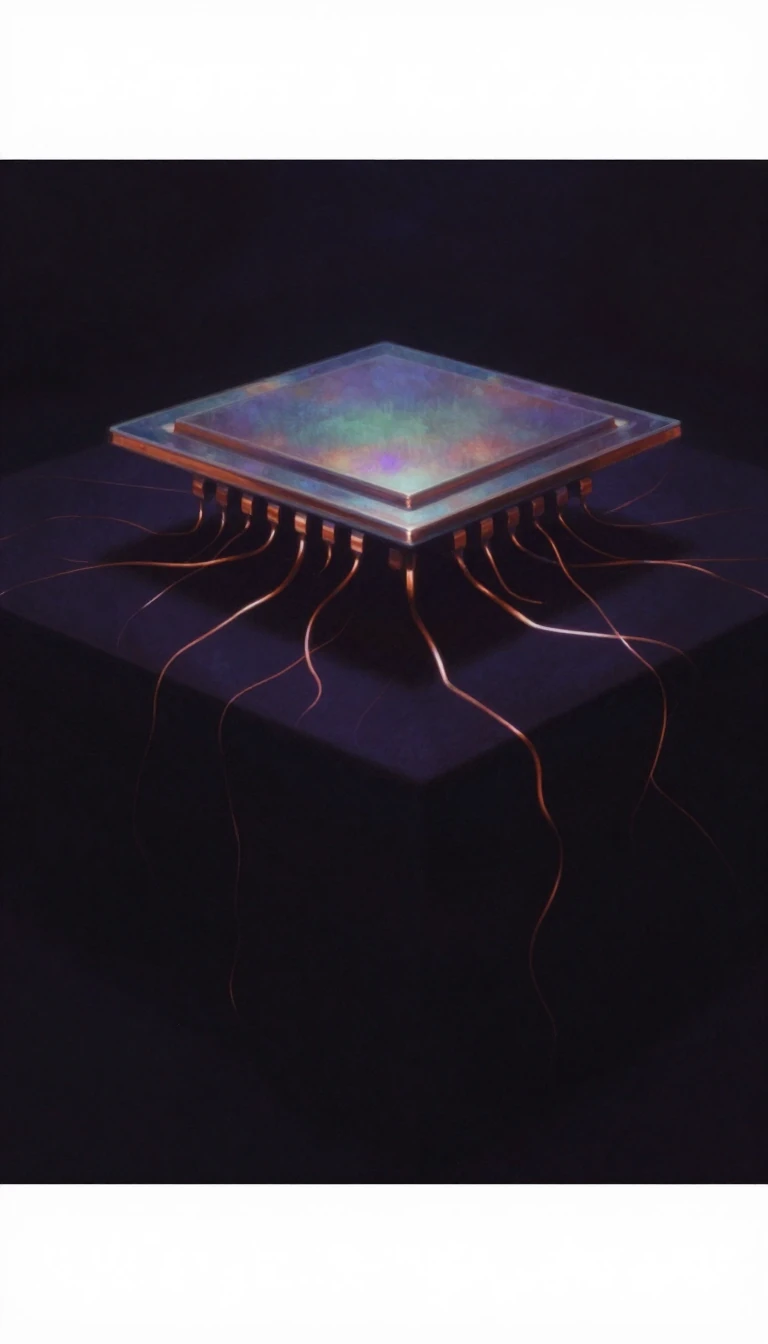
In short: While your screen displays pixels, the underlying logic of vector graphics relies on coordinate geometry. By defining shapes through vertices and mathematical paths rather than a fixed grid of dots, these images remain perfectly crisp whether printed on a business card or stretched to the size of a billboard.
Vector graphics represent a fundamental departure from raster or bitmap images. Instead of storing information for every individual pixel, vector files function as a list of mathematical descriptions. A square, for instance, can be defined by the coordinates of just three of its corners, allowing software to interpolate the boundary lines and interior space automatically. This approach relies on geometric primitives like line segments, polylines, and complex parametric curves such as Bézier curves, which allow for smooth, resolution-independent rendering.
The primary advantage of this model is scalability. Because the image is a set of instructions rather than a static grid, it can be resized infinitely without pixelation or blurring. This makes vector formats the standard for typography, engineering, and architecture, where geometric precision is paramount. Furthermore, because the file size depends on the number of elements rather than the image dimensions, vector files are often significantly smaller than high-resolution raster images. However, this efficiency comes at a cost: vector graphics are generally ill-suited for complex, continuous-tone images like photographs, which are better handled by raster formats.
Historically, vector technology was central to early computing. Displays like the vector CRT were used in the 1958 US SAGE air defense system, and Ivan Sutherland famously used vector graphics for his 1963 Sketchpad program. While modern hardware is almost exclusively raster-based, requiring vector data to be converted into pixel arrays for display, the vector model remains essential. Today, formats like SVG, PDF, and AI ensure that logos, maps, and fonts retain their integrity across any device, serving as a vital bridge between mathematical abstraction and visual output.
Opens the Intellect+ feed with this card first. Swipe up for the next one.
Sources
- Summary by Intellect · source: Vector graphics
To cite this card, link to https://intellectplus.co.uk/app/art-vector-graphics.
How we source, check and correct cards: Editorial standards.
General information, not professional advice. Spotted an error? Flag the card or see corrections and complaints.
Intellect Plus is a visual educational discovery platform for exploring fascinating facts and ideas. Brain Food, Not Brain Rot. What is Intellect Plus?
Related
More in Visual arts · More in Art · Latest · A–Z · All topics
