Willem de Kooning: The Dutch stowaway who redefined the boundaries of modern art
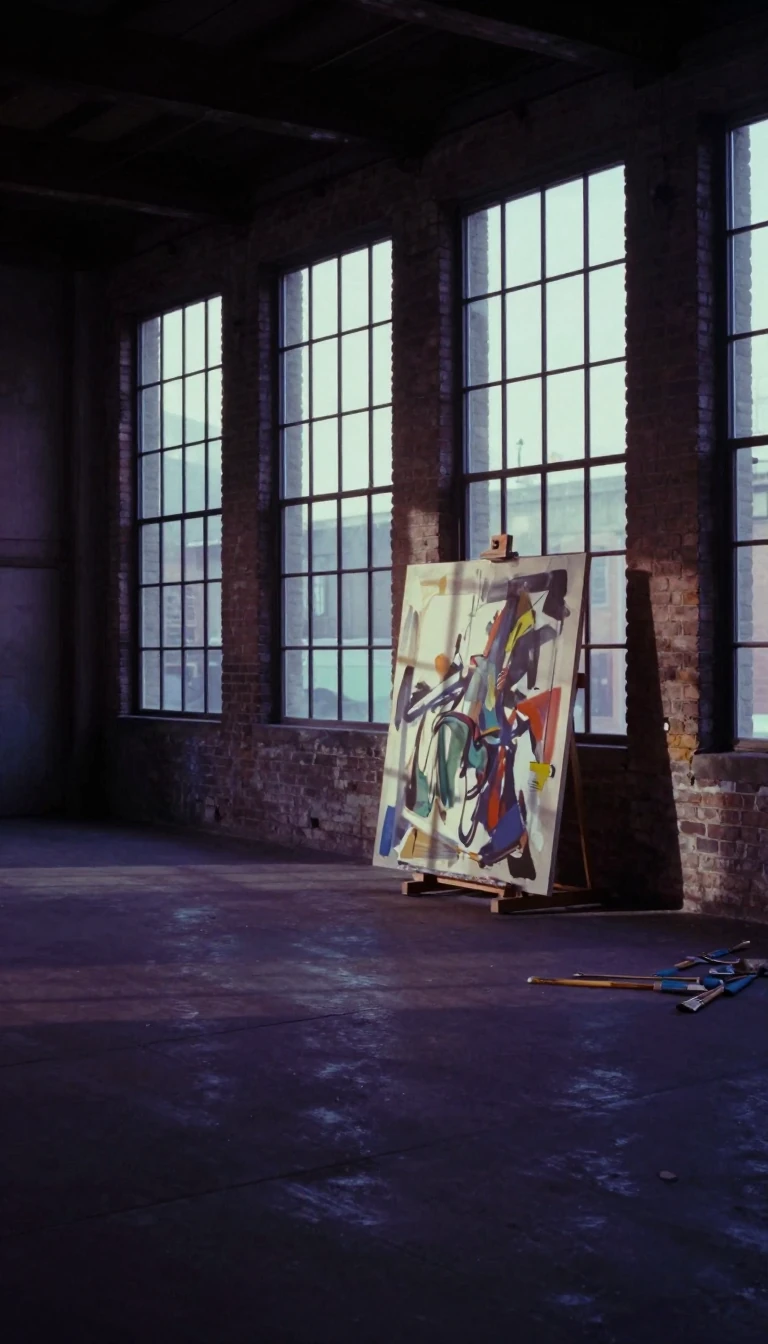
In short: Willem de Kooning arrived in America as a stowaway, working as a house painter before becoming a titan of Abstract Expressionism. By dissolving the lines between abstraction and figuration, he created a radical visual language that challenged viewers and forever altered the trajectory of 20th-century art.
Born in Rotterdam in 1904, Willem de Kooning’s journey to artistic prominence was unconventional. After training at the Rotterdam Academy of Fine Arts, he entered the United States as a stowaway in 1926. Settling in New York, he supported himself through commercial art and house painting while immersing himself in the city's burgeoning modernist scene. He formed close bonds with influential figures like Arshile Gorky and John Graham, whose work—alongside that of Picasso and Miró—deeply informed his early experiments with biomorphic shapes and geometric compositions.
De Kooning is best known as a central figure of Abstract Expressionism, specifically the 'Action painting' style. His process was famously rigorous; he would build up layers of pigment and scrape them down over months to achieve a specific tension. This is evident in his 1950 masterpiece, Excavation, which features a complex, mobile structure of calligraphic lines. While he often worked in abstract modes, he frequently returned to the human figure, particularly in his controversial Woman series of the early 1950s. These works, characterized by aggressive brushwork and visceral imagery, caused a sensation by reintroducing figurative elements at a time when his peers were moving toward pure abstraction.
Throughout his seven-decade career, de Kooning refused to be pinned down to a single style. He famously stated that he did not feel much difference between drawing and painting, often blurring the disciplines by using unconventional methods, such as drawing with his eyes closed. His work remained self-referential, frequently revisiting earlier forms and adapting techniques from his background in commercial design. By the late 1950s, his focus shifted toward more abstract, landscape-inspired imagery, yet the core of his practice—the constant, restless innovation—remained constant until his death in 1997.
The significance of de Kooning’s contribution lies in his ability to sustain a dialogue between disparate elements. Whether he was painting men, women, or abstract landscapes, he navigated the space between 'high' and 'low' art with ease. His legacy is not just in the iconic paintings he left behind, but in the way he redefined the possibilities of the canvas, proving that the act of painting itself could be a profound, emotional, and intellectual event.
Opens the Intellect+ feed with this card first. Swipe up for the next one.
Sources
- Summary by Intellect · source: Willem de Kooning | Abstract Expressionist Painter | Britannica
- Also: Willem de Kooning
- Also: Art Institute of Chicago — Excavation · CC0 (data); description CC BY 4.0
To cite this card, link to https://intellectplus.co.uk/app/art-willem-de-kooning.
How we source, check and correct cards: Editorial standards.
General information, not professional advice. Spotted an error? Flag the card or see corrections and complaints.
Intellect Plus is a visual educational discovery platform for exploring fascinating facts and ideas. Brain Food, Not Brain Rot. What is Intellect Plus?
Related
More in Visual artists · More in Art · Latest · A–Z · All topics
