Why the 'New World' was never actually new to the people living there
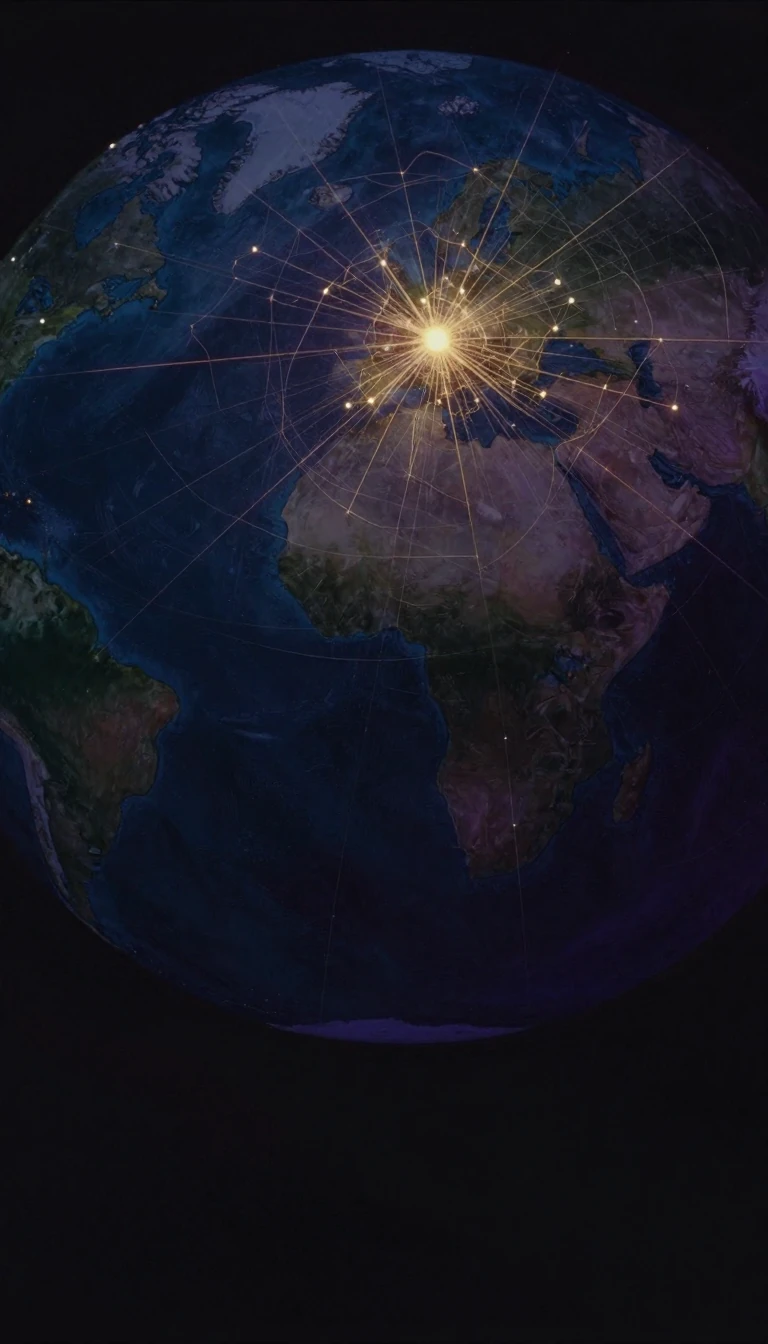
In short: The term New World emerged in the 16th century to describe the Americas, but it was a European invention that ignored the deep history of the lands. While it fundamentally changed global trade and biology, the label remains a contested relic of a colonial perspective that persists in modern terminology.
The concept of a New World was popularized by Italian explorer Amerigo Vespucci, who in 1503 argued that the lands discovered across the Atlantic were not the edges of Asia, but an entirely different continent. While others like Peter Martyr d'Anghiera had previously used terms like 'new hemisphere' or 'new globe' to describe these regions, it was Vespucci’s pamphlet, Mundus Novus, that captured the European imagination. By 1505 and 1508, at the Junta de Navegantes conferences, Spanish officials began to accept that these lands were distinct from the Indies, shifting their focus toward finding a passage to Asia.
The label was never a neutral geographic description. It reflected a European-centric view that ignored the established civilizations already thriving in the Americas. Even as late as 1516, cartographer Martin Waldseemüller retreated from his earlier recognition of 'America' as a distinct continent, reverting to classical authority that merged the Americas with Asia. It was not until the 1513 discovery of the Pacific by Vasco Núñez de Balboa and the 1519–1522 voyage of Ferdinand Magellan that the true scale of the separation between Asia and the Americas was confirmed.
Today, the term persists primarily in specialized fields like biology and agriculture. Taxonomists use it to distinguish species like New World monkeys from their Old World counterparts, while agriculturalists categorize crops based on their origins. Crops like maize, potatoes, and tomatoes are classified as New World because they were domesticated in the Americas before the 1490s, whereas staples like wheat and cattle were introduced from the Old World. Despite its utility in these contexts, critics argue that the term remains problematic, as it centers a colonial narrative that obscures the complex, pre-existing history of the Western Hemisphere.
The legacy of this classification continues to influence how we discuss history. While it accurately tracks the post-Columbian exchange of goods and species, it fails to account for the indigenous perspective. By framing the Americas as a 'new' discovery, the term effectively erased the millennia of human achievement that preceded European arrival, turning a vibrant, inhabited landscape into a blank slate for colonial expansion.
Opens the Intellect+ feed with this card first. Swipe up for the next one.
Sources
- Summary by Intellect · source: New World
To cite this card, link to https://intellectplus.co.uk/app/culture-new-world.
How we source, check and correct cards: Editorial standards.
General information, not professional advice. Spotted an error? Flag the card or see corrections and complaints.
Intellect Plus is a visual educational discovery platform for exploring fascinating facts and ideas. Brain Food, Not Brain Rot. What is Intellect Plus?
Related
More in US culture · More in Cultures · Latest · A–Z · All topics
