Did a divine geometer design the universe through mathematical patterns?
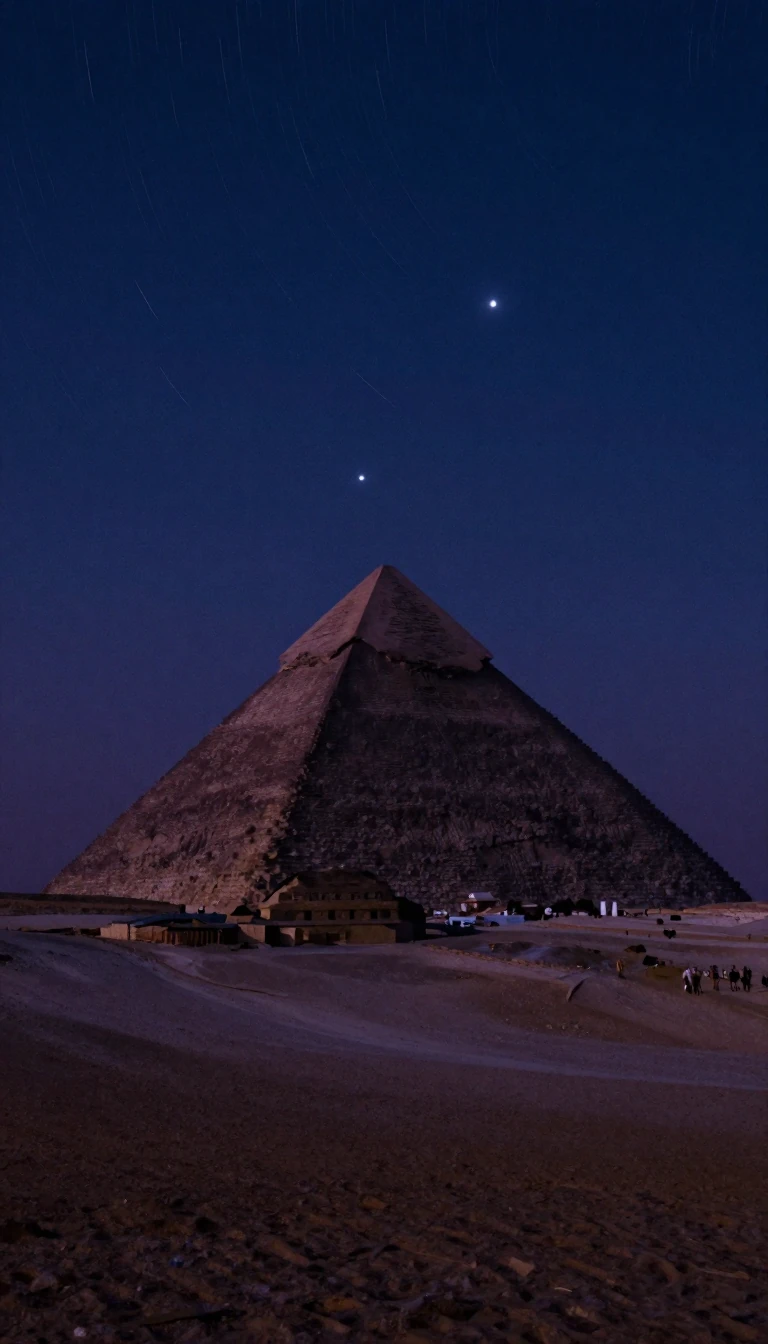
In short: From the floor plans of Medieval cathedrals to the intricate sand mandalas of Tibetan Buddhists, many cultures believe the cosmos follows a precise geometric blueprint. This concept of sacred geometry suggests that shapes and proportions are not merely aesthetic, but are the fundamental language of a divine creator.
The idea that the universe is built upon a geometric plan is an ancient one. The philosopher Plato famously suggested that God 'geometrizes continually,' a sentiment later echoed by the mathematician Carl Friedrich Gauss, who adapted the phrase to say 'God arithmetizes.' This belief manifests in diverse architectural and spiritual traditions, where specific shapes are used to bridge the gap between the earthly and the divine. In Medieval Europe, cathedrals often utilized a Latin Cross floor plan, using geometry to help viewers perceive the world through a mathematical lens.
Different cultures employ unique geometric mechanisms to channel spiritual energy. In Chinese feng shui, rectangles and squares are preferred to ensure the smooth flow of 'Chi,' or life-generating energy, while avoiding 'unnatural' angles that might obstruct it. Similarly, the Forbidden City was designed on a central axis, with the Hall of Supreme Harmony positioned at the midpoint to symbolically transform the Emperor into the center of the universe. In Hindu temple construction, the principle of Sukha Darshan uses self-similar, fractal-like patterns to reflect the cosmic model on a smaller scale.
However, the study of these patterns is not without critique. While some see profound meaning in every intersection, scholar Stephen Skinner warns against 'unanchored geometry'—the tendency to overlay geometric diagrams onto natural objects or structures where the lines do not actually intersect major physical points. Despite this, the influence of sacred geometry remains visible in art, from the cosmic circles in Dante’s Divine Comedy to the complex, ritualistically destroyed sand mandalas of Tibetan Buddhism, which use precisely calculated 'Brahman lines' to house deities.
Opens the Intellect+ feed with this card first. Swipe up for the next one.
Sources
- Summary by Intellect · source: Sacred geometry
To cite this card, link to https://intellectplus.co.uk/app/culture-sacred-geometry.
How we source, check and correct cards: Editorial standards.
General information, not professional advice. Spotted an error? Flag the card or see corrections and complaints.
Intellect Plus is a visual educational discovery platform for exploring fascinating facts and ideas. Brain Food, Not Brain Rot. What is Intellect Plus?
Related
More in UK & Irish culture · More in Cultures · Latest · A–Z · All topics
