Blue cheese is a controlled accident of mold, chemistry, and cave-aged fermentation
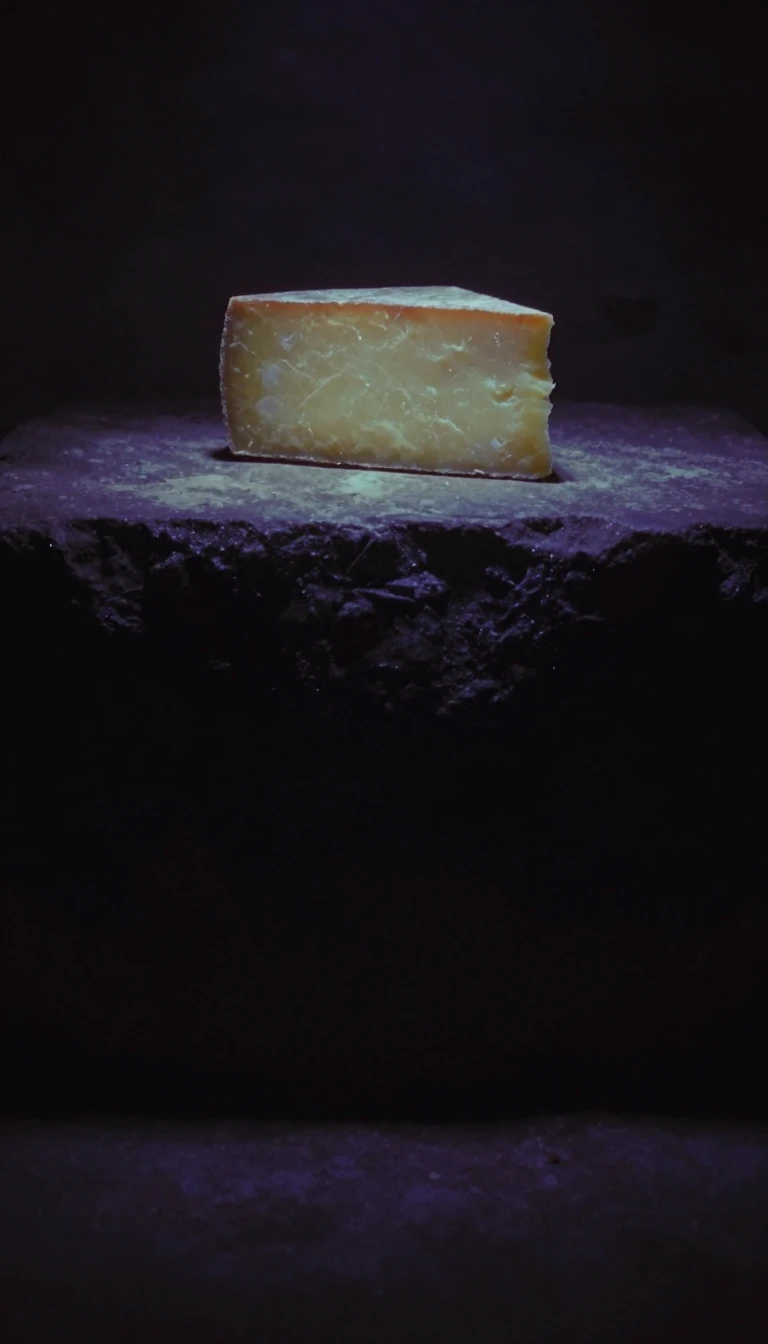
In short: Blue cheese is not merely spoiled dairy; it is a precise biological feat. By introducing specific mold spores and manipulating milk proteins with rennet, cheesemakers transform liquid into complex, aromatic wheels. From ancient cave-aged discoveries to modern industrial standards, the science of blue cheese relies on oxygen, salt, and time.
The transformation of milk into blue cheese begins with the manipulation of casein micelles. In raw milk, these particles are kept from aggregating by a 'hairy layer' of kappa-casein. The addition of rennet, an enzyme derived from calf stomach lining, cleaves this layer, allowing the micelles to collide and form solid curds. Once these curds are formed, they are inoculated with Penicillium roqueforti or Penicillium glaucum. These molds are aerobic, meaning they require oxygen to thrive. To facilitate their growth, cheesemakers pierce the aging cheese loaves, creating air tunnels that allow the mold to spread and develop the characteristic blue-green veins.
Flavor development is a complex biochemical process driven by lipolysis and proteolysis. As the cheese ripens over 60 to 90 days in temperature-controlled environments—typically 8 to 10 degrees Celsius with high humidity—the mold breaks down fats into free fatty acids. These are further metabolized into methyl ketones, such as 2-pentanone and 2-heptanone, which provide the cheese's signature sharp aroma and taste. Interestingly, the bacterium Brevibacterium linens, which contributes to the scent profile, is the same organism associated with human foot odor, highlighting the strange biological origins of these pungent flavors.
While the mold produces various mycotoxins like roquefortine, their presence is generally considered safe due to low concentrations and the instability of certain compounds like PR toxin. Modern production is strictly regulated; for instance, the United States mandates a minimum 50 percent milkfat content, while the European Union protects the names of traditional varieties like Roquefort and Gorgonzola through designation of origin status. Whether it is the ancient, cave-ripened Roquefort or the 20th-century Danablu, blue cheese remains a testament to human ingenuity in harnessing microbial life to create culinary complexity.
The history of this craft is as layered as the cheese itself. Evidence from Hallstatt, Austria, suggests that miners consumed blue cheese as early as 800 to 400 BC. Legends persist, such as the tale of a young boy who abandoned his meal in a cave, only to return months later to find his cheese transformed by mold. Today, the process is a blend of tradition and rigorous science, ensuring that the delicate balance of moisture, salt, and microbial activity produces a consistent, high-quality product.
Opens the Intellect+ feed with this card first. Swipe up for the next one.
Sources
- Summary by Intellect · source: Blue cheese
To cite this card, link to https://intellectplus.co.uk/app/food-blue-cheese.
How we source, check and correct cards: Editorial standards.
General information, not professional advice. Spotted an error? Flag the card or see corrections and complaints.
Intellect Plus is a visual educational discovery platform for exploring fascinating facts and ideas. Brain Food, Not Brain Rot. What is Intellect Plus?
Related
More in Cooking, food and drink · More in Food & Drink · Latest · A–Z · All topics
