The Osage orange was a vital barrier for American settlers before barbed wire existed.
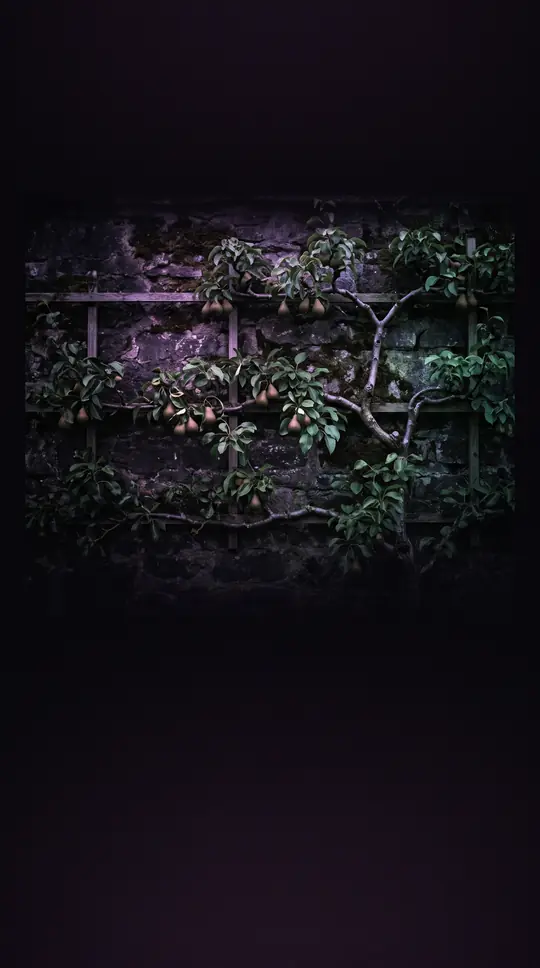
In short: Known as the hedge apple, this thorny tree once defined the American landscape. Its dense, interwoven branches created impenetrable barriers that kept livestock contained, serving as a crucial stop-gap for westward expansion. Today, it remains a botanical curiosity, prized for its rot-resistant wood and its mysterious, debated evolutionary history.
The Osage orange, or Maclura pomifera, is a deciduous tree native to a small region of the south-central United States. Before the invention of barbed wire in 1874, settlers relied on the tree's ability to sprout abundant, thorny shoots when pruned. By interweaving these branches, they created dense, living fences described as horse-high, bull-strong, and pig-tight. This utility made it a staple of the Great Plains Shelterbelt, a massive WPA project launched in 1934 that planted over 220 million trees across 18,600 miles to combat soil erosion.
Beyond its role as a fence, the tree is famous for its exceptionally strong, flexible wood. Native American groups, including the Osage and Comanche, highly valued it for crafting bows and war clubs, with some historians suggesting this resource contributed to the wealth of the Spiroan Mississippian culture. The wood is so dense that it is twice as hard as white oak, boasting a Janka hardness of 11.64 kN. It is remarkably rot-resistant, making it ideal for fence posts, tool handles, and even the construction of the schooner Sultana in 2001.
The tree's fruit, a bumpy, yellow-green syncarp, has sparked scientific debate. Some ecologists have proposed that the fruit is an evolutionary anachronism—a plant that coevolved with extinct Pleistocene megafauna like mammoths or ground sloths, which would have consumed the fruit and dispersed its seeds. However, this hypothesis is controversial and criticized by some as a just-so story lacking empirical evidence. Recent studies have shown that modern animals, including horses and squirrels, are largely ineffective at dispersing the seeds, leaving the tree's original ecological strategy a subject of ongoing academic speculation.
Despite its name, the tree is not related to the orange. It is a member of the Moraceae family, and while its fruit is not poisonous to humans, it is generally considered inedible due to its hard, dry texture and milky latex. While some claim the fruit repels insects, the EPA has previously flagged such marketing as false advertising, noting that natural concentrations of the relevant compounds are too low to be effective.
Opens the Intellect+ feed with this card first. Swipe up for the next one.
Sources
- Summary by Intellect · source: Maclura pomifera
- Also: GBIF — Bodark (Maclura pomifera) · http://creativecommons.org/licenses/by/4.0/legalcode
To cite this card, link to https://intellectplus.co.uk/app/gardening-maclura-pomifera.
How we source, check and correct cards: Editorial standards.
General information, not professional advice. Spotted an error? Flag the card or see corrections and complaints.
Intellect Plus is a visual educational discovery platform for exploring fascinating facts and ideas. Brain Food, Not Brain Rot. What is Intellect Plus?
Related
More in Plants · More in Gardening · Latest · A–Z · All topics
