Your immune system reads your body like a library of nametags called antigens.
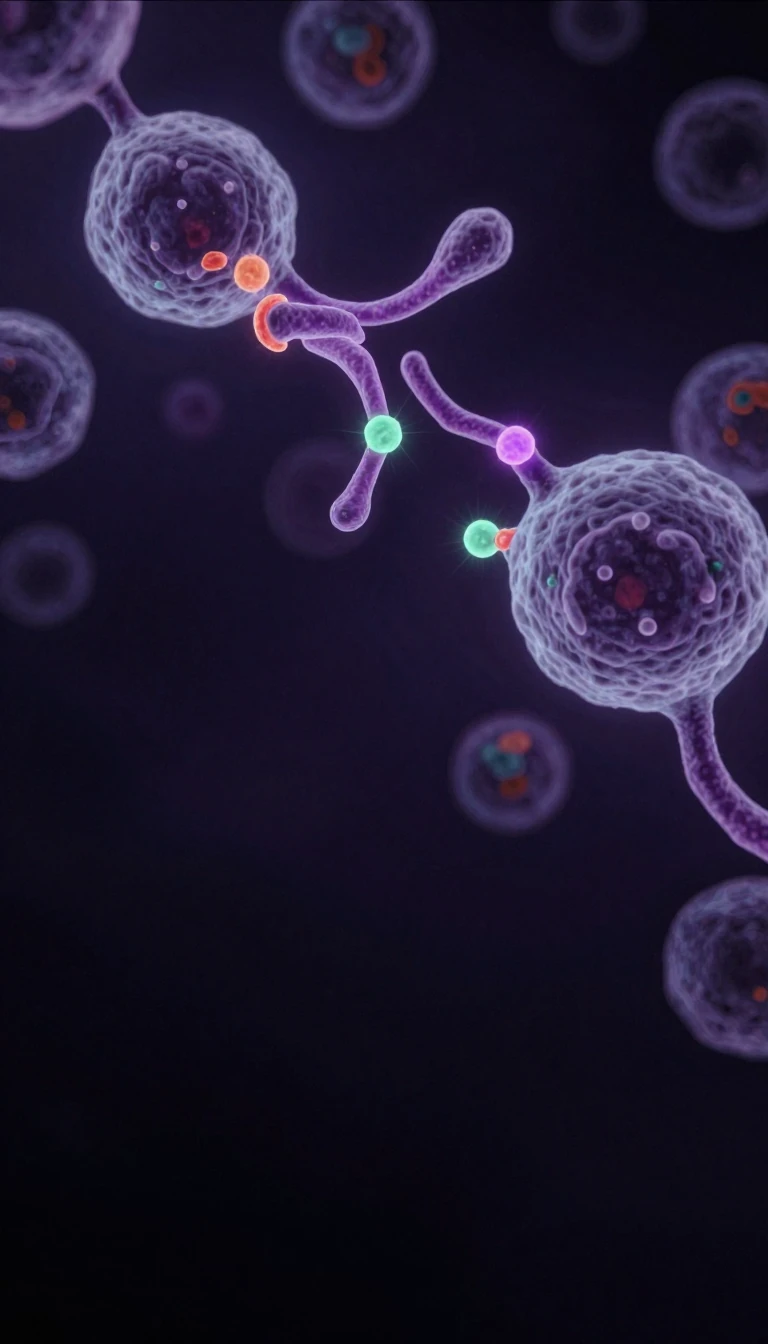
In short: Every cell in your body carries a unique molecular signature that tells your immune system whether you are a friend or a foe. These markers, known as antigens, act as biological nametags. When the system detects a mismatch, it launches a precise, lock-and-key defense to neutralize the intruder.
At their core, antigens are molecules—typically proteins or sugars—that the immune system uses to distinguish self from non-self. Your own cells display 'self' antigens, which the body recognizes as belonging to you. Conversely, foreign substances like bacteria, viruses, or pollen carry 'non-self' antigens. When these intruders enter, specialized cells such as macrophages and dendritic cells act as detectives, devouring the invaders and displaying their fragments as 'wanted posters' to T cells. If a T cell recognizes the threat, it triggers a full-scale immune response.
The primary weapon in this defense is the antibody. B cells produce these proteins to bind specifically to an antigen's unique shape, much like a key fitting into a lock. Once bound, the immune system can destroy the target. This process is so effective that the body retains 'immunological memory' of past threats, allowing for a faster response upon re-exposure. However, this system is not infallible; pathogens can mutate, changing their surface antigens so that existing antibodies no longer fit, effectively hiding from the immune system's reach.
The complexity of this system is evident in clinical applications, such as organ transplantation. Research into ABO-incompatible kidney transplants has shown that the expression levels of blood group antigens on a graft can influence the risk of rejection. In one study of 28 recipient-donor pairs, higher antigen expression levels were linked to increased antibody-mediated rejection rates. Furthermore, scientists are developing advanced detection methods, such as terbium-based fluorescent immunoassays, which can identify specific bacterial antigens like those from MRSA in as little as 15 minutes, demonstrating the critical role of antigen identification in modern medicine.
While the term 'antigen' is often used broadly, it is technically distinct from an 'immunogen'—a substance capable of inducing an immune response. Not all antigens are immunogenic, and some substances, like haptens, require a carrier molecule to trigger a reaction. Understanding these nuances is essential for everything from vaccine development to managing autoimmune diseases, where the body mistakenly attacks its own 'self' antigens.
Opens the Intellect+ feed with this card first. Swipe up for the next one.
Sources
- Summary by Intellect · source: Antigen: What It Is, Function, Types, & Testing
- Also: Antigen
- Also: B3GALT5 regulates renal A/B antigen levels: a determinant of prognosis and rejection in ABO-incompatible kidney transplantation.
- Also: A highly sensitive terbium-keton complex-based fluorescent immunoassay for detection of methicillin-resistant <i>Staphylococcus aureus</i> (MRSA) antigen in milk, farmer hand swabs, and cattle drinking water.
To cite this card, link to https://intellectplus.co.uk/app/health-antigen.
How we source, check and correct cards: Editorial standards.
General information, not professional advice. Spotted an error? Flag the card or see corrections and complaints.
Intellect Plus is a visual educational discovery platform for exploring fascinating facts and ideas. Brain Food, Not Brain Rot. What is Intellect Plus?
Related
More in Anatomy and morphology · More in Health · Latest · A–Z · All topics
