Why your brain rebels against beautiful art made by machines
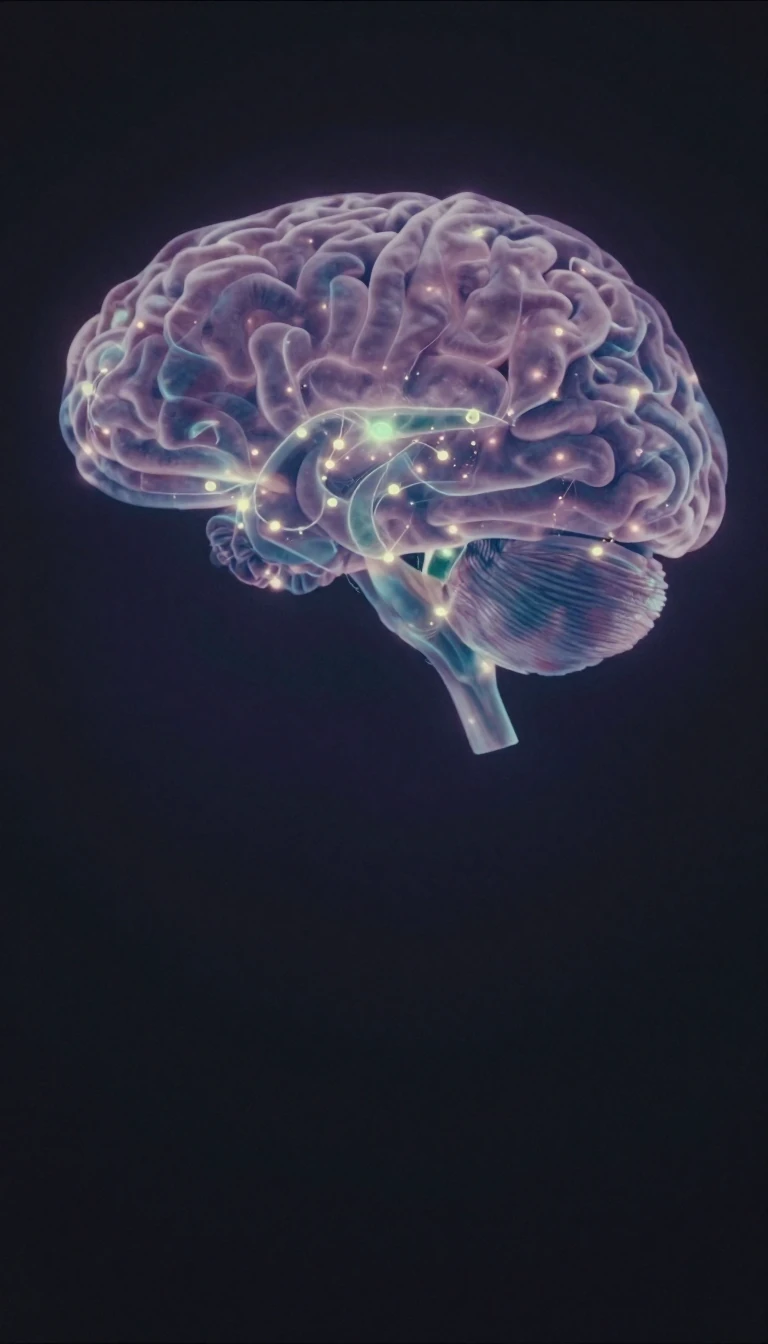
In short: We often find AI art aesthetically pleasing, yet it frequently triggers a strange sense of anger or unease. This isn't just a preference; it is a psychological friction caused by the breakdown of how humans map creativity, agency, and the
The psychological resistance to AI-generated art stems from a violation of "lay theories of creativity." Humans intuitively link artistic value to a coherent history of human agency—the "spark" of embodied insight. When we view a masterpiece, our brains attempt to reconstruct a unified generative history that links a human's intention, their physical process, and the final outcome.
AI disrupts this reconstruction by "proceduralizing" the associative processes that usually underlie human creative insight. Because the link between the creative performance and the artistic result is no longer reconstructible, the artifact fails to satisfy several psychological mechanisms. These include "magical contagion" (the feeling of a human's essence in the work), the "extended self," and "communicative inference," all of which rely on perceiving a human mind as the source of the action.
This structural breakdown leads to two specific emotional responses: "aesthetic anger," triggered by the violation of expectations regarding human authorship, and "ontological unease," which arises from the simulation of uniquely human processes by a non-biological system. While AI can produce high-quality surface cues, it lacks the "embodied insight" that our cognitive frameworks use to categorize and value art.
Historically, the concept of inspiration has shifted from the divine to the internal. Ancient Greeks viewed it as "furor poeticus" (divine frenzy), while 18th-century thinkers like John Locke saw it as mental association. In the 19th century, Romantics viewed it as a mystical attunement to "winds," and 20th-century psychoanalysts like Freud and Jung moved the source into the inner psyche or archetypes. Modern psychology, however, generally treats inspiration as an entirely internal process, distinct from the technical skill of "ingenium."
Opens the Intellect+ feed with this card first. Swipe up for the next one.
Sources
- Summary by Intellect · source: Beyond ethics and aesthetics: perceived lay theory violations and agency disruption in AI-generated art.
- Also: Artistic inspiration
To cite this card, link to https://intellectplus.co.uk/app/health-artistic-inspiration.
How we source, check and correct cards: Editorial standards.
General information, not professional advice. Spotted an error? Flag the card or see corrections and complaints.
Intellect Plus is a visual educational discovery platform for exploring fascinating facts and ideas. Brain Food, Not Brain Rot. What is Intellect Plus?
Related
More in Mental health · More in Health · Latest · A–Z · All topics
