Your dermis is more than just skin; it is the structural foundation of you.
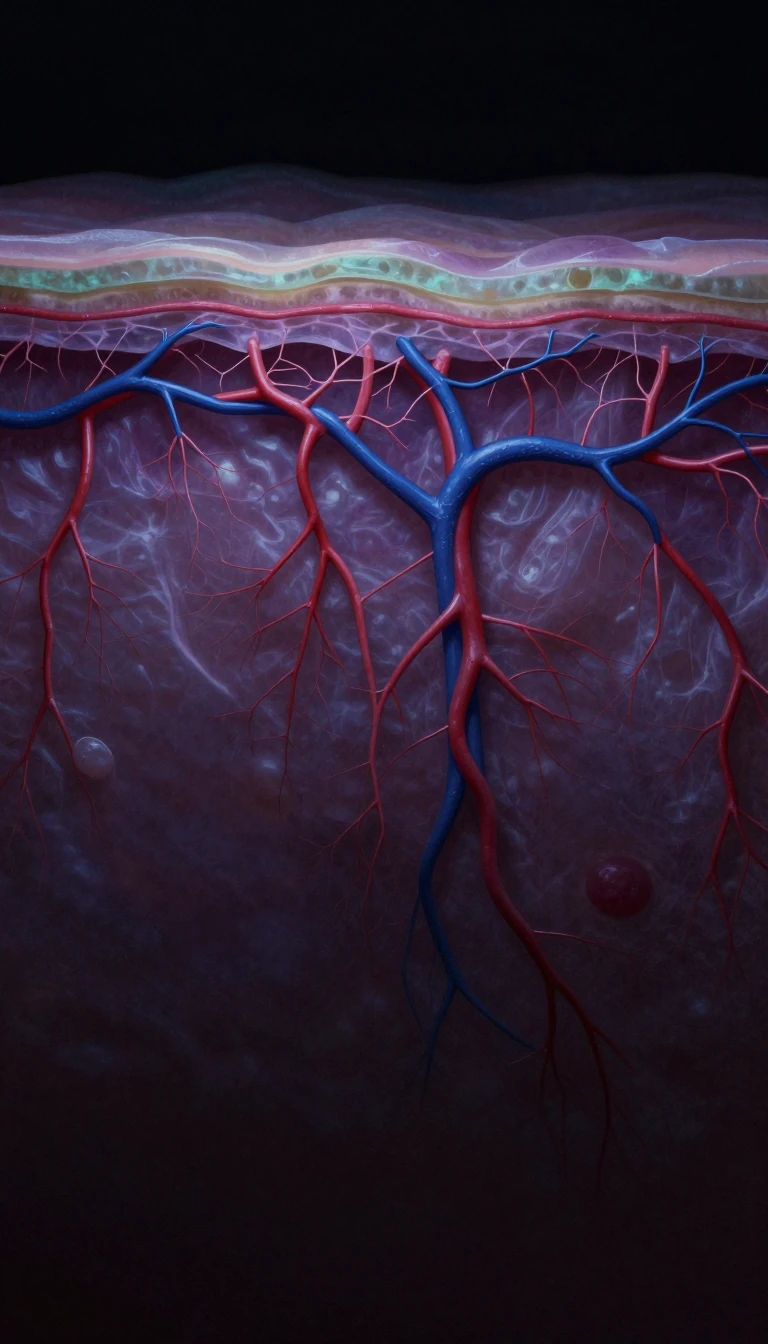
In short: Beneath the thin surface of your epidermis lies the dermis, a thick, complex layer that acts as your body's structural anchor. From the leather-like reticular base to the finger-like papillae that lock your skin together, this middle layer manages everything from your sense of touch to your body's temperature.
The dermis, also known as the corium—a Latin term for leather—is the thickest layer of human skin. It sits between the thin, protective epidermis and the underlying hypodermis. While the epidermis is primarily concerned with hydration and barrier protection, the dermis provides the mechanical strength and elasticity required for the body to move and stretch without tearing.
Structurally, the dermis is divided into two distinct regions. The upper papillary dermis is thin and features nipple-like projections called papillae. These structures interlock with the epidermis like fingers, creating a massive surface area that facilitates the exchange of nutrients and waste. This junction is critical; it anchors the layers together, preventing separation. In the hands and feet, these papillae form the ridges we recognize as fingerprints.
Beneath this lies the reticular dermis, a dense, thick layer composed of irregular connective tissue. This is the engine room of the skin, housing hair follicles, sweat and oil glands, nerve endings, and blood vessels. It is packed with collagen for strength and elastin for flexibility. The orientation of these fibers creates tension lines, which are significant in surgical procedures, as incisions made along these lines often heal more effectively.
Beyond its role in daily function, the dermis is a focus of modern regenerative medicine. In cases of severe burns, the loss of this dermal matrix is a major clinical challenge. Because the dermis does not easily regenerate, researchers are increasingly using artificial dermal matrices, synthetic biodegradable materials, and even acellular fish skin to reconstruct the wound bed. These tools aim to restore the biological functionality of the dermis, providing the necessary foundation for the epidermis to regrow and preventing the functional impairment caused by scarring.
Opens the Intellect+ feed with this card first. Swipe up for the next one.
Sources
- Summary by Intellect · source: Dermis (Middle Layer of Skin): Layers, Function & Structure
- Also: Dermis
- Also: Beyond Early Excision and Grafting: A Perspective on Tissue-Preserving and Regenerative Topical Burn Wound Care.
To cite this card, link to https://intellectplus.co.uk/app/health-dermis.
How we source, check and correct cards: Editorial standards.
General information, not professional advice. Spotted an error? Flag the card or see corrections and complaints.
Intellect Plus is a visual educational discovery platform for exploring fascinating facts and ideas. Brain Food, Not Brain Rot. What is Intellect Plus?
Related
More in Anatomy and morphology · More in Health · Latest · A–Z · All topics
