Your skin is a complex, living organ that constantly renews its own protective barrier.
In short: As the body's largest organ, skin does far more than hold you together. It is a dynamic, three-layered system that regulates temperature, shields you from infection, and processes sensory input. Every month, you effectively grow a new outer layer, shedding millions of cells in a continuous cycle of biological renewal.
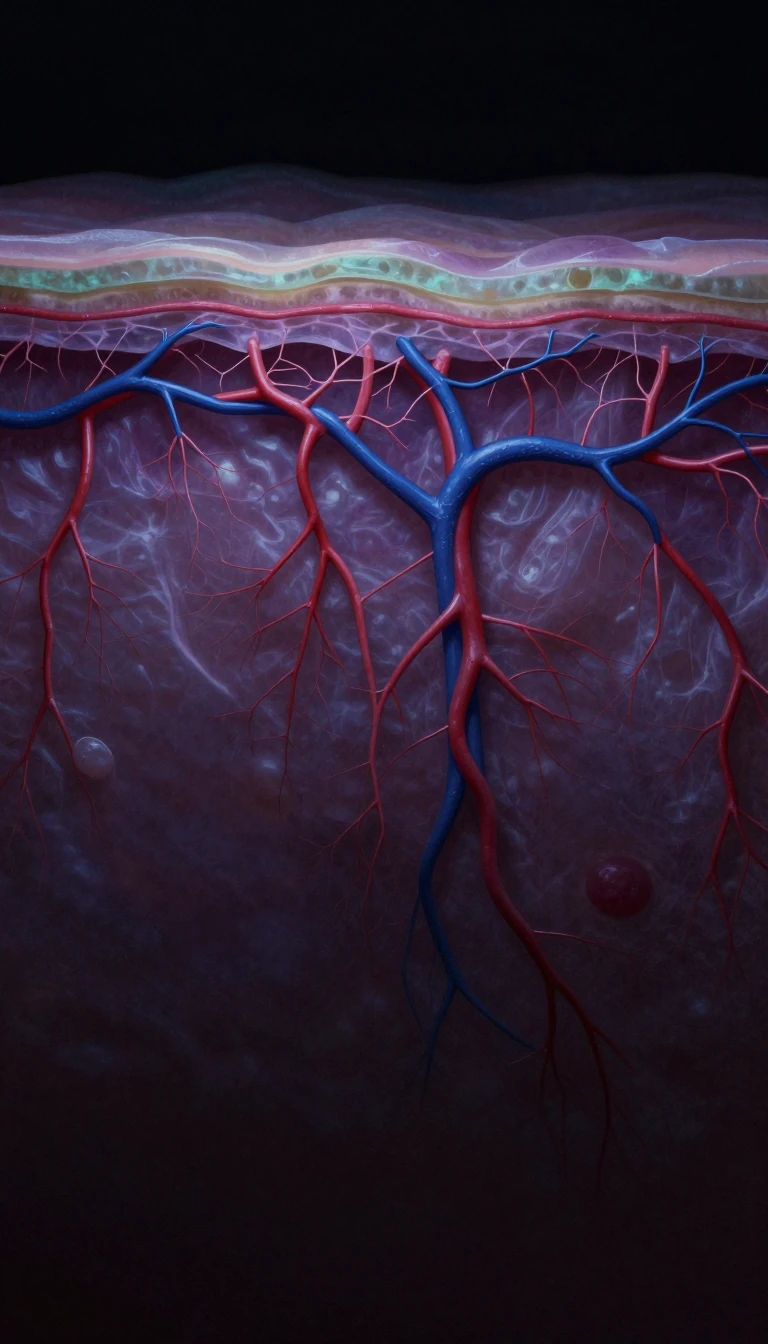
The skin is organized into three distinct layers: the epidermis, the dermis, and the subcutis (or hypodermis). The epidermis, the outermost layer, acts as the primary shield. It is composed of cells that undergo a process called keratinization, where they move upward from the basal layer, fill with the protein keratin, and eventually slough off. Humans shed approximately 40,000 old skin cells daily, resulting in a complete replacement of this outer layer roughly every 30 days. This layer is avascular, meaning it contains no blood vessels; instead, it relies on diffusion from the underlying dermis for nutrients.
Beneath the epidermis lies the dermis, which makes up the bulk of the skin's thickness. This fibrous layer is packed with collagen for strength and elastin for flexibility, allowing the skin to stretch and return to its original shape. The dermis is a hub of activity, housing hair follicles, sweat glands, and sebaceous glands. It is also richly supplied with blood vessels that serve a critical role in thermoregulation. By contracting or dilating these vessels, the body manages heat dissipation, while sweat glands provide additional cooling through evaporation.
The deepest layer, the subcutis, consists of fat and connective tissue that cushions muscles and bones while providing insulation. Beyond its physical structure, the skin is a sensory powerhouse, containing thousands of nerve endings per square inch that detect touch, temperature, and pain. It is also a site of immense genetic activity, with about 70% of all human protein-coding genes expressed within its tissues. This complex architecture ensures that the skin remains a versatile interface, constantly adapting to environmental stressors while maintaining the internal stability required for survival.
Opens the Intellect+ feed with this card first. Swipe up for the next one.
Sources
- Summary by Intellect · source: Human skin | Definition, Layers, Types, & Facts | Britannica
- Also: Skin: Layers, Structure and Function
- Also: Human skin
To cite this card, link to https://intellectplus.co.uk/app/science-human-skin.
How we source, check and correct cards: Editorial standards.
General information, not professional advice. Spotted an error? Flag the card or see corrections and complaints.
Intellect Plus is a visual educational discovery platform for exploring fascinating facts and ideas. Brain Food, Not Brain Rot. What is Intellect Plus?
Related
More in Human body & genes · More in Science · Latest · A–Z · All topics
