Your body's hidden inner lining is a master of rapid, microscopic self-repair
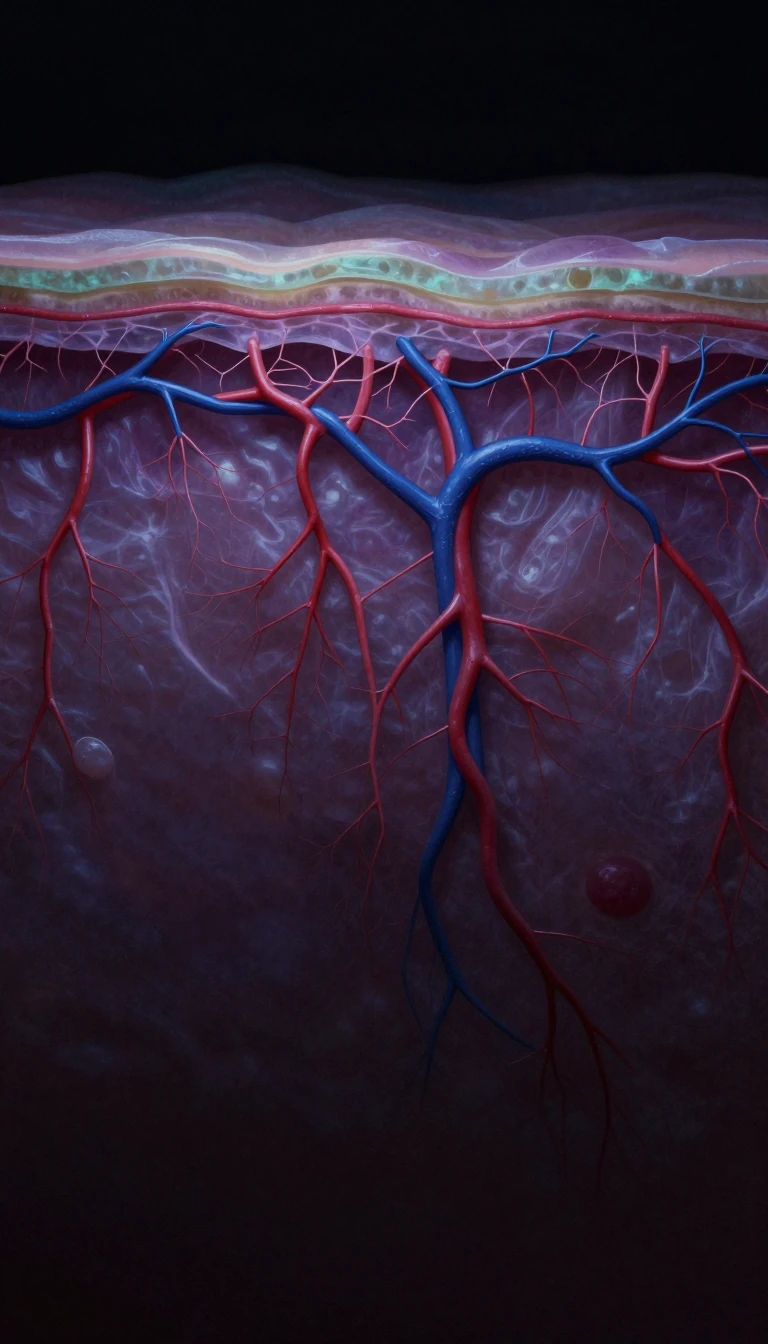
In short: The endothelium is a vast, single-cell layer lining every blood vessel in your body. While it acts as a resilient barrier, it is also surprisingly dynamic. When immune cells need to pass through, the endothelium creates temporary pores, then instantly seals them to prevent dangerous leaks and systemic inflammation.
Spanning roughly 60,000 miles of vessels, the endothelium is one of the body's largest organs. It is composed of at least one trillion cells, each measuring only a few dozen micrometers across. Despite being just a few hundred nanometers thick, this structure is remarkably tough, constantly enduring blood pressure, stretching, and compression while maintaining a vital partition between tissues and the circulatory system.
Recent research has unveiled the mechanism behind its rapid healing. When immune cells, or leukocytes, pierce the endothelium to reach an infection, they create micro-wounds. Scientists have discovered that the endothelium senses these breaches not through physical pulling, but through a sudden loss of isometric tension. This force-unloading signal triggers the cells to generate specialized structures called ventral lamellipodia, which migrate to close the gaps within minutes.
This restorative process relies on the localized production of reactive oxygen species, specifically hydrogen peroxide. While high levels of these molecules are typically associated with cellular damage, the endothelium uses them in precise, low-level bursts to coordinate wound closure. If this delicate signaling is disrupted, the resulting leaks can lead to severe conditions like sepsis or acute lung injury, highlighting how the endothelium's health is fundamental to systemic stability.
Beyond its role as a barrier, the endothelium is a complex regulator of vascular function. It controls blood pressure through vasoconstriction and vasodilation, manages clotting, and facilitates the growth of new vessels. Because it is in constant contact with blood, it is also susceptible to damage from high cholesterol, tobacco smoke, and hypertension, which can impair its protective capacity and contribute to diseases like atherosclerosis.
Opens the Intellect+ feed with this card first. Swipe up for the next one.
Sources
- Summary by Intellect · source: Endothelium, Heal Thyself
- Also: Endothelium | anatomy | Britannica
- Also: What is the Endothelium?
- Also: Endothelium
To cite this card, link to https://intellectplus.co.uk/app/health-endothelium.
How we source, check and correct cards: Editorial standards.
General information, not professional advice. Spotted an error? Flag the card or see corrections and complaints.
Intellect Plus is a visual educational discovery platform for exploring fascinating facts and ideas. Brain Food, Not Brain Rot. What is Intellect Plus?
Related
More in Anatomy and morphology · More in Health · Latest · A–Z · All topics
