Your body is mostly a vast, carefully managed ocean outside of your cells.
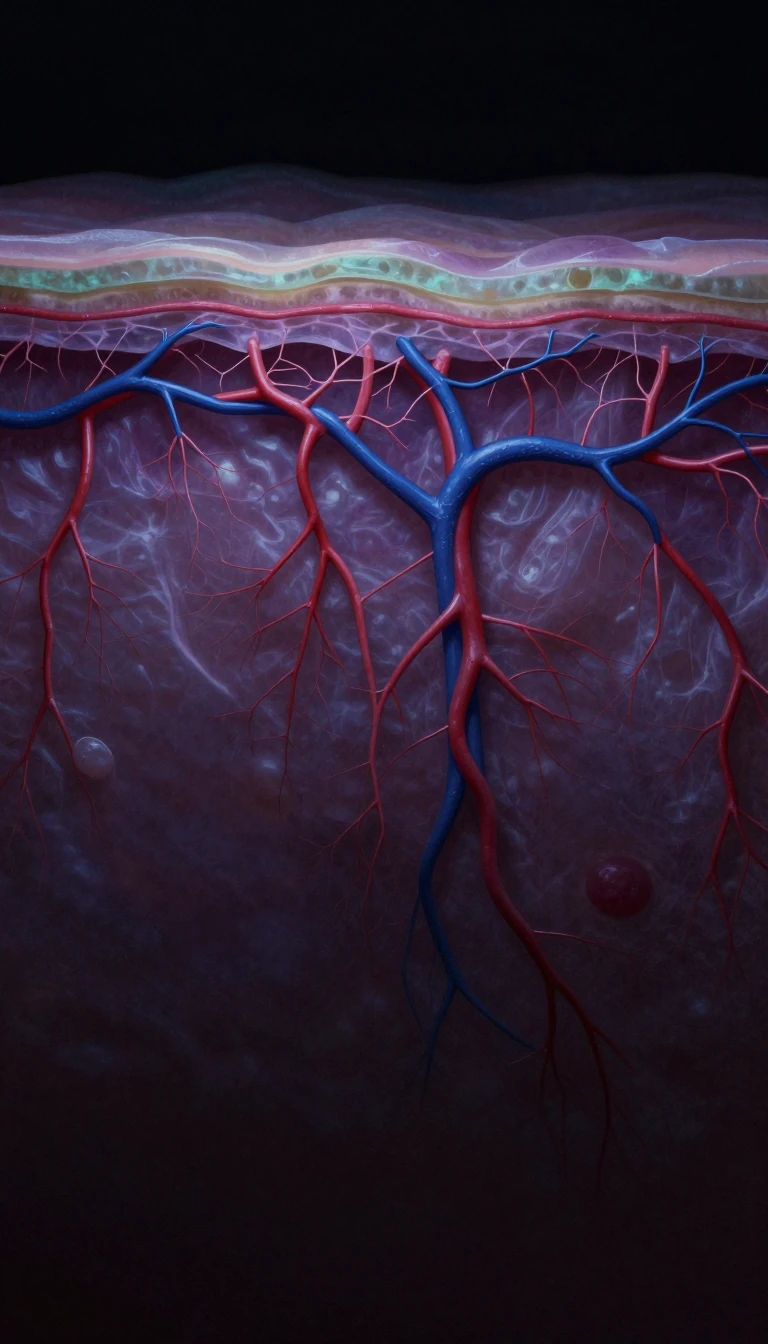
In short: You are not just a collection of cells; you are a walking ecosystem. About one-third of your body fluid exists outside your cells, forming a critical internal sea. This extracellular fluid acts as your body's personal life-support system, constantly circulating to deliver nutrients and maintain the delicate balance required for survival.
Extracellular fluid (ECF) is the internal environment that bathes every cell in a multicellular organism. In a healthy adult, total body water accounts for 50–60% of body weight, with ECF comprising about one-third of that total. It is primarily composed of interstitial fluid—the liquid between cells—and blood plasma, which together make up at least 97% of the ECF. A smaller fraction, known as transcellular fluid, includes specialized liquids like cerebrospinal fluid, joint fluid, and the aqueous humor of the eye.
The composition of ECF is strictly regulated by homeostatic mechanisms to ensure cells can function. For instance, the concentration of sodium ions is significantly higher outside the cell than inside, while potassium ions are more concentrated within the cell. This gradient creates an electrical charge across cell membranes, known as the resting potential, which is essential for nerve and muscle activity. Precise levels of ionized calcium are equally vital; even minor fluctuations can trigger muscle spasms or lethargy by altering the structure of membrane proteins and ion channels.
The circulatory system acts as a constant stirring mechanism, ensuring that nutrients, hormones, and gases are distributed evenly throughout the body in about a minute. At the capillary level, water and small molecules move between plasma and interstitial fluid through pores, while larger proteins like albumin remain in the blood to create the oncotic pressure that pulls fluid back into circulation. Any excess fluid is collected by the lymphatic system and returned to the blood, a process that can be disrupted in diseases like ALS, where glymphatic dysfunction is linked to changes in ECF and white matter degeneration.
Beyond simple transport, ECF facilitates the exchange of oxygen and carbon dioxide. While oxygen has poor solubility in water and requires plasma lipoproteins for efficient transport, carbon dioxide is highly soluble and diffuses easily. This complex, dynamic fluid environment is not merely a passive filler; it is a highly controlled medium that allows for the precise chemical signaling and metabolic exchange necessary to maintain life.
Opens the Intellect+ feed with this card first. Swipe up for the next one.
Sources
- Summary by Intellect · source: Extracellular fluid
- Also: Putative glymphatic dysfunction links extracellular fluid dysregulation to white matter degeneration and clinical impairment in amyotrophic lateral sclerosis.
- Also: Extracellular fluid | Definition, Examples, Function, & Facts | Britannica
To cite this card, link to https://intellectplus.co.uk/app/health-extracellular-fluid.
How we source, check and correct cards: Editorial standards.
General information, not professional advice. Spotted an error? Flag the card or see corrections and complaints.
Intellect Plus is a visual educational discovery platform for exploring fascinating facts and ideas. Brain Food, Not Brain Rot. What is Intellect Plus?
Related
More in Anatomy and morphology · More in Health · Latest · A–Z · All topics
