You are mostly water, but where exactly is all that fluid hiding inside you?
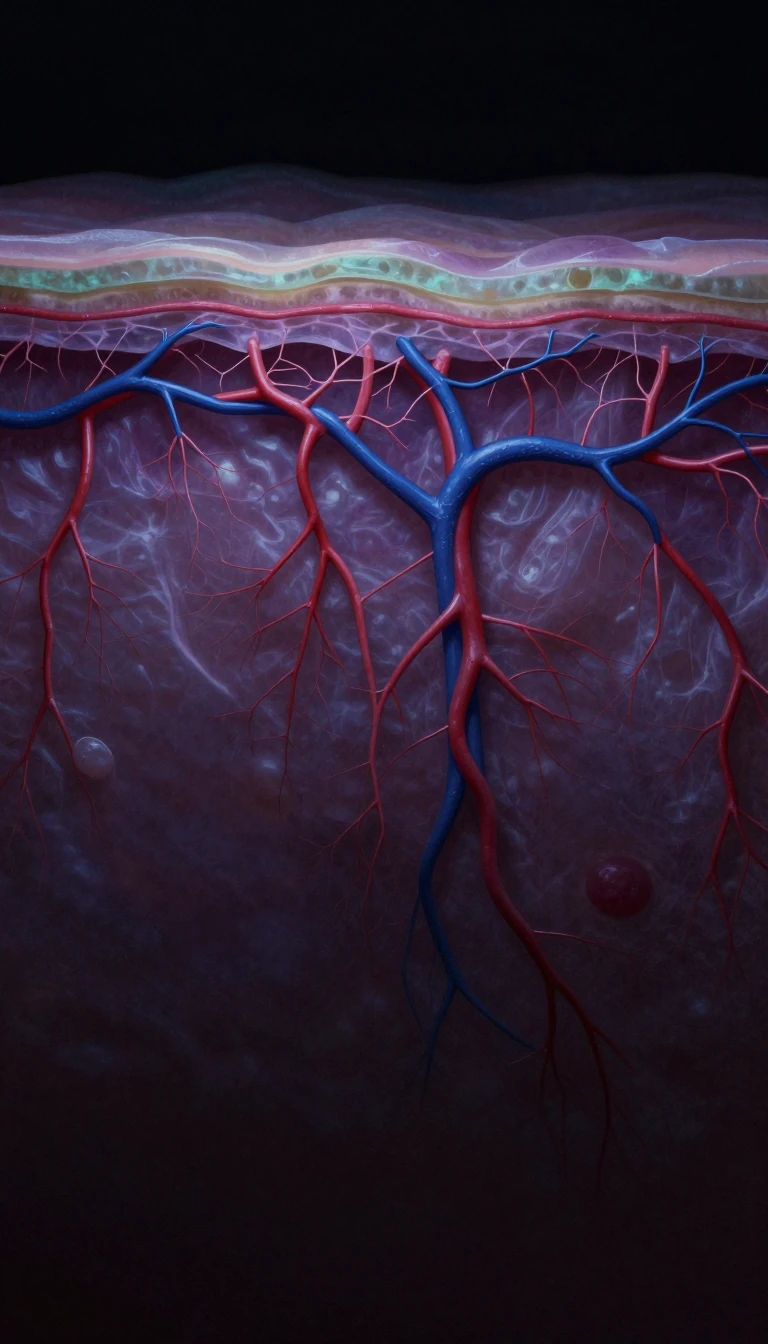
In short: The human body is a complex landscape of liquid compartments, with water accounting for over half of your total weight. While we often think of blood as our primary fluid, it represents only a tiny fraction of the total volume circulating and residing within your cells and tissues every single day.
In a healthy adult man, water makes up approximately 60% of total body weight, though this percentage is slightly lower in women. This fluid is not a single pool; it is strictly partitioned into distinct compartments. The largest portion, roughly 28 liters, resides inside your cells as intracellular fluid, which includes the cytosol and the contents of the cell nucleus. The remaining 14 liters exist outside these cells, forming the extracellular fluid compartment.
This extracellular space is further subdivided into two main categories: the interstitial fluid and the vascular volume. The interstitial fluid, which surrounds cells and tissues, accounts for about 12 liters of volume. Within this, the lymphatic system holds approximately 8 liters, while transcellular fluid makes up the remaining 4 liters. Meanwhile, the vascular volume—the blood plasma circulating through your vessels—is surprisingly small, totaling only about 4 liters in an average adult.
Understanding these fluid dynamics is critical for medical diagnostics. When clinicians analyze effusion fluids to identify diseases, they rely on specialized processing techniques. A recent study comparing diagnostic methods found that conventional smear preparations often suffer from poor cellularity and overlapping cells. In contrast, advanced techniques like cytospin and cell block preparations significantly improve the clarity, preservation, and distribution of cells, allowing pathologists to distinguish between reactive mesothelial cells and potential malignancies with much greater accuracy.
The balance of these fluids is a feat of biological homeostasis, regulated by complex neurobiological processes. Because the exact percentage of water in the body is inversely proportional to body fat, these measurements can fluctuate based on individual physiology. Whether evaluating a clinical sample for diagnostic purposes or simply mapping the internal architecture of the human form, these fluid compartments remain essential to maintaining life and detecting systemic health conditions.
Opens the Intellect+ feed with this card first. Swipe up for the next one.
Sources
- Summary by Intellect · source: Body fluid
- Also: Tri-Modal Cytology Excellence: Improving Body Fluid Diagnostic Performance.
To cite this card, link to https://intellectplus.co.uk/app/health-body-fluid.
How we source, check and correct cards: Editorial standards.
General information, not professional advice. Spotted an error? Flag the card or see corrections and complaints.
Intellect Plus is a visual educational discovery platform for exploring fascinating facts and ideas. Brain Food, Not Brain Rot. What is Intellect Plus?
Related
More in Anatomy and morphology · More in Health · Latest · A–Z · All topics
