Macrophages are the body's versatile immune sentinels, acting as both killers and healers.
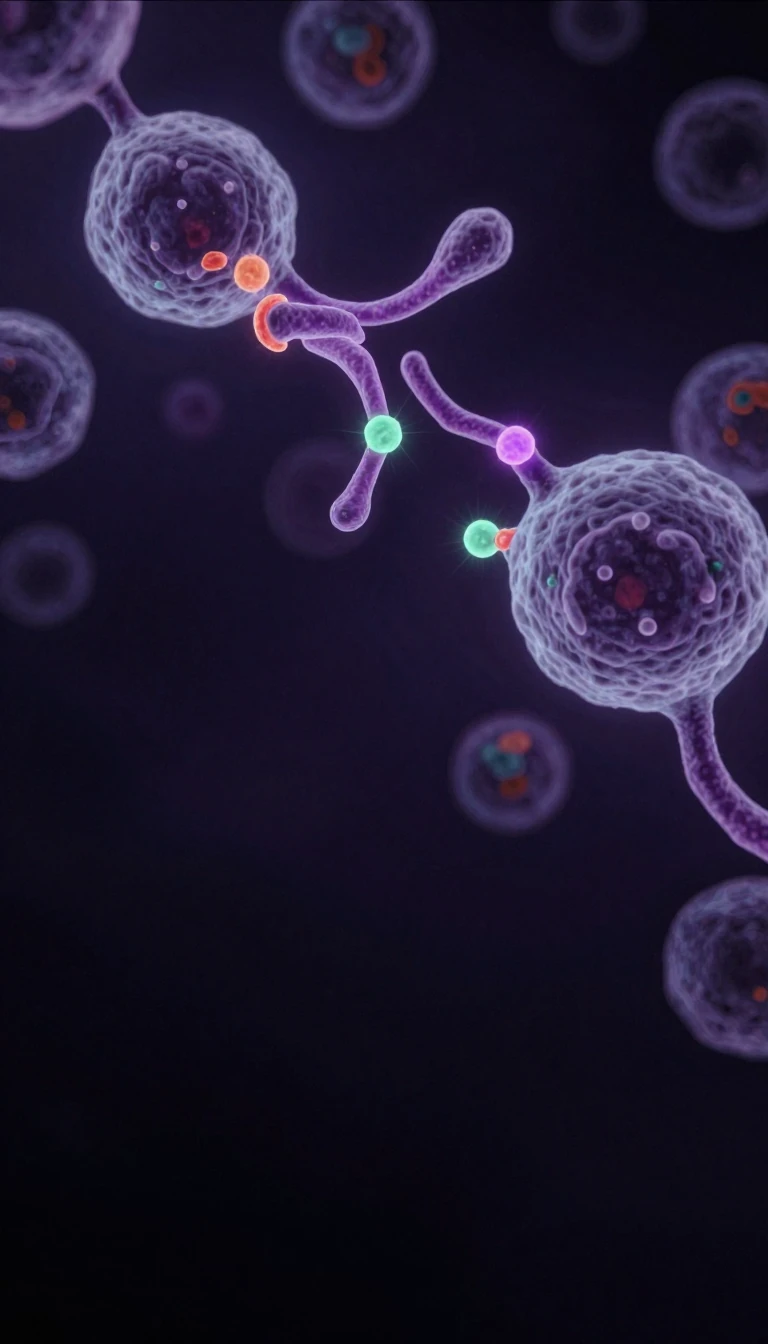
In short: These white blood cells patrol your tissues, engulfing pathogens and clearing cellular debris. Beyond simple defense, they orchestrate complex immune responses, shifting between inflammatory killer states and tissue-repairing modes. They are essential for everything from fighting infections to healing wounds, yet their dysfunction can drive chronic disease.
Discovered in 1884 by the zoologist Élie Metchnikoff, macrophages are white blood cells of the innate immune system. They patrol the body, using amoeboid movement to locate and ingest pathogens and debris through a process called phagocytosis. While they are professional phagocytes, their role extends far beyond ingestion. They act as critical communicators, recruiting other immune cells and presenting antigens to T cells to initiate adaptive immunity.
The traditional view of macrophages centers on a dichotomy between two phenotypes: M1 and M2. M1 macrophages are classically activated, pro-inflammatory cells that metabolize arginine into nitric oxide to kill pathogens. Conversely, M2 macrophages are alternatively activated, anti-inflammatory cells that promote tissue repair by metabolizing arginine into ornithine. This classification is now considered a simplification, as macrophages are highly plastic and fluid, capable of shifting their phenotype based on environmental cues.
In wound healing, macrophages follow a precise sequence. Neutrophils arrive first, but by day two, macrophages become the dominant cell type. They clear apoptotic neutrophils and debris, then secrete growth factors that stimulate angiogenesis and the formation of new extracellular matrix. If this transition from M1 to M2 is impaired, chronic wounds may fail to heal. Similarly, in muscle injury, two distinct waves of macrophages appear: an initial phagocytic group that peaks at 24 hours to degrade damaged fibers, followed by a non-phagocytic group that supports tissue regeneration.
Beyond their role in immunity, macrophages exhibit organ-specific functions. In the testis, they interact with Leydig cells to support testosterone production and help maintain an immune-privileged environment. In the heart, they participate in electrical conduction through gap junctions. Despite their utility, their versatility can be a liability; for instance, tumor-associated macrophages often adopt an M2-like phenotype that promotes tumor growth, and their involvement in atherosclerosis can lead to the formation of harmful foam cells.
Opens the Intellect+ feed with this card first. Swipe up for the next one.
Sources
- Summary by Intellect · source: Macrophage
To cite this card, link to https://intellectplus.co.uk/app/health-macrophage.
How we source, check and correct cards: Editorial standards.
General information, not professional advice. Spotted an error? Flag the card or see corrections and complaints.
Intellect Plus is a visual educational discovery platform for exploring fascinating facts and ideas. Brain Food, Not Brain Rot. What is Intellect Plus?
Related
More in Health, medicine and disease · More in Health · Latest · A–Z · All topics
