The smallest bones in your body were once part of your prehistoric jaw.
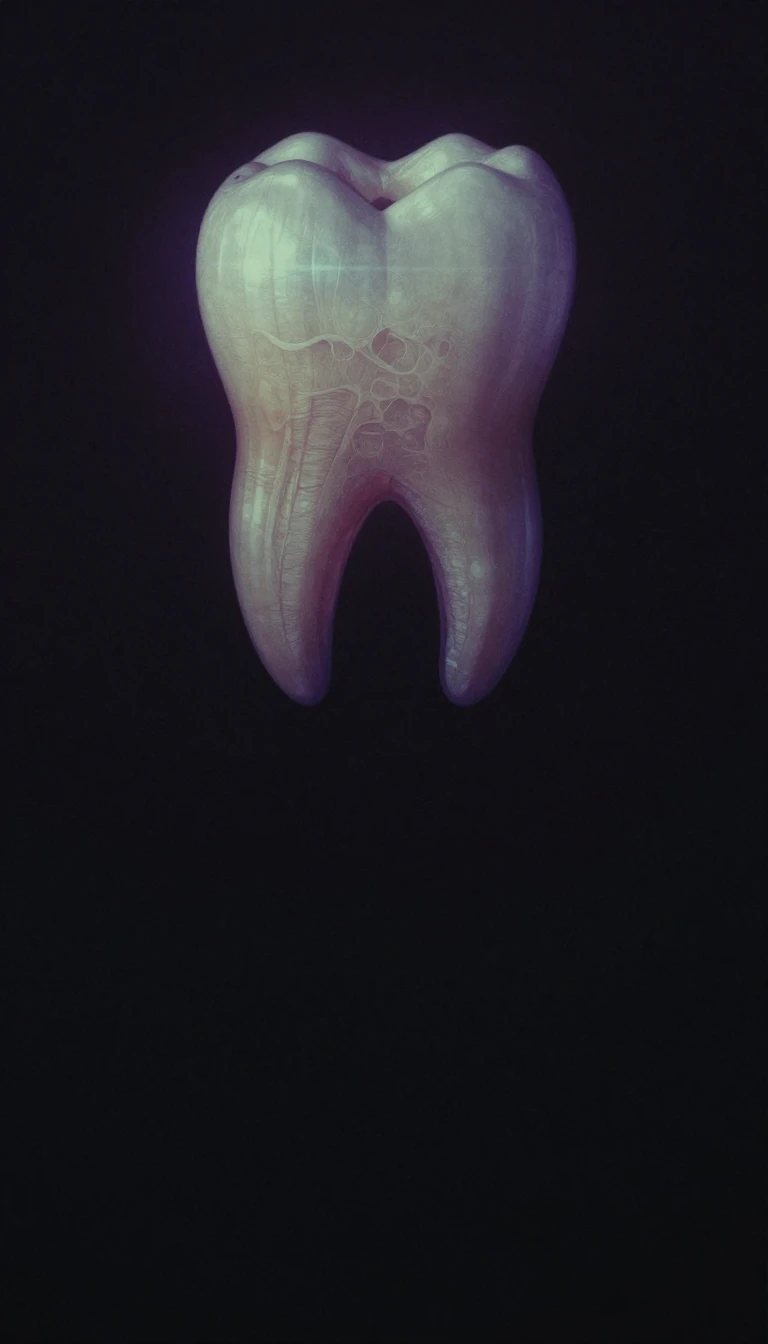
In short: Deep inside your ear, three tiny bones—the hammer, anvil, and stirrup—act as a mechanical lever system to translate air vibrations into sound. Surprisingly, these delicate structures did not evolve for hearing; they were originally jaw joints and skull braces in ancient ancestors before migrating to the middle ear.
The auditory ossicles—the malleus, incus, and stapes—form a kinematic chain that bridges the gap between the eardrum and the fluid-filled cochlea. Because sound waves lose most of their energy when moving from air into liquid, the ossicles provide a crucial mechanical advantage. By concentrating force onto the smaller oval window, they increase pressure, allowing sound to penetrate the inner ear fluid. Without this impedance-matching mechanism, we would suffer from moderate-to-severe conductive hearing loss.
The evolutionary history of these bones is a remarkable example of repurposing. In mammal embryos, the ossicles begin as Meckel's cartilage attached to the dentary bone of the lower jaw. As development progresses, this cartilage ossifies and eventually detaches, migrating to the middle ear. This transition mirrors the evolutionary path from early vertebrates, where the malleus and incus functioned as jaw joints and the stapes served to brace the skull. These structures correspond to the articular, quadrate, and columella bones found in the jaws of modern amphibians, birds, and reptiles.
Beyond their role in hearing, these bones have become vital in modern forensic science. Because they are protected deep within the skull, ossicles are often preserved even in highly degraded remains, such as those recovered from the 2015 Mediterranean shipwreck. Researchers have found that these tiny bones provide high-quality DNA for short tandem repeat (STR) profiling. This minimally invasive sampling allows for the identification of victims in mass disasters while preserving the integrity of the skull for further anthropological study, proving that our smallest bones hold significant value for both biology and humanitarian efforts.
Opens the Intellect+ feed with this card first. Swipe up for the next one.
Sources
- Summary by Intellect · source: Ossicles
- Also: Minimally invasive skeletal sampling for STR-based human identification in degraded marine remains.
- Also: What Are Ossicles?
To cite this card, link to https://intellectplus.co.uk/app/health-ossicles.
How we source, check and correct cards: Editorial standards.
General information, not professional advice. Spotted an error? Flag the card or see corrections and complaints.
Intellect Plus is a visual educational discovery platform for exploring fascinating facts and ideas. Brain Food, Not Brain Rot. What is Intellect Plus?
Related
More in Anatomy and morphology · More in Health · Latest · A–Z · All topics
