The pons is a small, cauliflower-shaped bridge essential for your survival and daily movement.
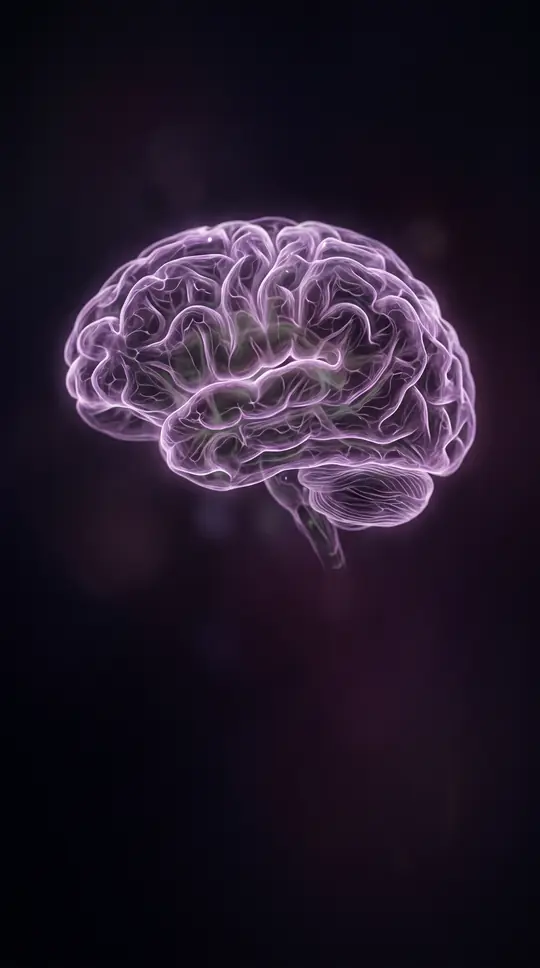
In short: Tucked at the base of your skull, this beige structure acts as a vital junction between your brain and spinal cord. It manages everything from your breathing and sleep cycles to facial expressions and swallowing. Without this tiny bridge, your brain would lose its primary pathway for controlling involuntary functions.
Named for the Latin word for bridge, the pons is a critical component of the brainstem. Measuring roughly 27 millimeters in height, 38 millimeters in width, and 25 millimeters in depth, it sits between the midbrain and the medulla oblongata. Its physical structure is composed of neurons and glial cells, the latter of which outnumber neurons by a factor of ten. These cells work in tandem to relay signals, maintain chemical balance, and protect the nervous system.
The pons serves as a complex command center for several cranial nerves, specifically numbers five through eight. These nerves regulate essential motor and sensory tasks, including chewing, facial sensations, eye movement, and equilibrium. Within the pons, the pneumotaxic center—comprising the medial and subparabrachial nuclei—precisely manages the transition between inhalation and exhalation. Beyond these mechanical roles, the structure is implicated in sleep paralysis and may be involved in the generation of dreams.
Evolutionary evidence suggests the pons emerged as a distinct region from the medulla at least 525 million years ago, as seen in lampreys. Its importance is underscored by the severity of conditions like central pontine myelinolysis, which can cause locked-in syndrome, or rare congenital cases where the pons is entirely absent. Because of its deep location and proximity to critical nuclei, neurosurgeons have historically found it challenging to operate on, though modern techniques like the trans-middle cerebellar peduncle approach are improving outcomes for patients with pontine lesions.
Opens the Intellect+ feed with this card first. Swipe up for the next one.
Sources
- Summary by Intellect · source: What Is the Pons?
- Also: Pons
To cite this card, link to https://intellectplus.co.uk/app/health-pons.
How we source, check and correct cards: Editorial standards.
General information, not professional advice. Spotted an error? Flag the card or see corrections and complaints.
Intellect Plus is a visual educational discovery platform for exploring fascinating facts and ideas. Brain Food, Not Brain Rot. What is Intellect Plus?
Related
More in Anatomy and morphology · More in Health · Latest · A–Z · All topics
