Could the brain's specialized regions be the result of a single learning goal?
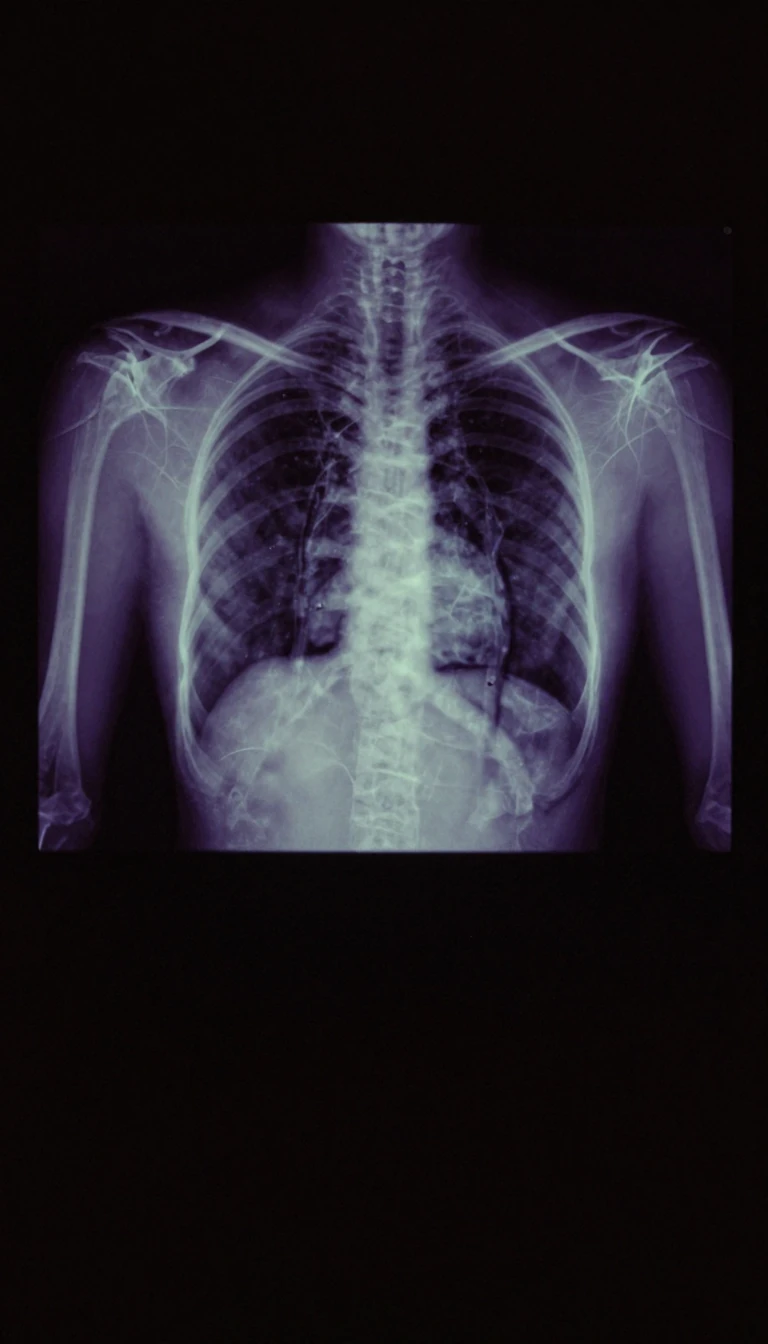
In short: Why does the human brain have specific areas for faces and scenes? New research suggests these specialized regions might not be hard-wired by unique biological biases. Instead, they may emerge from a unified computational goal similar to how modern AI teaches itself using raw data.
Self-supervised learning (SSL) is a machine learning paradigm where models generate their own supervisory signals from raw data rather than relying on human-provided labels. By creating 'pretext tasks'—such as predicting missing words in a sentence or reconstructing a cropped image—models learn to capture the essential underlying structures of the world. This mimics human learning, where we extract correlations and metadata from our environment autonomously.
In neuroscience, researchers have investigated the ventral visual stream, which contains category-selective regions like the fusiform face area (FFA) and the parahippocampal place area (PPA). These regions are known for their distinct feature tuning, such as preferences for face shapes or spatial layouts. A recent study tested whether these human-specific signatures could be replicated by models trained with domain-general learning objectives, rather than specialized training for faces or places.
The findings were striking: category-selective model units largely recapitulated the distinct representational signatures of the FFA and PPA. The models captured most of the effects across a battery of tests probing curvature, animacy, and real-world size.
This connection has profound implications for both AI and neuroscience. It suggests that 'human-like' intelligence might be a byproduct of how systems process information at scale. By moving toward models like Yann LeCun's Joint-Embedding Predictive Architectures (JEPA), which aim to create a 'world model' in latent space, researchers hope to replicate the way humans develop high-level reasoning and autonomous intelligence from the raw, noisy inputs of reality.
Opens the Intellect+ feed with this card first. Swipe up for the next one.
Sources
- Summary by Intellect · source: Self-supervised learning
- Also: Self-supervised learning yields representational signatures of category-selective cortex.
- Also: PLoS computational biology — AET5: A transcriptome-guided molecular generation framework with contrastive self-supervised learning. · CC BY
- Also: hai.stanford.edu — What is Self-Supervised Learning? | Stanford HAI
To cite this card, link to https://intellectplus.co.uk/app/health-self-supervised-learning.
How we source, check and correct cards: Editorial standards.
General information, not professional advice. Spotted an error? Flag the card or see corrections and complaints.
Intellect Plus is a visual educational discovery platform for exploring fascinating facts and ideas. Brain Food, Not Brain Rot. What is Intellect Plus?
Related
More in Memory · More in Health · Latest · A–Z · All topics
