Venules are the microscopic gateways that bridge your capillary beds to the venous system.
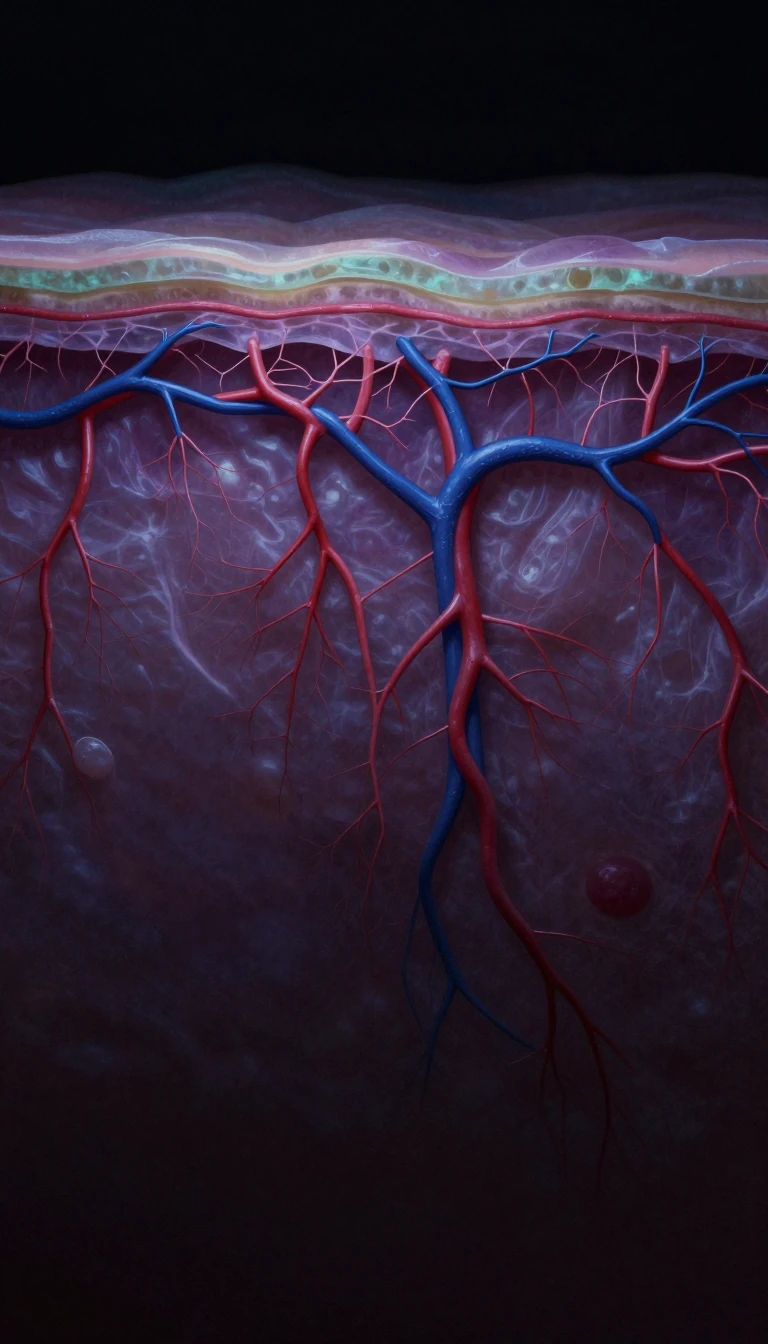
In short: While veins are often visualized as the body's primary plumbing, they rely on a vast, microscopic network of venules to collect oxygen-depleted blood. These tiny vessels act as the essential transition point, gathering blood from capillaries and funneling it into the larger veins that eventually return it to your heart.
Venules represent the smallest vessels in the venous system, serving as the critical link between capillary beds and larger veins. As blood completes its journey through the body's tissues, it enters these small vessels, which converge to form the veins that guide blood back toward the heart. While the larger veins, such as the superior and inferior venae cavae, are responsible for delivering this oxygen-depleted blood to the right atrium, the process begins at the microscopic level within the venules.
Structurally, these vessels are distinct from the arteries that supply oxygenated blood. Because veins and their smaller counterparts operate under lower pressure than the arterial system, their walls are thinner and less muscular. This structural difference is vital, as it allows for the necessary permeability that enables fluid and blood cells to move through their walls. In the human body, venules are estimated to contain approximately 25% of the total blood volume, highlighting their significant role as a reservoir within the circulatory system.
Beyond simple transport, venules exhibit specialized functions depending on their location. Some, known as high endothelial venules, possess unique cuboidal cells that act as entry points for lymphocytes to enter lymph nodes during an immune response. Others, such as those found within the pituitary gland, facilitate rapid hormonal exchange between lobes. This complex architecture ensures that the circulatory system does more than just move blood; it acts as a dynamic, responsive network that supports immune function, hormonal regulation, and the continuous return of blood to the heart, completing the vital circuit that keeps tissues and organs functioning.
Opens the Intellect+ feed with this card first. Swipe up for the next one.
Sources
- Summary by Intellect · source: Venule | anatomy | Britannica
- Also: Venule
- Also: Veins: Anatomy and Function
To cite this card, link to https://intellectplus.co.uk/app/health-venule.
How we source, check and correct cards: Editorial standards.
General information, not professional advice. Spotted an error? Flag the card or see corrections and complaints.
Intellect Plus is a visual educational discovery platform for exploring fascinating facts and ideas. Brain Food, Not Brain Rot. What is Intellect Plus?
Related
More in Anatomy and morphology · More in Health · Latest · A–Z · All topics
