From the House of Life to the modern classroom
In short: Egypt's educational history is a journey from the world's first library to a complex dual system of religious and secular learning. While modern schools face funding hurdles, they stand on a foundation laid by ancient scribes and medieval scholars who turned cities into global intellectual hubs.
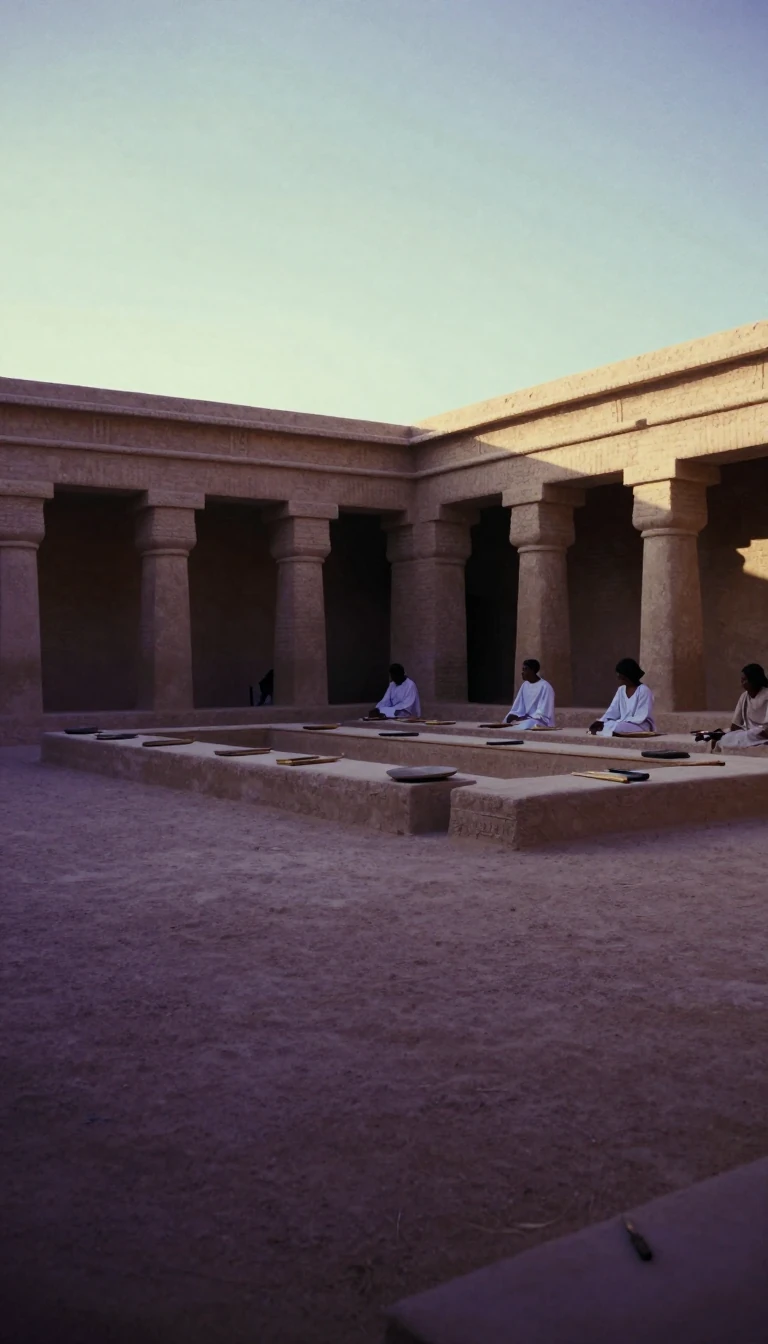
The earliest recorded educational facility and library for humanity was 'Bar Ankh' (House of Life), which founded Egypt's scholarly tradition. Ancient Egyptians established these centers where students, typically aged five to ten, were enrolled to study hieroglyphs and other disciplines. This tradition of intellectual leadership continued into antiquity; by 300 BCE, Alexandria hosted a university that attracted scholars like Euclid and Archimedes, utilizing structured lectures similar to modern academic systems.
The Islamic era introduced two distinct models of learning. In the 10th century, the Fatimids established al-Azhar (970–972 CE), which grew from an informal mosque-based center for theology into a premier institution. Simultaneously, Caliph al-Hakim bi-Amr Allah founded the Dar al-Ilm in 1005 CE as a state-sponsored 'House of Knowledge.' Unlike the reputation-based learning of al-Azhar, the Dar al-Ilm offered salaried teachers and public access to diverse subjects like astronomy and medicine, housing over 100,000 volumes.
Modernity arrived with a fracture. In the 19th century, Muhammad Ali Pasha introduced a dual system: 'mansouri' schools for religious memorization and secular 'madrasas' based on French models. This era also saw significant colonial intervention; Napoleon’s 1798 expedition established the Institut d'Égypte to study Egypt's resources, while later British occupation under Lord Cromer (starting in 1882) intentionally restricted modern schooling to the elite, fearing that widespread education would fuel nationalist movements.
Today, Egypt provides compulsory nine years of education for children aged 4 to 14. While the constitution guarantees free government education, schools still charge small fees ranging from 210 to 520 Egyptian pounds (approx. US$5–10). The country currently faces a literacy gap, with an overall rate of 72% as of 2010, and continues to work toward integrating ICT and expanding early childhood education.
Opens the Intellect+ feed with this card first. Swipe up for the next one.
Sources
- Summary by Intellect · source: Education in Egypt
To cite this card, link to https://intellectplus.co.uk/app/history-education-in-egypt.
How we source, check and correct cards: Editorial standards.
General information, not professional advice. Spotted an error? Flag the card or see corrections and complaints.
Intellect Plus is a visual educational discovery platform for exploring fascinating facts and ideas. Brain Food, Not Brain Rot. What is Intellect Plus?
Related
More in Egypt · More in History · Latest · A–Z · All topics
