Cinema began as a scientific tool to analyze movement beyond the human eye's reach.
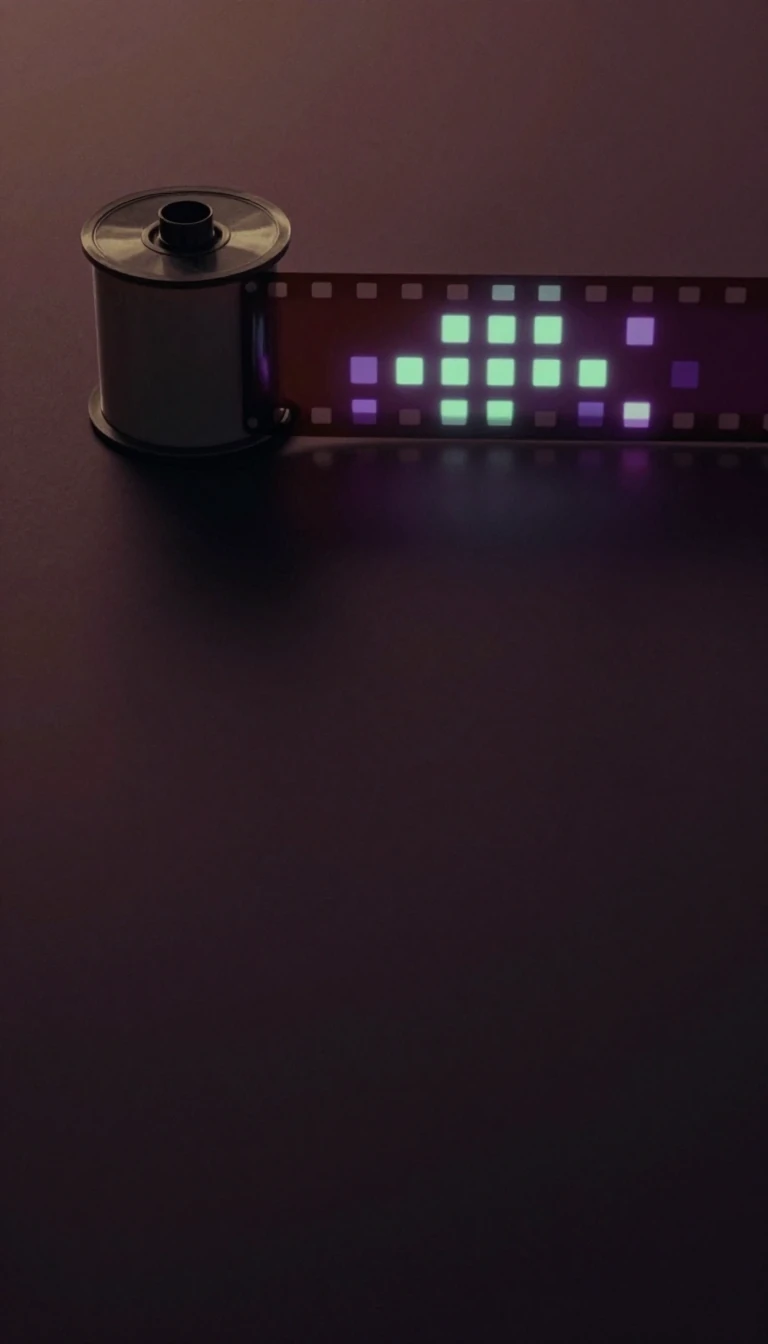
In short: Before movies were entertainment, they were instruments of inquiry. Inventors like Eadweard Muybridge and Étienne-Jules Marey used rapid-fire photography to deconstruct motion, such as a horse's gallop or a bird's flight. These pioneers sought to see the invisible, unknowingly laying the technical foundation for the global film industry.
The illusion of cinema relies on two optical phenomena: persistence of vision, where the retina retains an image for a fraction of a second, and the phi phenomenon, which creates the perception of movement between rapidly succeeding images. By the 1830s, optical toys like the phenakistoscope and zoetrope exploited these effects using hand-drawn phase images. However, true motion pictures required the ability to photograph live action spontaneously, a feat that demanded exposure times drop to one-thousandth of a second by 1870.
In the 1870s, Eadweard Muybridge famously used a battery of 12 cameras triggered by tripwires to capture a horse in motion, proving that all four hooves leave the ground simultaneously. Shortly after, in 1882, Étienne-Jules Marey invented the chronophotographic gun, a rifle-shaped camera that recorded 12 images per second to study bird flight. Both men were driven by scientific curiosity, aiming to analyze rapid events rather than synthesize entertainment. They left the commercial exploitation of these discoveries to those who followed.
The final piece of the puzzle was a flexible, durable medium. In 1887, Hannibal Goodwin proposed celluloid as a base for photographic emulsions, and by 1889, George Eastman began manufacturing celluloid roll film. This allowed for the thousands of images required for longer, complex narratives. Louis Le Prince successfully combined these principles in the late 1880s, shooting films in Leeds, England, before his mysterious disappearance in 1890. While his work remained obscure for decades, the marriage of celluloid and high-speed photography had already set the stage for the birth of modern cinema.
Opens the Intellect+ feed with this card first. Swipe up for the next one.
Sources
- Summary by Intellect · source: History of film | Summary, Industry, History, Technology, Directors, & Facts | Britannica
- Also: History of film technology
To cite this card, link to https://intellectplus.co.uk/app/history-history-of-film-technology.
How we source, check and correct cards: Editorial standards.
General information, not professional advice. Spotted an error? Flag the card or see corrections and complaints.
Intellect Plus is a visual educational discovery platform for exploring fascinating facts and ideas. Brain Food, Not Brain Rot. What is Intellect Plus?
Related
More in History by topic · More in History · Latest · A–Z · All topics
