Africa holds the world's oldest record of human technological and mathematical achievement.
In short: From the earliest stone tools crafted 3.3 million years ago to sophisticated geometric traditions and advanced astronomical observations, Africa’s scientific history is vast. Often overlooked, these developments reveal a deep, continuous legacy of innovation that predates many established global narratives, challenging our understanding of human cognitive evolution and mathematical origins.
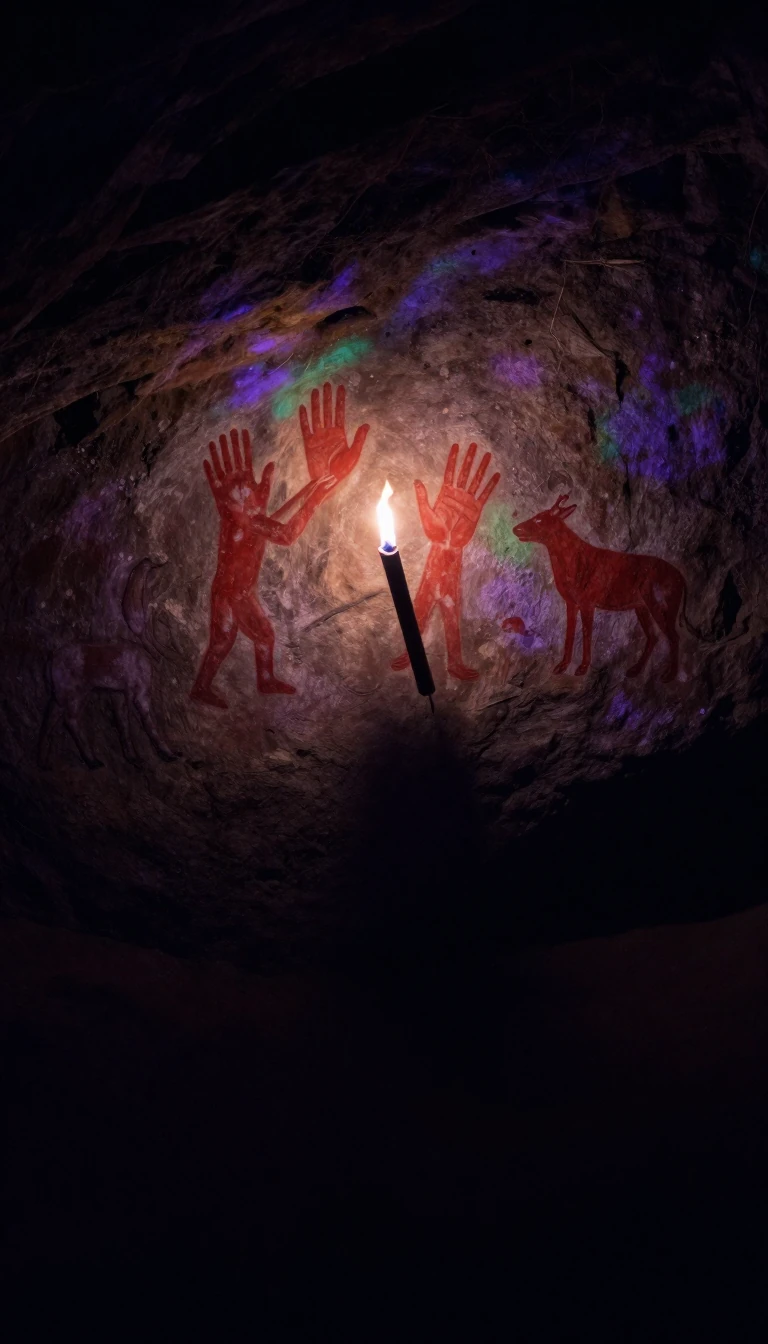
The African continent serves as the cradle of human technology, housing the oldest stone tools ever discovered. At Lomekwi in the Turkana Basin, unidentified hominins created tools 3.3 million years ago, followed by the Oldowan industry 2.3 million years ago and the Acheulean hand-axes of Homo erectus 1.5 million years ago. By 100,000 years ago, early humans in Southern Africa demonstrated an elementary grasp of chemistry, utilizing specific recipes to create liquefied, ochre-rich mixtures. This cognitive sophistication is further evidenced by the world's oldest abstract art, including a shell necklace from Morocco dated to 82,000 years ago and rock art from South Africa's Blombos Cave dated to 77,000 years ago.
Mathematical exploration also has ancient roots on the continent. The Lebombo bone, dating to 35,000 BCE, features 29 distinct notches, potentially marking the oldest known mathematical artifact. Later, the Ishango bone from the Democratic Republic of Congo, dated to 18,000–20,000 BCE, displays tally marks that some researchers believe represent advanced calculations or lunar tracking. In Egypt, the Naqada period saw the development of a fully realized decimal numeral system. Ancient Egyptian mathematicians mastered basic arithmetic, geometry, and algebra, as evidenced by the Rhind and Moscow Mathematical Papyri, which detail methods for calculating volumes, surface areas, and solving simultaneous equations.
African scientific traditions extended into complex astronomical and geometric systems. Ancient Nubians constructed a stone circle at Nabta Playa around 4800 BCE to mark the summer solstice, while Timbuktu scholars between the 14th and 16th centuries utilized diagrams and calculations to track planetary orbits and orient prayer toward Mecca. Furthermore, the 'sona' drawing tradition of Angola and the graph-based knowledge of the Bushong people demonstrate a sophisticated understanding of topology and Eulerian paths. These practices, often passed down through generations of artisans and scholars, highlight a long-standing rationalist tradition that predates the formalization of Greek philosophical schools.
Opens the Intellect+ feed with this card first. Swipe up for the next one.
Sources
- Summary by Intellect · source: History of science and technology in Africa
To cite this card, link to https://intellectplus.co.uk/app/history-history-of-science-and-technology-in-africa.
How we source, check and correct cards: Editorial standards.
General information, not professional advice. Spotted an error? Flag the card or see corrections and complaints.
Intellect Plus is a visual educational discovery platform for exploring fascinating facts and ideas. Brain Food, Not Brain Rot. What is Intellect Plus?
Related
More in History by topic · More in History · Latest · A–Z · All topics
