Why 19th-Century Scientists Preferred Admiration and Love Over Cold Mathematical Control
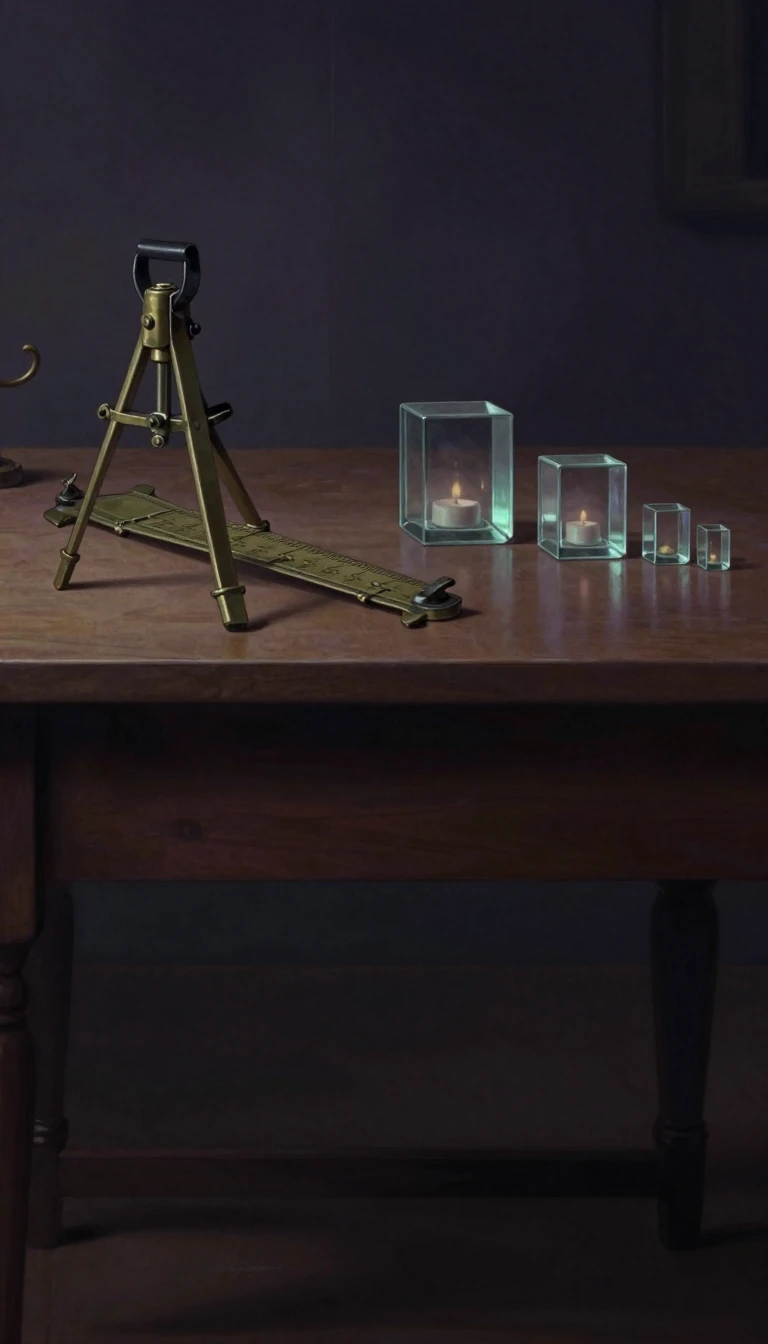
In short: Between 1800 and 1840, Romanticism challenged the Enlightenment’s mechanistic view of the world. Rather than dissecting nature into cold, isolated parts, these scientists argued that true knowledge required a personal, harmonious connection with the living world. They viewed the universe not as a machine, but as an organic, sacred whole.
The Romantic movement in science, flourishing primarily in Germany and Great Britain, emerged as a direct reaction against the Enlightenment’s focus on reductionism. Enlightenment thinkers like Isaac Newton and Carl Linnaeus believed that by dividing nature into subcategories and applying deductive reasoning, humanity could master the physical world. Romantics, however, felt this approach was an act of force—a cold-hearted attempt to extort knowledge that ignored the intrinsic value of nature.
Central to this era was the belief in anti-reductionism: the idea that the whole is greater than the sum of its parts. Figures like Sir Humphry Davy argued that understanding chemistry required an attitude of worship and love rather than mere mechanical analysis. Similarly, Johann Goethe challenged Newtonian optics, asserting that color was an internal human experience rather than a phenomenon defined solely by mathematical equations. This period also saw the birth of biology as a distinct discipline, as thinkers like Jean-Baptiste Lamarck sought to explain living beings through principles separate from the laws of physics.
The movement was deeply intertwined with the arts and philosophy. Friedrich Schelling’s Naturphilosophie envisioned nature as a path to freedom, while Mary Shelley’s Frankenstein served as a cautionary tale about the dangers of manipulating nature without respect. By 1840, however, the rise of positivism shifted the intellectual tide toward a stricter, more process-oriented study of science. While the Romantic era declined by 1880, its legacy persists in the way we view the scientist’s role—not merely as a master of nature, but as a participant in a living, interconnected system.
Opens the Intellect+ feed with this card first. Swipe up for the next one.
Sources
- Summary by Intellect · source: Romanticism in science
To cite this card, link to https://intellectplus.co.uk/app/history-romanticism-in-science.
How we source, check and correct cards: Editorial standards.
General information, not professional advice. Spotted an error? Flag the card or see corrections and complaints.
Intellect Plus is a visual educational discovery platform for exploring fascinating facts and ideas. Brain Food, Not Brain Rot. What is Intellect Plus?
Related
More in History by topic · More in History · Latest · A–Z · All topics
