The noble spirit who protected ancient homes and cities with a serpentine grace
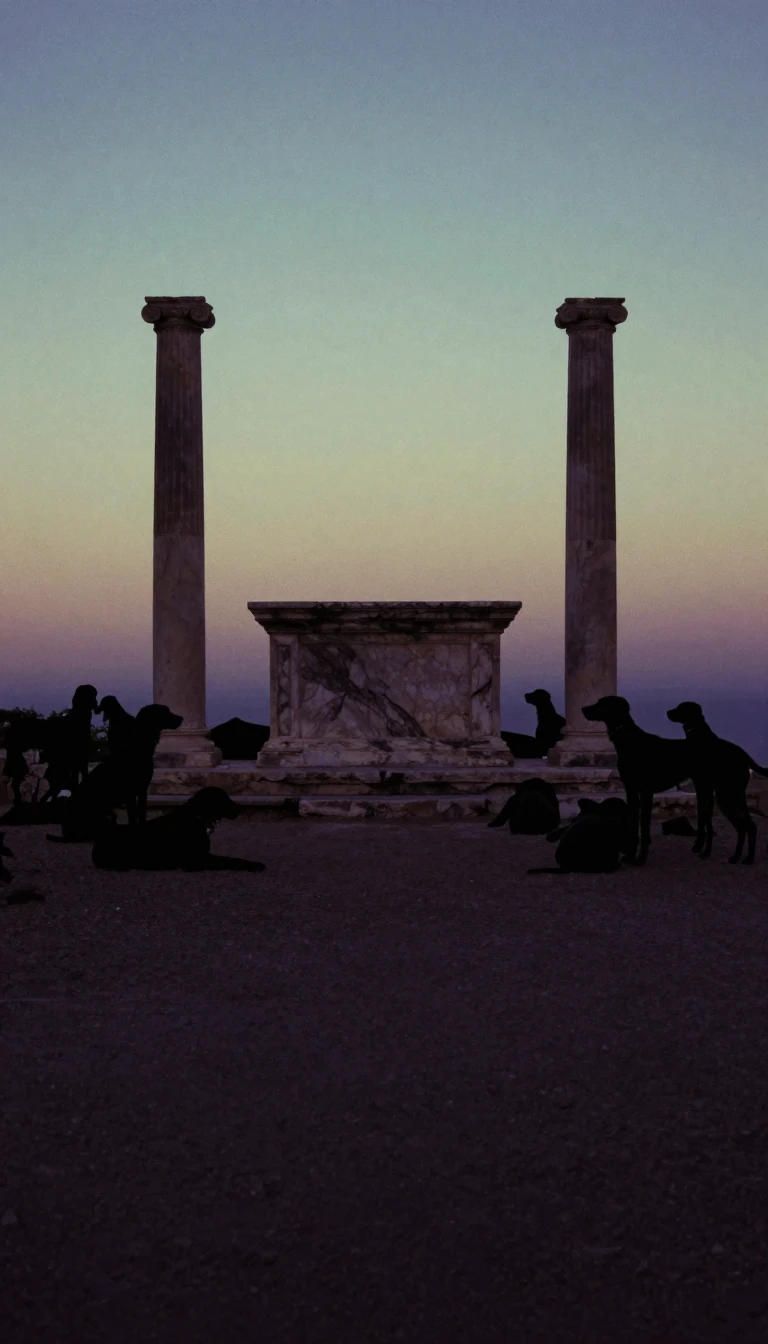
In short: Long before he became a serpentine icon of Alexandria, the Agathos Daimon was a humble household deity in Greece. Honored with a final drop of wine after every meal, this noble spirit evolved from a domestic guardian into a complex civic protector, bridging the gap between Greek and Egyptian traditions.
In classical Greek religion, the Agathos Daimon was a lesser deity invoked to ensure the prosperity of the home. Families would pour a libation of unmixed wine in his honor after finishing a meal, often alongside Zeus Soter. While he was recognized in domestic contexts as early as the fifth century BC, he was rarely depicted as a snake in mainland Greece. This changed significantly in Ptolemaic Alexandria, where he emerged as a prominent civic god, frequently represented in serpentine form as the city's special protector.
The origin of this Alexandrian figure remains a subject of scholarly debate. Some researchers view him as a Greek import later syncretized with Egyptian deities like Shai, Kneph, or Khnum. Others argue he was a Hellenized native Egyptian household god. Evidence for this tension appears in the Oracle of the Potter, an Egyptian nationalistic text that prophesied the departure of Agathos Daimon and the serpent-god Kneph from Alexandria to Memphis, signaling the downfall of the city and the end of the Macedonian era.
By late antiquity, the Agathos Daimon had become deeply enmeshed in syncretic practices. He was frequently identified with Zeus Meilichios and Serapis, and often appeared alongside his companion, Tyche Agathe, the personification of good fortune. In art, he could be depicted as a young man holding a cornucopia, a poppy, and an ear of grain, or as a powerful serpent. His legacy persists in magical artifacts, such as gems featuring the lion-headed snake Chnum–Agathodaemon–Aion, illustrating how this noble spirit evolved from a simple household blessing into a multifaceted symbol of security and fate across the ancient Mediterranean world.
The figure's reach extended beyond the home; a temple dedicated to the Agathoi Daimones once stood on the road between Megalopolis and Maenalus in Arcadia. Whether viewed as a manifestation of Zeus or an independent spirit of fortune, the Agathos Daimon remains a testament to the fluid, interconnected nature of ancient religious life, where local traditions constantly reshaped the divine.
Opens the Intellect+ feed with this card first. Swipe up for the next one.
Sources
- Summary by Intellect · source: Agathodaemon
To cite this card, link to https://intellectplus.co.uk/app/ideas-agathodaemon.
How we source, check and correct cards: Editorial standards.
General information, not professional advice. Spotted an error? Flag the card or see corrections and complaints.
Intellect Plus is a visual educational discovery platform for exploring fascinating facts and ideas. Brain Food, Not Brain Rot. What is Intellect Plus?
Related
More in Greek mythology · More in Ideas & Philosophy · Latest · A–Z · All topics
