Does your brain decide to move before you even know it?
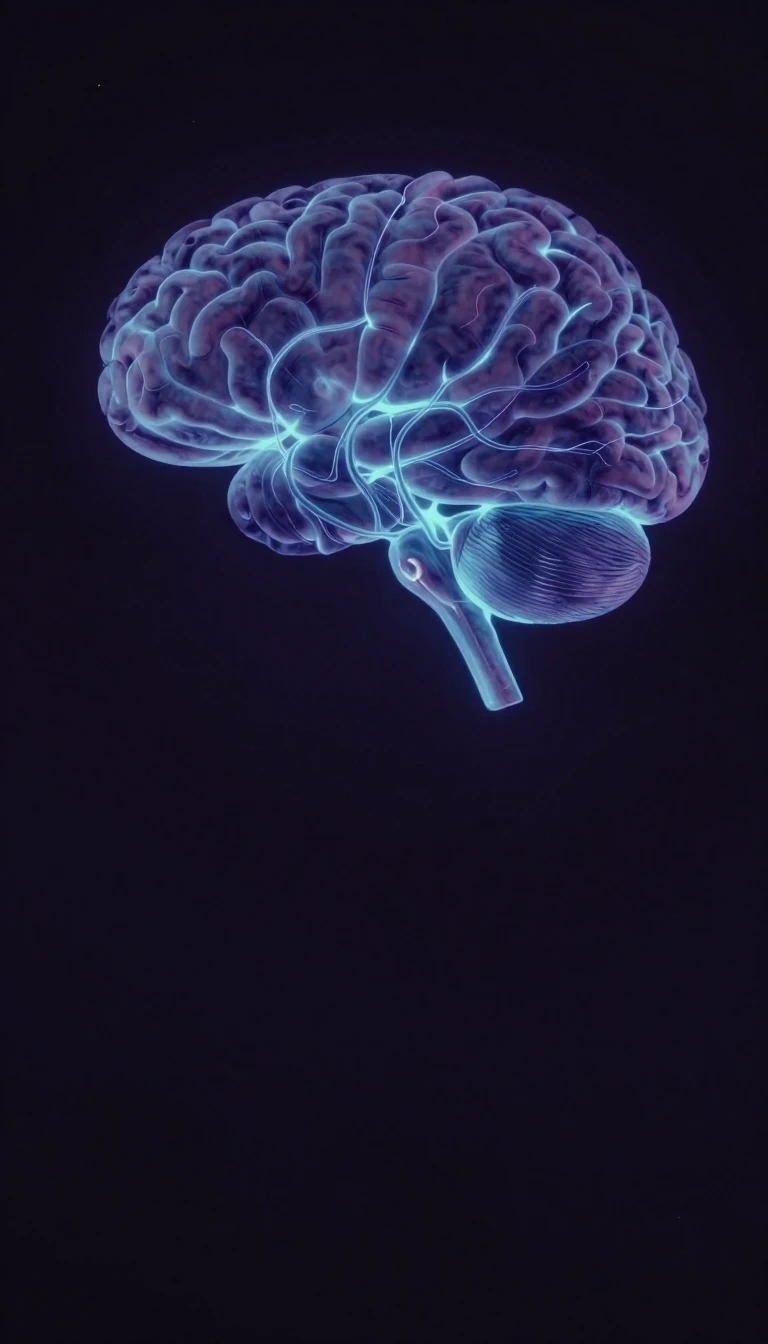
In short: Neuroscientist Benjamin Libet discovered that electrical signals for physical actions often appear in the brain before a person feels a conscious urge. His research suggests that unconscious neuronal processes might initiate movements, leaving our subjective experience of making a choice as a retrospective feeling rather than the primary cause of action.
In the 1970s, Benjamin Libet conducted experiments to explore the relationship between unconscious neural activity and conscious volition. Using an electroencephalogram (EEG) to monitor the cortex and an electromyograph (EMG) to record muscle movement, Libet asked subjects to perform simple tasks like pressing a button. He used a cathode ray oscilloscope as a timer to mark the exact moment a subject felt the "urge to act."
The results were startling: brain activity in the secondary motor cortex—known as the Bereitschaftspotential or readiness potential—began on average 500 milliseconds before the action. Crucially, this activity started as much as 300 milliseconds before the subject reported any conscious awareness of the decision. This suggested that unconscious neuronal processes might precede and potentially cause volitional acts, which we only feel as conscious choices after the fact.
Libet proposed a middle ground known as "free won't." He observed that subjects could still "veto" a decision after the conscious awareness of the urge occurred, but only within a narrow window of 100–150 milliseconds. While some critics, like Susan Blackmore, argue that conscious experience is simply too slow to be responsible for action, others suggest that these brain impulses are just stochastic fluctuations rather than goal-directed operations.
The implications for free will remain contested. Some argue that Libet's study of spontaneous wrist movements doesn't apply to complex, deliberate decisions involving reason. Others point out that because of the speed of nerve signals, our conscious awareness of any present event is always slightly in the past, making the timing of "decision-making" a complex neurophysiological delay.
Opens the Intellect+ feed with this card first. Swipe up for the next one.
Sources
- Summary by Intellect · source: Benjamin Libet
To cite this card, link to https://intellectplus.co.uk/app/ideas-benjamin-libet.
How we source, check and correct cards: Editorial standards.
General information, not professional advice. Spotted an error? Flag the card or see corrections and complaints.
Intellect Plus is a visual educational discovery platform for exploring fascinating facts and ideas. Brain Food, Not Brain Rot. What is Intellect Plus?
Related
More in Free will · More in Ideas & Philosophy · Latest · A–Z · All topics
