The Cretan goddess who escaped a king by leaping into a fisherman's net
In short: Britomartis was a mysterious deity of the mountains and the hunt, primarily worshipped on Crete. Often conflated with Artemis, she is best known for a dramatic escape from King Minos, which earned her the title Lady of the Nets. Her legacy spans from ancient cults to English military allegory.
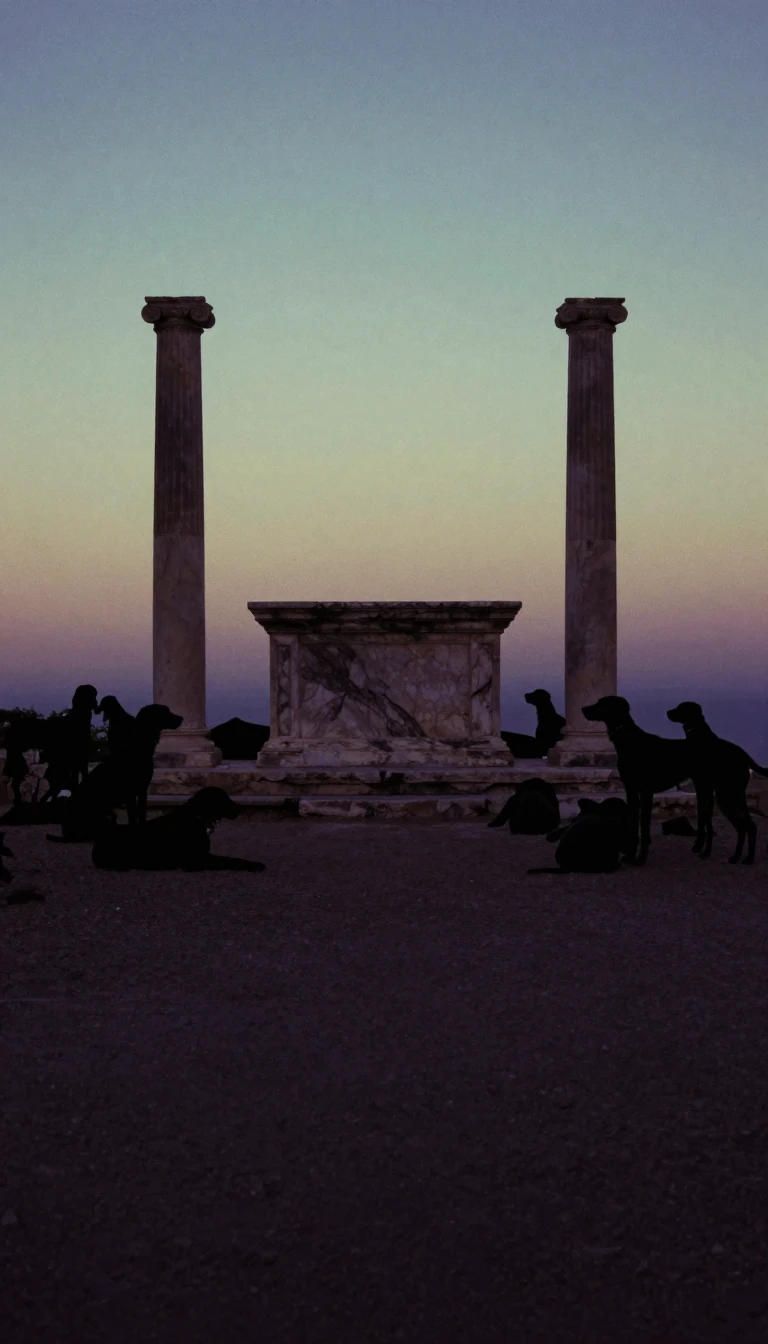
Britomartis, whose name likely stems from a Cretan dialect meaning sweet virgin, occupied a complex space in the Greek pantheon. She was frequently syncretized with major goddesses like Artemis, Athena, and Aphaea. In her Cretan heartland, she was often depicted as Diktynna, a winged figure associated with the Potnia Theron, or mistress of animals, and sometimes linked to the birth of Zeus on Mount Dikte. Her veneration was widespread, with temples stretching from Athens and Sparta to Massalia, often guarded by dogs described as stronger than bears.
The most enduring myth surrounding her involves a nine-month pursuit by King Minos. To evade his advances, Britomartis allegedly leapt into the sea, landing in fishermen's nets. This event earned her the title Diktynna, or Lady of the Nets, and led to her deification by Artemis. However, ancient historians like Diodorus Siculus were skeptical of this narrative, arguing it was improbable that a daughter of the gods would require human assistance. Alternative accounts suggest she fled to Aegina, where she was worshipped as Aphaea, the invisible goddess, after another attempted assault by a local fisherman.
The goddess's influence persisted long after the decline of her original cults. In the 16th century, Edmund Spenser repurposed her name for his epic The Faerie Queene, creating a knightly figure of chastity and English military power. Spenser’s interpretation relied on a folk etymology that linked the prefix 'Brit-' to Britons and 'Martis' to the Roman war god Mars. This literary transformation cemented her name in British culture, eventually lending it to Royal Navy vessels and landmarks like Auckland's Britomart station, far removed from her origins as a Cretan mountain nymph.
Opens the Intellect+ feed with this card first. Swipe up for the next one.
Sources
- Summary by Intellect · source: Britomartis
To cite this card, link to https://intellectplus.co.uk/app/ideas-britomartis.
How we source, check and correct cards: Editorial standards.
General information, not professional advice. Spotted an error? Flag the card or see corrections and complaints.
Intellect Plus is a visual educational discovery platform for exploring fascinating facts and ideas. Brain Food, Not Brain Rot. What is Intellect Plus?
Related
More in Greek mythology · More in Ideas & Philosophy · Latest · A–Z · All topics
