Why your brain prefers a quick, flawed guess over a slow, perfect calculation
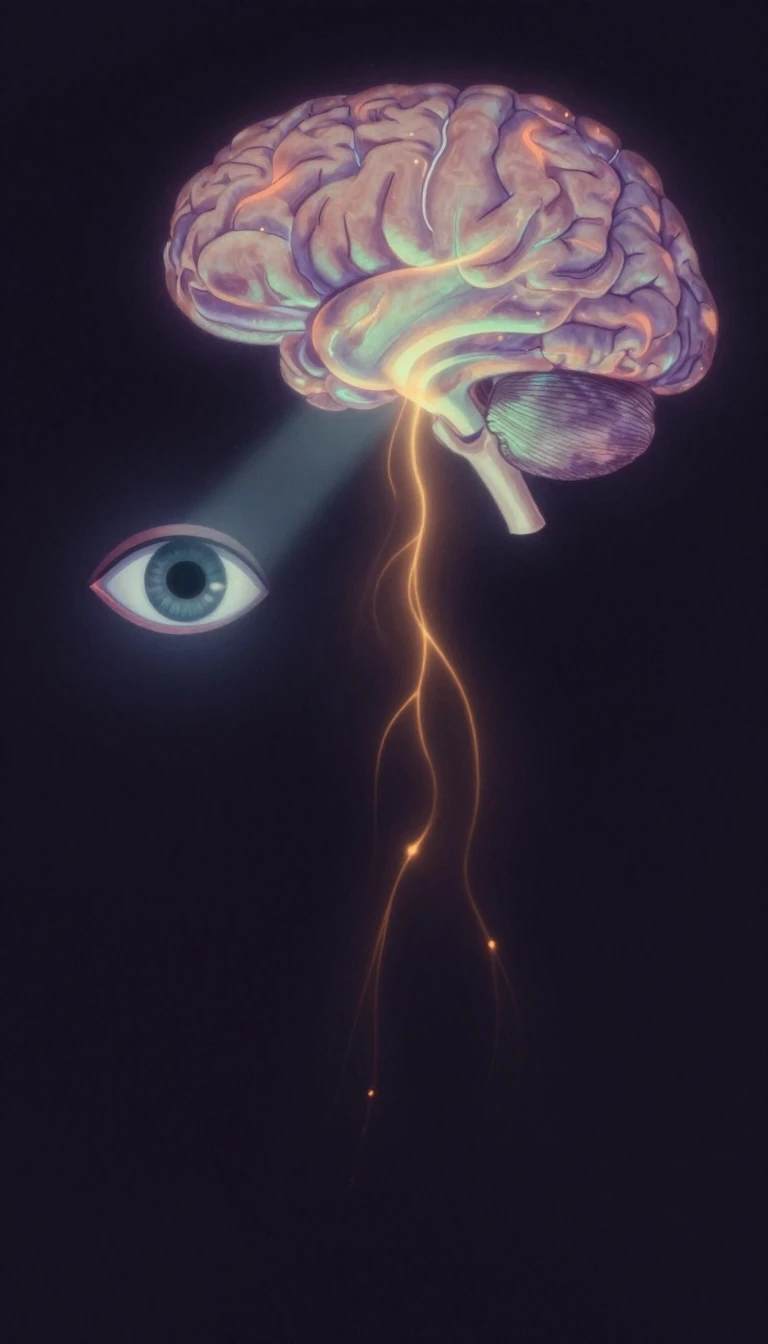
In short: Your brain is a master of mental shortcuts. To navigate a complex world, it relies on heuristics—intuitive rules of thumb that save time and energy. While these shortcuts often lead to adequate decisions, they can also trigger systematic cognitive biases, causing you to misjudge reality and ignore objective data.
Cognitive biases are predictable patterns of error stemming from how the human mind processes information. Rather than calculating every outcome through formal logic, we often use heuristics—mental shortcuts that reduce cognitive load. These processes allow for rapid decision-making under uncertainty, providing results that are 'good enough' even if they are not optimal. This concept, known as bounded rationality, was pioneered by Herbert A. Simon, who argued that human reasoning is limited by our capacity to process information.
Foundational research by Daniel Kahneman and Amos Tversky in the 1970s shifted our understanding of human judgment. Their 1974 paper, 'Judgment Under Uncertainty: Heuristics and Biases,' identified three primary shortcuts: representativeness, availability, and anchoring. The representativeness heuristic, for instance, leads people to judge probability based on how closely an object or person resembles a stereotype, often ignoring statistical facts like base rates. Similarly, the availability heuristic causes us to overestimate the frequency of events that are easy to recall, such as recent or salient news.
The study of these biases has sparked a 'rationality war' in psychology. Critics like Gerd Gigerenzer argue that what researchers label as 'biases' are actually adaptive tools—'gut feelings' that function effectively in real-world environments. Gigerenzer suggests that human thinking should be viewed as ecologically rational rather than simply flawed. A middle ground, proposed by researchers like Martie Haselton and David Buss, suggests that evolution may favor biases that minimize the cost of errors. Ultimately, while these shortcuts can lead to irrationality, they remain essential mechanisms for navigating a world where perfect information is rarely available.
Opens the Intellect+ feed with this card first. Swipe up for the next one.
Sources
- Summary by Intellect · source: Cognitive bias | Description & Examples | Britannica
- Also: Cognitive bias
To cite this card, link to https://intellectplus.co.uk/app/ideas-cognitive-bias.
How we source, check and correct cards: Editorial standards.
General information, not professional advice. Spotted an error? Flag the card or see corrections and complaints.
Intellect Plus is a visual educational discovery platform for exploring fascinating facts and ideas. Brain Food, Not Brain Rot. What is Intellect Plus?
Related
More in Psychology · More in Ideas & Philosophy · Latest · A–Z · All topics
