Lampetia: The Divine Guardian of the Sun God's Immortal and Everlasting Sacred Herds
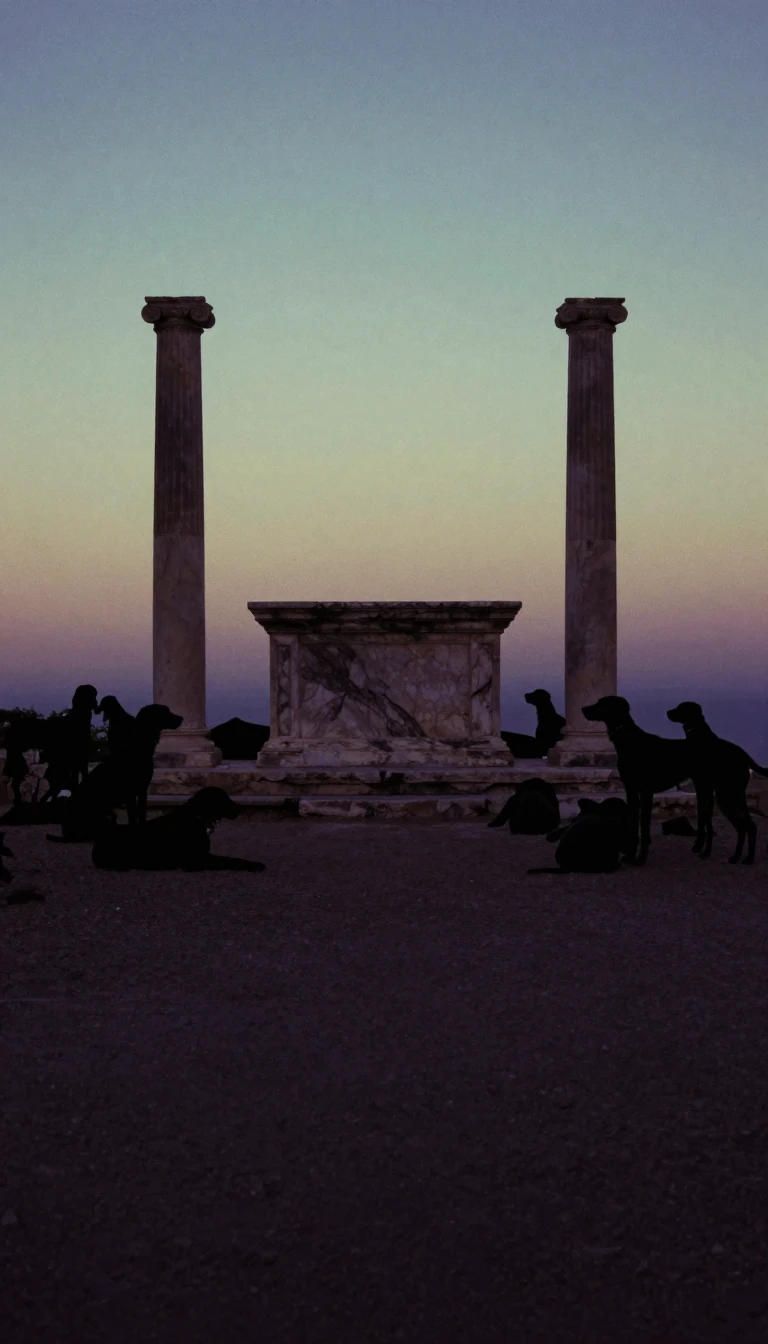
In short: In Greek mythology, Lampetia served as a celestial shepherdess on the island of Thrinacia. Armed with an orichalcum staff, she watched over her father Helios's prized, ageless livestock. Her role in the Odyssey proved fatal for Odysseus's crew, marking a pivotal moment where divine duty collided with human desperation.
Lampetia, whose name translates to 'shining,' occupies a complex space in Greek mythology. She is most frequently identified as the daughter of the sun god Helios and the nymph Neaera. In this lineage, she shares the responsibility of guarding her father's sacred cattle and sheep on the island of Thrinacia, often identified as Sicily. These animals were unique, possessing white coats and golden horns, and they were famously immortal, neither aging nor breeding.
The most prominent account of Lampetia appears in Homer's Odyssey. When Odysseus and his starving crew were stranded on Thrinacia by a storm orchestrated by Zeus, the men eventually slaughtered some of the sacred cattle. Lampetia and her sister Phaethusa acted as the divine informants, rushing to Helios to report the sacrilege. Helios subsequently demanded retribution from Zeus, who destroyed the ship with a lightning bolt, leaving Odysseus as the sole survivor of the ordeal.
Her mythological identity is fluid, with various traditions offering conflicting genealogies. Some accounts categorize her as one of the Heliades, the daughters of Helios and the Oceanid Clymene. In these versions, she is the sister of Phaethon, and her narrative often includes a tragic transformation into a poplar or alder tree while mourning his death, with her tears hardening into amber. However, this version is contested; for instance, the Argonautica depicts her as alive and actively tending to the herds long after Phaethon's demise.
Beyond her role as a shepherdess, other traditions expand her life significantly. Hermippus, in his Trimeters, credits Lampetia with bearing five children to Asclepius, the god of medicine. These children—Machaon, Podaleirius, Iaso, Panacea, and Aegle—link her to the lineage of healing deities. This diversity in storytelling highlights how ancient figures like Lampetia were adapted by different authors to serve various narrative purposes, ranging from tragic figures of mourning to active participants in the divine order.
Opens the Intellect+ feed with this card first. Swipe up for the next one.
Sources
- Summary by Intellect · source: Lampetia
To cite this card, link to https://intellectplus.co.uk/app/ideas-lampetia.
How we source, check and correct cards: Editorial standards.
General information, not professional advice. Spotted an error? Flag the card or see corrections and complaints.
Intellect Plus is a visual educational discovery platform for exploring fascinating facts and ideas. Brain Food, Not Brain Rot. What is Intellect Plus?
Related
More in Greek mythology · More in Ideas & Philosophy · Latest · A–Z · All topics
