Could life on Earth be a cosmic stowaway from another distant star system?
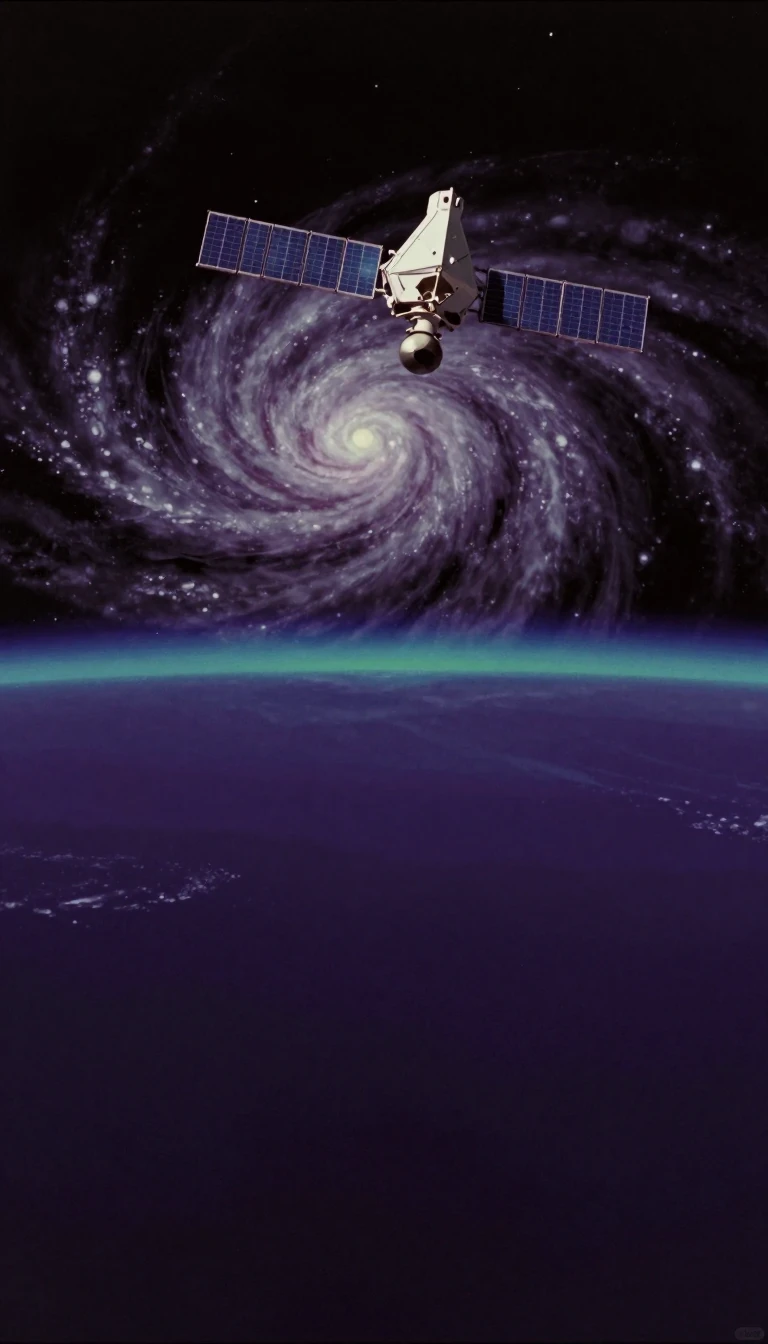
In short: Panspermia suggests life did not begin on Earth but arrived via meteorites or comets. While often dismissed as fringe, the theory persists in scientific discourse. It asks whether we are the product of local evolution or the descendants of extraterrestrial seeds that traveled across the vast, cold reaches of space.
The hypothesis of panspermia posits that life is distributed throughout the universe by cosmic debris. Unlike abiogenesis, which assumes life emerged from non-living matter on a primitive Earth, panspermia suggests life originated elsewhere and was transported here. The concept has deep roots, tracing back to the 5th century BCE philosopher Anaxagoras, though it gained its modern scientific framework in the early 20th century through the work of Svante Arrhenius. Arrhenius proposed that radiation pressure from stars could propel microscopic life, such as bacterial spores, across interstellar distances.
Modern iterations often focus on lithopanspermia, the transfer of organisms protected within rocks ejected from planetary surfaces. This process requires life to survive three brutal stages: the initial ejection from a planet, the harsh conditions of space transit, and the fiery re-entry into a new atmosphere. While experiments like the STONE project have shown that some organisms cannot survive atmospheric ablation, others suggest that small, non-photosynthetic life forms shielded deep within rocks might endure the journey. Mathematical models, such as those applied to the Trappist-1 system, suggest that such transfers could be statistically more probable in compact planetary systems than in our own.
Despite its longevity, panspermia remains a controversial and largely untestable theory. Critics argue that it merely shifts the question of life's origin to another location rather than solving it. Furthermore, the theory has been marred by historical hoaxes, such as the 1864 Orgueil meteorite incident, where a seed capsule was fraudulently glued into a fragment to influence debates on spontaneous generation. While pseudo-panspermia—the well-supported idea that the organic building blocks of life, like amino acids, arrived from space—is widely accepted, the jump to the transport of living organisms remains a speculative, albeit fascinating, frontier of astrobiology.
Directed panspermia, a more radical variant proposed by Francis Crick and Leslie Orgel in 1972, suggests that life might have been intentionally brought to Earth by an advanced extraterrestrial civilization. While they argued that the universality of the genetic code made an infective origin plausible, this remains firmly in the realm of conjecture. Today, the search for biosignatures on multiple planets remains the only potential path to validating whether panspermia is a genuine mechanism for the spread of life.
Opens the Intellect+ feed with this card first. Swipe up for the next one.
Sources
- Summary by Intellect · source: Panspermia
To cite this card, link to https://intellectplus.co.uk/app/ideas-panspermia.
How we source, check and correct cards: Editorial standards.
General information, not professional advice. Spotted an error? Flag the card or see corrections and complaints.
Intellect Plus is a visual educational discovery platform for exploring fascinating facts and ideas. Brain Food, Not Brain Rot. What is Intellect Plus?
Related
More in Philosophers · More in Ideas & Philosophy · Latest · A–Z · All topics
