Is Earth a cosmic fluke, or is complex life common throughout the universe?
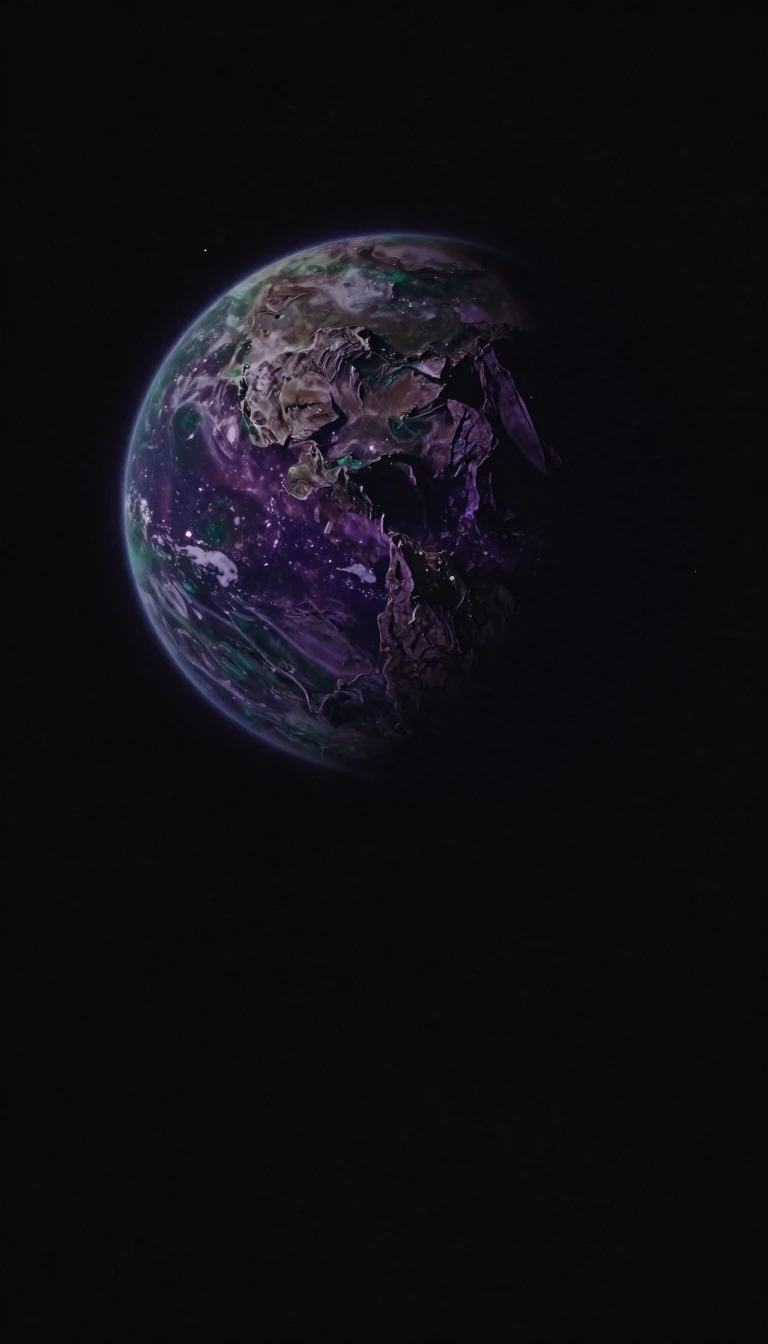
In short: The Rare Earth hypothesis suggests that the evolution of complex life requires an improbable sequence of astrophysical and geological events. While the universe is vast, this theory argues that the specific conditions needed for multicellular organisms are so rare that we may be effectively alone in the cosmos.
The Rare Earth hypothesis, introduced by Peter Ward and Donald E. Brownlee in 2000, challenges the principle of mediocrity championed by Carl Sagan and Frank Drake. While earlier thinkers assumed Earth was a typical planet in a common galaxy, Ward and Brownlee argue that the emergence of complex life depends on a narrow, fortuitous set of variables. These include a stable, circular orbit within a galaxy's habitable zone, a star with precise luminosity, and a planetary system structured with gas giants to deflect catastrophic impacts.
Central to this argument is the necessity of a terrestrial planet with the right mass and composition to support plate tectonics and a protective magnetic field. Earth’s unique features, such as the presence of a large moon—likely formed by a collision with a body named Theia—are seen as critical stabilizers for the planet's axial tilt and climate. Without these specific conditions, the hypothesis suggests that life would likely remain stuck at the level of simple, single-celled bacteria, unable to achieve the complexity seen in the Cambrian explosion.
The theory also addresses the Fermi paradox, which questions why we have not detected extraterrestrial intelligence if the universe is so vast. Proponents argue that even if Earth-like planets exist, they are likely separated by thousands of light-years, making communication impossible. Furthermore, the evolution of eukaryotes—the building blocks of complex life—may have required a singular, unlikely event: the incorporation of one simple cell into another to create mitochondria. If this transition is as rare as it seems, complex life may be a lonely phenomenon in the universe.
Opens the Intellect+ feed with this card first. Swipe up for the next one.
Sources
- Summary by Intellect · source: Rare Earth hypothesis
To cite this card, link to https://intellectplus.co.uk/app/space-rare-earth-hypothesis.
How we source, check and correct cards: Editorial standards.
General information, not professional advice. Spotted an error? Flag the card or see corrections and complaints.
Intellect Plus is a visual educational discovery platform for exploring fascinating facts and ideas. Brain Food, Not Brain Rot. What is Intellect Plus?
Related
More in Planetary science · More in Space · Latest · A–Z · All topics
