Why the human mind is a fountain of symbols, not just a logic machine.
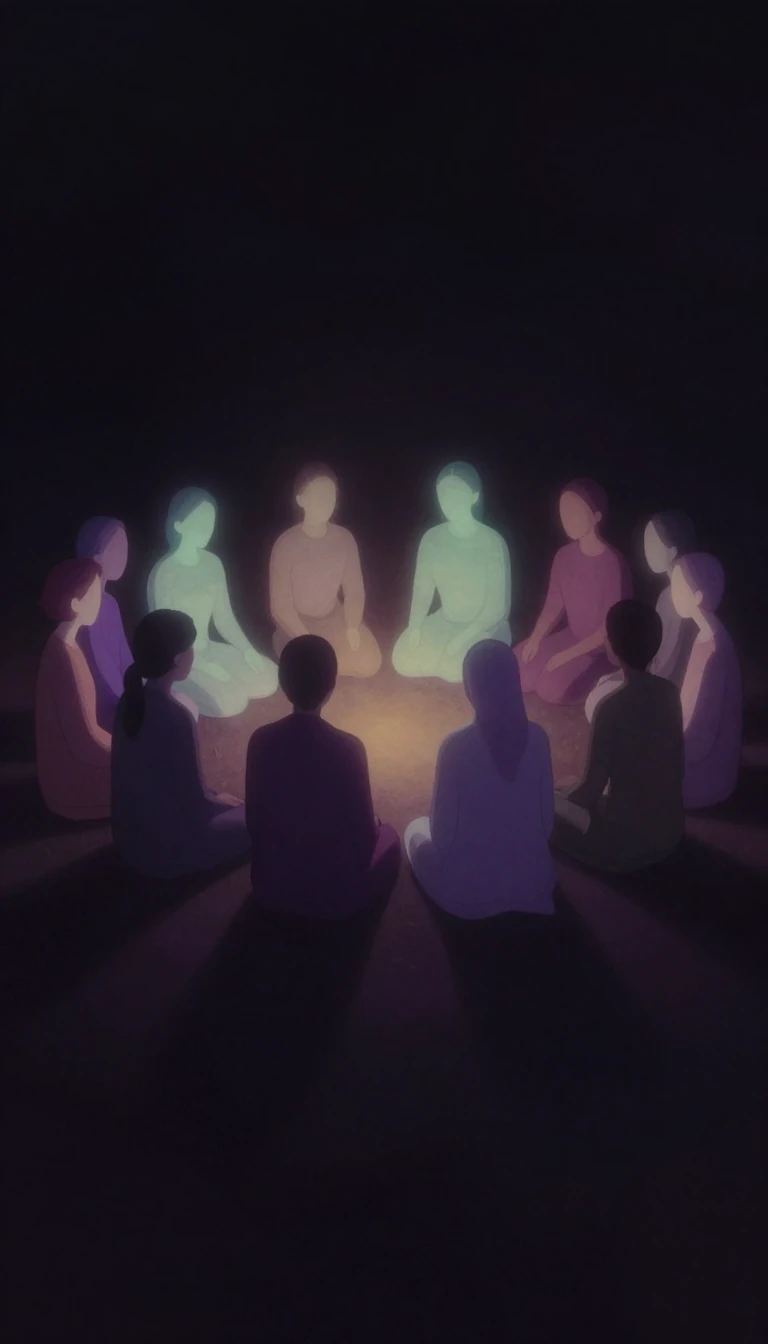
In short: Susanne Langer argued that humans are defined by a pervasive need to symbolize. While animals respond to simple signs, our minds constantly transform experience into meaning. This process, she claimed, is the foundation of all human knowing, art, and culture, turning our world into a shared, symbolic reality.
Susanne Langer, one of the first women to forge a career as an academic philosopher in America, fundamentally shifted how we view consciousness. In her seminal 1942 work, Philosophy in a New Key, she proposed that the human mind is not merely a processor of data but a 'veritable fountain' of spontaneous ideas. She argued that the essential human activity is symbolic transformation—the process of 'seeing' one thing in terms of another. This drive to invent and invest meaning into the world is what separates human cognition from the stimulus-response patterns of animal life.
Langer famously distinguished between discursive and presentational symbols. Discursive symbols, like language, arrange elements with stable meanings to build a logical structure. In contrast, presentational symbols—found in art, music, and architecture—cannot be understood by analyzing their parts in isolation. Instead, they function as a whole, creating a 'virtual' space of contemplation. For Langer, art is not just an aesthetic object; it is a tangible, created entity that represents human feeling. She viewed architecture, for instance, as the conceptual translation of space into a virtual form for symbolic perceiving.
Influenced by Alfred North Whitehead and Ernst Cassirer, Langer eventually sought to ground her aesthetic theories in biology and psychology. In her final three-volume project, Mind: An Essay on Human Feeling, she explored how the central nervous system evolved to support cognitive interactions. She posited that 'feeling' is an inherently biological concept, rooted in the rhythmic cooperation of bodily organs. By connecting evolutionary genetics to the life of the mind, Langer aimed to establish a scientific underpinning for the human experience, suggesting that our very capacity for culture and knowledge is built upon these shared, symbolic systems.
Her work remains influential across diverse fields, from urban planning and anthropology to digital media theory. While some scholars debate her precise impact on modern rhetoric, her assertion that language is intrinsic to thinking and perception continues to challenge traditional, logic-centered views of human discourse. By arguing that discourse forms through shared sensory experiences rather than purely logical abstraction, Langer offered a perspective that remains vital for understanding how we construct our reality.
Opens the Intellect+ feed with this card first. Swipe up for the next one.
Sources
- Summary by Intellect · source: Susanne Langer
To cite this card, link to https://intellectplus.co.uk/app/ideas-susanne-langer.
How we source, check and correct cards: Editorial standards.
General information, not professional advice. Spotted an error? Flag the card or see corrections and complaints.
Intellect Plus is a visual educational discovery platform for exploring fascinating facts and ideas. Brain Food, Not Brain Rot. What is Intellect Plus?
Related
More in Philosophers · More in Ideas & Philosophy · Latest · A–Z · All topics
