How a Dutch lawyer became the primary architect of Newtonian physics in Europe
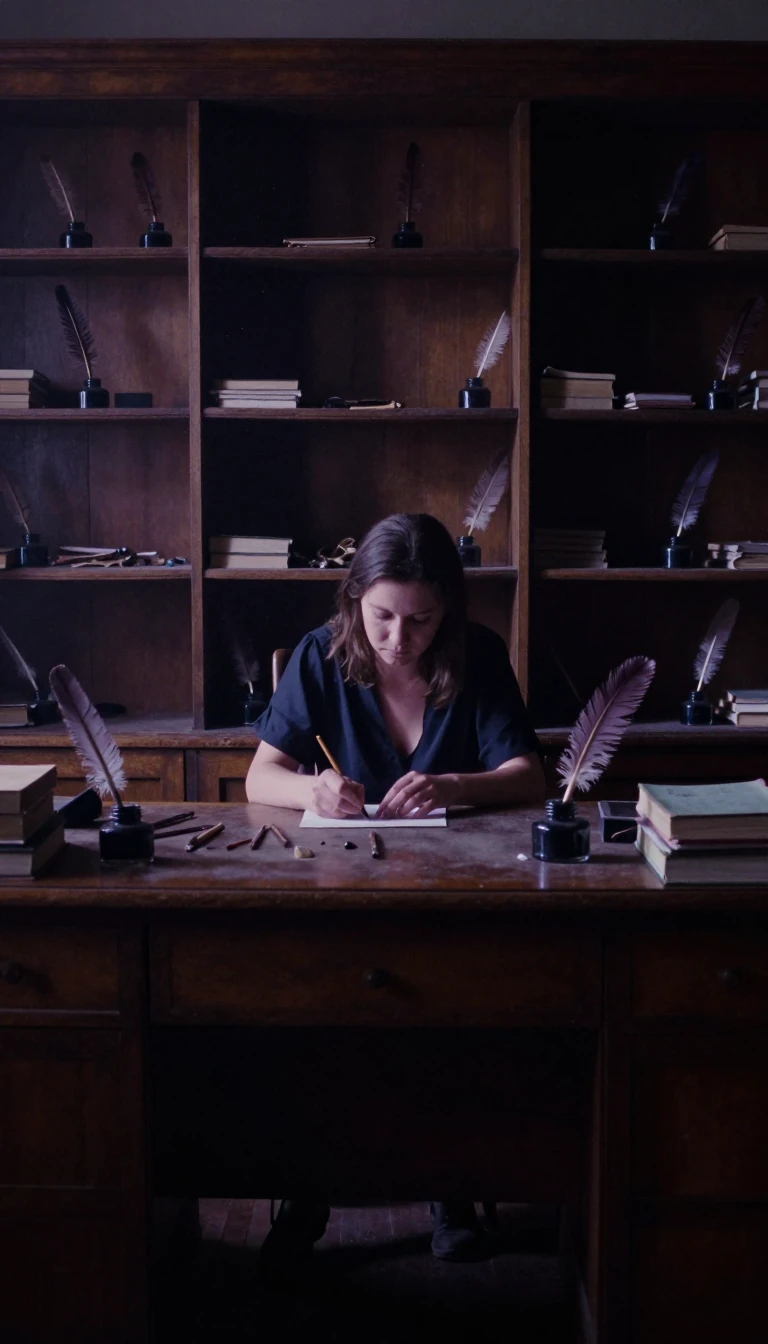
In short: Willem 's Gravesande was a legal professional who transformed into a scientific luminary. By championing experimental demonstrations over pure theory, he turned Leiden University into a hub for Newtonian thought, fundamentally changing how physics was taught and understood across the continent during the early eighteenth century.
Born in 1688, Willem 's Gravesande initially followed a traditional path, earning a law degree from Leiden University in 1707. While he practiced law in The Hague, his intellectual curiosity led him toward mathematics and natural philosophy. His trajectory shifted dramatically during a 1715 diplomatic mission to London, where he met Isaac Newton and joined the Royal Society. This encounter is often cited as the catalyst for his career, though modern scholarship suggests his appointment at Leiden in 1717 was also the result of his own innovative technical papers and established reputation among elite circles.
Once established as a professor of mathematics and astronomy, 's Gravesande revolutionized pedagogy by integrating experimental proof into his lectures. His seminal two-volume work, published in 1720 and 1721, served as a foundational textbook for Newtonian mechanics. He argued that physical laws must be discovered through phenomena and induction rather than abstract speculation. This approach proved highly influential, attracting hundreds of international students to Leiden, where he and Hermann Boerhaave became the university's twin intellectual pillars.
His scientific contributions were marked by both rigor and controversy. He famously engaged in the 'vis viva' dispute, initially debating the nature of force before conducting experiments with falling brass balls that provided early empirical evidence for kinetic energy. Despite his scientific acumen, he remained open to unconventional ideas, famously investigating a purported perpetual motion machine by Orffyreus in 1721. His legacy persists in physics classrooms today through his simple yet elegant demonstration of thermal expansion, where a heated metal ball expands to become blocked by a ring it previously passed through.
Opens the Intellect+ feed with this card first. Swipe up for the next one.
Sources
- Summary by Intellect · source: Willem 'sGravesande - Biography
- Also: The impeccable credentials of an untrained philosopher: Willem Jacob 's Gravesande's career before his Leiden professorship, 1688–1717
- Also: Willem 's Gravesande
To cite this card, link to https://intellectplus.co.uk/app/ideas-willem-s-gravesande.
How we source, check and correct cards: Editorial standards.
General information, not professional advice. Spotted an error? Flag the card or see corrections and complaints.
Intellect Plus is a visual educational discovery platform for exploring fascinating facts and ideas. Brain Food, Not Brain Rot. What is Intellect Plus?
Related
More in Philosophers · More in Ideas & Philosophy · Latest · A–Z · All topics
