Was George Enescu the greatest musical phenomenon since Mozart, as Pablo Casals once claimed?
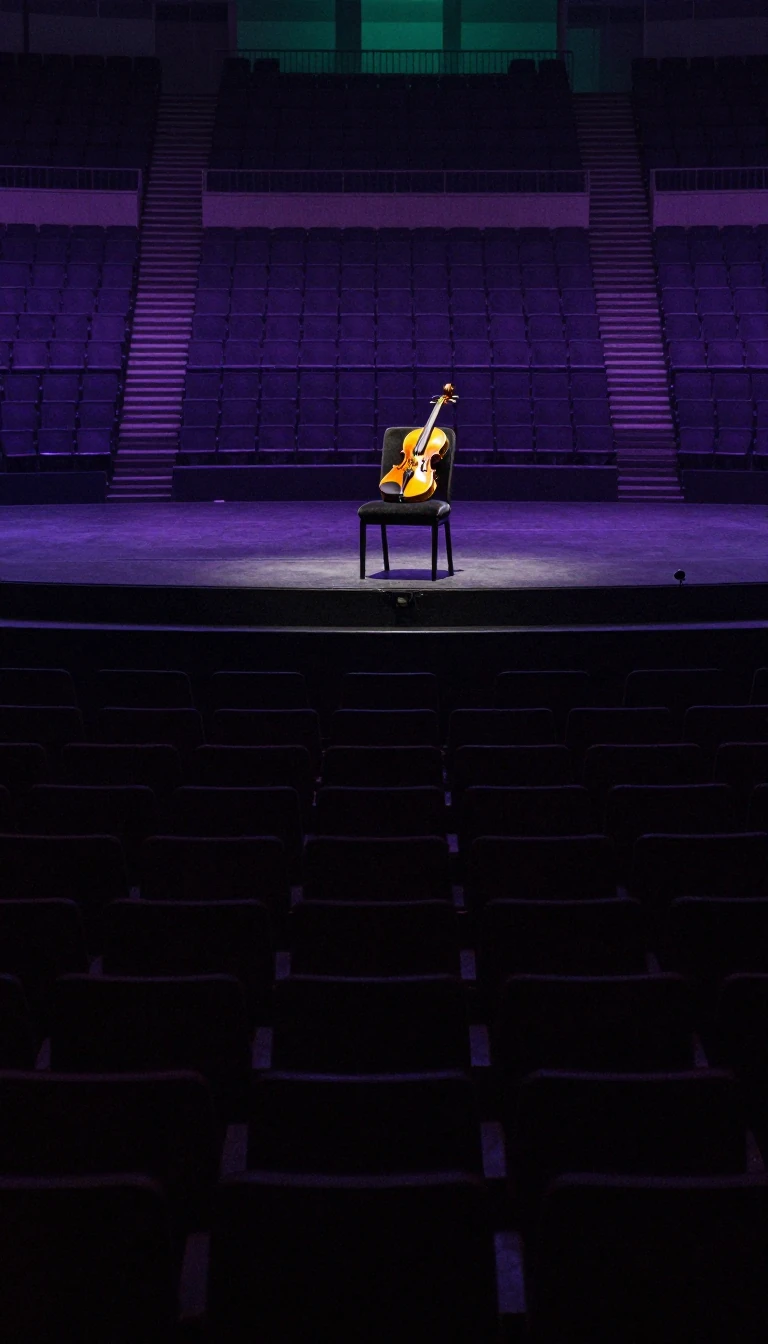
In short: A child prodigy who entered the Vienna Conservatory at seven, George Enescu became a legendary violinist, composer, and teacher. His influence was so profound that peers believed he could reconstruct Beethoven’s entire body of work from memory, and his students included some of the twentieth century’s most celebrated virtuosos.
Born in 1881 in the Romanian village of Liveni, Enescu was a prodigy who began composing at age five. By seven, he secured a rare age dispensation to enter the Vienna Conservatory, becoming its first non-Austrian student. His early exposure to the European musical elite included meeting Johannes Brahms, whose symphonic structures later influenced his own development. In 1895, he moved to Paris, where he studied under masters like Gabriel Fauré and Jules Massenet, eventually debuting his first mature work, Poema Română, at age 16.
Enescu’s output was remarkably diverse, spanning five mature symphonies, chamber music, and his singular opera, Œdipe. His compositions often integrated Romanian folk motifs, a style that defined his most popular works, such as the two Romanian Rhapsodies. Beyond his creative output, he was a titan of pedagogy, teaching luminaries like Yehudi Menuhin, who credited Enescu as the most formative influence of his life. Enescu’s reputation as a performer was equally formidable; he was renowned for his interpretations of Bach, which he famously described as the 'Himalayas of violinists.'
The depth of his musical memory and technical mastery led to extraordinary claims from his contemporaries. Vincent d'Indy suggested that Enescu possessed the uncanny ability to reconstruct the entire canon of Beethoven from memory, while pianist Alfred Cortot remarked that Enescu’s piano technique surpassed his own. Despite his immense stature during his lifetime—including a 1923 American conducting debut at Carnegie Hall and his appointment to the Romanian Senate—his works have faced varying levels of international recognition. Today, he remains a foundational figure in Romanian music, honored by festivals, museums, and a dedicated international prize.
Opens the Intellect+ feed with this card first. Swipe up for the next one.
Sources
- Summary by Intellect · source: George Enescu
- Also: www.britannica.com — George Enesco | Biography, Music, & Facts | Britannica
To cite this card, link to https://intellectplus.co.uk/app/music-george-enescu.
How we source, check and correct cards: Editorial standards.
General information, not professional advice. Spotted an error? Flag the card or see corrections and complaints.
Intellect Plus is a visual educational discovery platform for exploring fascinating facts and ideas. Brain Food, Not Brain Rot. What is Intellect Plus?
Related
More in Musicians and composers · More in Music · Latest · A–Z · All topics
