How a runaway violinist became the Baroque era's most innovative musical architect
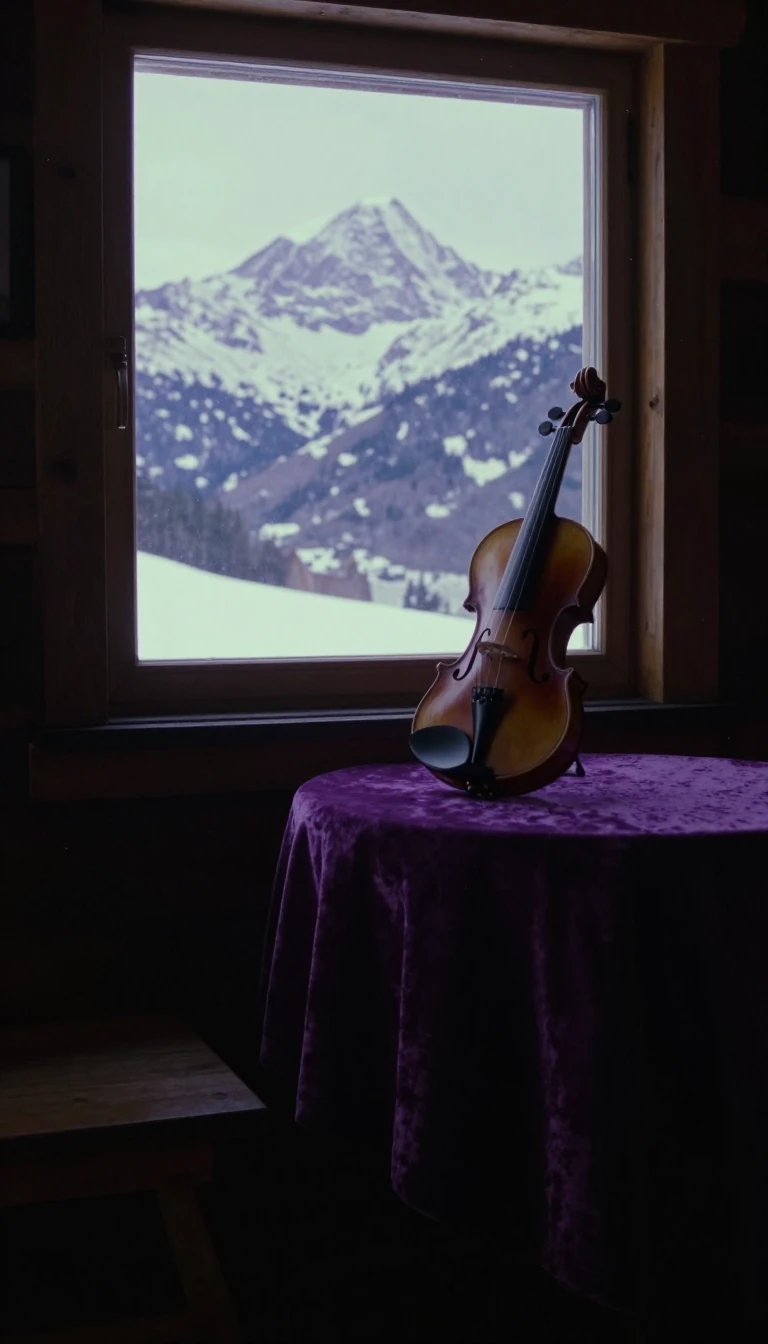
In short: Heinrich Biber was a Bohemian virtuoso who famously abandoned his employer to chase a new life in Salzburg. He never toured, yet his reputation spanned Europe. By mastering the violin's technical limits and pioneering unconventional tunings, he transformed sacred music into a complex, multi-dimensional experience that still resonates today.
Born in 1644 in Wartenberg, Bohemia, Heinrich Biber rose from a humble valet to the prestigious position of kapellmeister at the Salzburg court. His career path was unconventional; in 1670, he left his post in Kroměříž without permission to join the archbishop of Salzburg. Despite this breach of contract, he maintained a professional connection with his former employer, regularly sending manuscripts back to the court. His talent was so undeniable that he was eventually ennobled by Emperor Leopold I in 1690, solidifying his status as a central figure in European music.
Biber’s genius lay in his ability to push the violin beyond its perceived boundaries. He was a master of scordatura, a technique involving abnormal instrument tuning to create unique sonic effects, which he famously employed in his 15 Mystery Sonatas. His technical prowess allowed him to execute intricate polyphonic passages and reach advanced positions on the fingerboard that surpassed many of his Italian contemporaries. His compositions, such as the Missa Salisburgensis, demonstrated his mastery of large-scale architecture, utilizing seven distinct ensembles placed strategically throughout the cathedral to celebrate the archbishopric's 1,100th anniversary.
Beyond his technical innovations, Biber was a prolific composer of sacred and dramatic music, including the opera Chi la dura, la vince. His influence extended to his family, as his children followed in his musical footsteps; his son Karl eventually succeeded him as kapellmeister, and his daughter Anna became a director of music at the Nonnberg convent. While his style was eventually eclipsed by the rising popularity of Arcangelo Corelli, Biber’s work remains a cornerstone of Baroque violin literature, celebrated for its structural complexity and expressive depth.
Opens the Intellect+ feed with this card first. Swipe up for the next one.
Sources
- Summary by Intellect · source: Heinrich Biber | Baroque Composer & Violinist | Britannica
- Also: Heinrich Ignaz Franz Biber
To cite this card, link to https://intellectplus.co.uk/app/music-heinrich-ignaz-franz-biber.
How we source, check and correct cards: Editorial standards.
General information, not professional advice. Spotted an error? Flag the card or see corrections and complaints.
Intellect Plus is a visual educational discovery platform for exploring fascinating facts and ideas. Brain Food, Not Brain Rot. What is Intellect Plus?
Related
More in Musicians and composers · More in Music · Latest · A–Z · All topics
