The English composer who taught the Renaissance how to harmonize with sweet, sonorous sound.
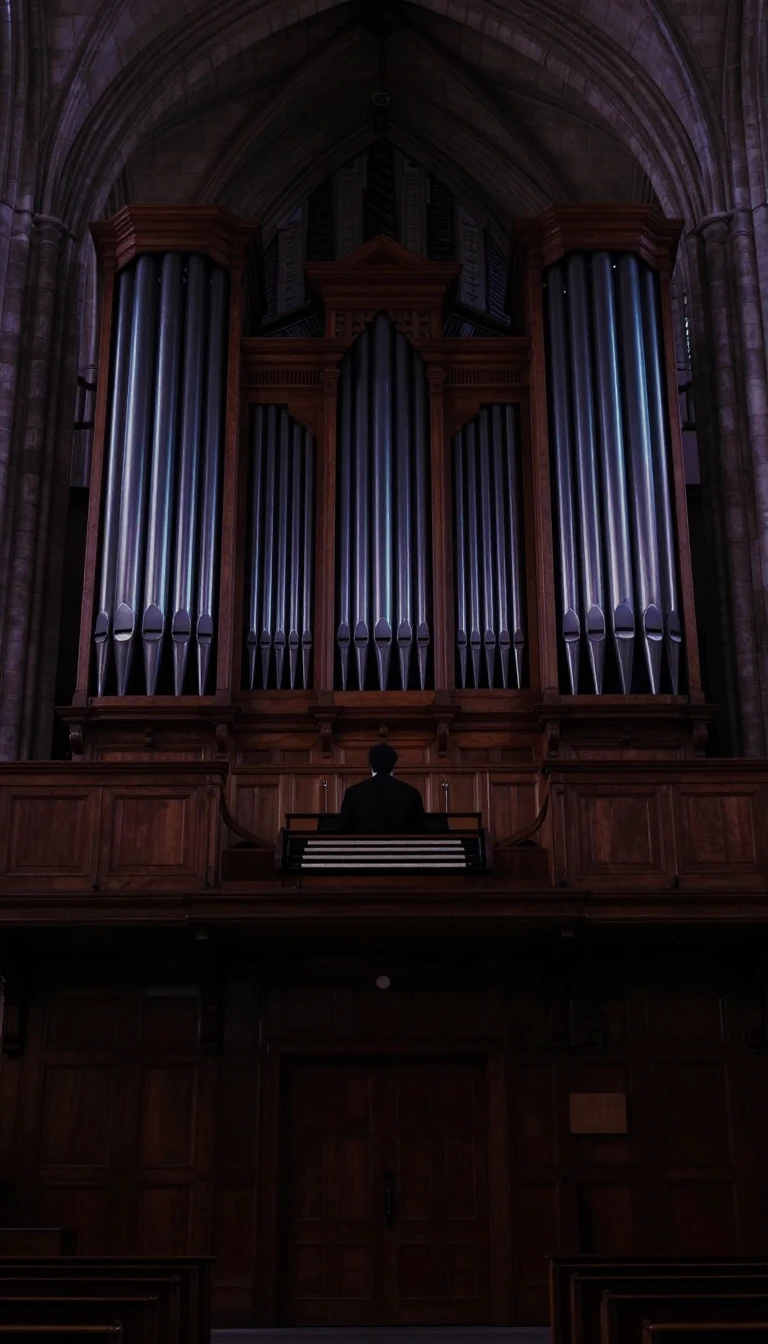
In short: John Dunstaple was the architect of the English manner, a musical style that transformed European composition in the 15th century. While his life remains shrouded in mystery, his influence on continental masters like Guillaume Dufay was profound, forever shifting the trajectory of Western music from medieval dissonance to harmonic beauty.
John Dunstaple, who died in London on December 24, 1453, stands as a pivotal figure bridging the late medieval and early Renaissance eras. Despite his immense stature, biographical details are remarkably scarce. Born around 1385, he served the Duke of Bedford, regent of France from 1422 to 1435, likely traveling with him across the Channel. This service facilitated the spread of his music, which was preserved largely in continental manuscripts after the English Reformation led to the widespread destruction of domestic musical records between 1536 and 1540.
Dunstaple’s signature contribution was the 'English manner'—a style defined by full, sonorous harmonies built on thirds and sixths. This departed from the starker, more dissonant textures prevalent in continental music at the time. His compositions, numbering about 60, frequently utilized isorhythm, a technique where rhythmic and melodic patterns of varying lengths overlap. He also pioneered a structure where the treble line dominated, often featuring an ornamented cantus firmus, a departure from the traditional tenor-led polyphony.
Beyond his musical genius, Dunstaple was a polymath. His epitaph and various non-musical manuscripts suggest he was a skilled mathematician, astronomer, and astrologer. He owned treatises by Boethius and likely copied scientific manuscripts, reflecting a mind that viewed music as part of a broader mathematical order. While some early accounts erroneously conflated him with a 10th-century saint, modern scholarship confirms his identity as a secular musician and landowner, distinct from the clerical class that dominated the era's musical output.
The legacy of his 'sweet' sound was explicitly recognized by contemporaries like Martin le Franc, who credited Dunstaple for the superiority of leading composers such as Guillaume Dufay and Gilles Binchois. By prioritizing a flowing, asymmetrical rhythm and a harmonic language that favored consonance, Dunstaple provided the foundational tools for the Renaissance musical revolution, ensuring his work remained a cornerstone of European musical development for generations.
Opens the Intellect+ feed with this card first. Swipe up for the next one.
Sources
- Summary by Intellect · source: John Dunstable | Medieval music, polyphony, motets | Britannica
- Also: John Dunstaple
To cite this card, link to https://intellectplus.co.uk/app/music-john-dunstaple.
How we source, check and correct cards: Editorial standards.
General information, not professional advice. Spotted an error? Flag the card or see corrections and complaints.
Intellect Plus is a visual educational discovery platform for exploring fascinating facts and ideas. Brain Food, Not Brain Rot. What is Intellect Plus?
Related
More in Musicians and composers · More in Music · Latest · A–Z · All topics
