Orchestration is the art of painting with sound, not just writing notes.
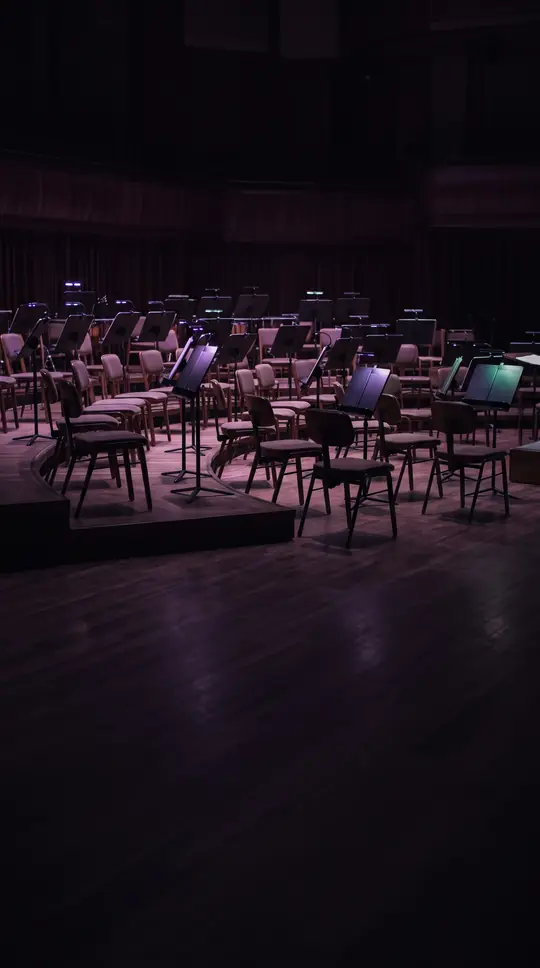
In short: Orchestration is the craft of assigning specific instruments to musical parts to create unique tonal colors. While composers once handled this themselves, it has evolved into a specialized profession. From the delicate textures of Bach to the bold innovations of Berlioz, orchestrators manipulate timbre to transform how we experience music.
At its core, orchestration involves deciding which instruments will play a melody, harmony, or rhythm. An orchestrator considers the register, dynamics, and physical capabilities of each instrument—such as the monophonic nature of brass versus the polyphonic flexibility of strings—to build a specific sound. By layering instruments or doubling melodies across different sections, they can create effects ranging from a 'glittery sheen' to a 'heavy and dark' atmosphere. This practice is not limited to large ensembles; it applies to any group, from string quartets to modern orchestras incorporating synthesizers.
Historically, classical composers usually orchestrated their own works, but the field has branched out. Today, film and musical theatre often rely on dedicated orchestrators to meet tight deadlines or supplement a composer's skill set. In jazz, orchestrators frequently 'flesh out' basic lead sheets into complex arrangements for big bands. While academic credentials like a Master's or Doctorate are increasingly valued in university teaching, professional experience remains the primary currency for those working in commercial film and theatre production.
The evolution of orchestration is marked by masters who treated the orchestra like an artist’s palette. Bach was celebrated for his 'incomparable instrumental writing,' while Haydn and Mozart were pioneers in using orchestration to define symphonic form and create 'gorgeous washes of colour.' Beethoven pushed boundaries with sudden, dramatic contrasts, and Berlioz—author of a famous Treatise on Instrumentation—revolutionized the field by treating timbre as an independent element of composition. His work in the 1830s, such as the 'Queen Mab' scherzo, demanded unprecedented precision and paved the way for the rich, complex textures of later composers like Debussy and Ravel.
Understanding orchestration requires mastering a complex shorthand. Standard notation uses a formulaic convention to denote instrumentation, such as '3[1.2.3/pic]' to indicate three flautists with the third doubling on piccolo. This precision allows composers to communicate exactly how they want their musical ideas realized, ensuring that every shimmer, dissonance, or powerful tutti is executed as intended.
Opens the Intellect+ feed with this card first. Swipe up for the next one.
Sources
- Summary by Intellect · source: Orchestration
To cite this card, link to https://intellectplus.co.uk/app/music-orchestration.
How we source, check and correct cards: Editorial standards.
General information, not professional advice. Spotted an error? Flag the card or see corrections and complaints.
Intellect Plus is a visual educational discovery platform for exploring fascinating facts and ideas. Brain Food, Not Brain Rot. What is Intellect Plus?
Related
More in Music · More in Music · Latest · A–Z · All topics
