Witold Lutosławski: How a Polish Composer Used Randomness to Outsmart Totalitarian Control
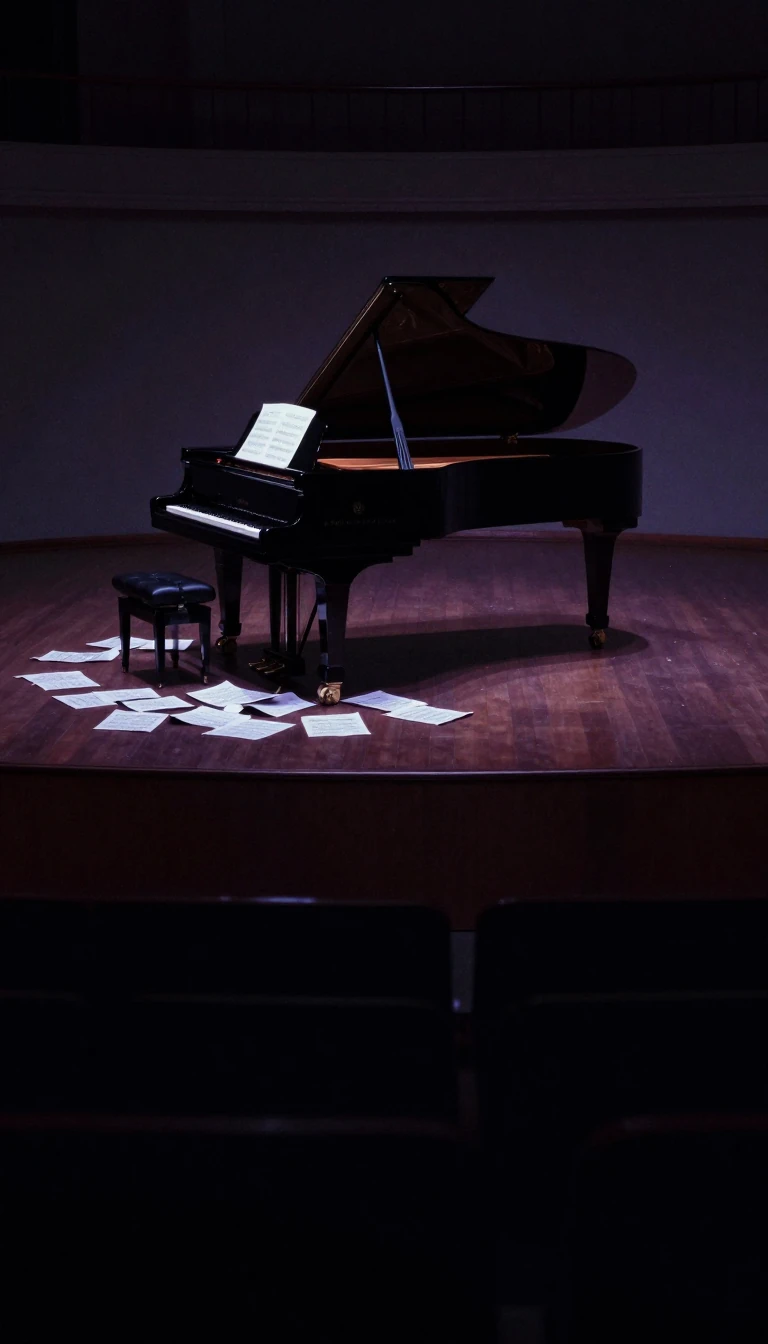
In short: Witold Lutosławski, widely considered the greatest Polish composer since Chopin, navigated the suffocating constraints of Stalinist censorship by inventing a unique musical language. By blending rigorous harmonic control with controlled aleatoric elements, he created a sophisticated, defiant sound that resonated far beyond the borders of Soviet-occupied Poland.
Born in 1913, Lutosławski’s early life was marked by the turbulence of the 20th century. After his father was executed by a Bolshevik firing squad in 1918, Lutosławski eventually established himself as a prominent composer in Warsaw. However, his career faced severe political pressure under Stalinist rule. In 1948, his First Symphony was officially proscribed as 'formalist'—a label used by authorities to condemn music deemed inaccessible to the masses. This censorship forced him to compose functional, folk-inspired pieces to survive, a period he later described as composing as he was 'able' rather than as he wished.
The turning point in his artistic evolution came in the late 1950s. Seeking to escape the 'cul-de-sac' of post-tonal composition, Lutosławski developed a signature twelve-note system that built harmonies from specific intervals, such as semitones and augmented fourths. This technique allowed him to construct dense, complex chords while maintaining structural integrity. Crucially, in 1960, he encountered the work of John Cage. While he rejected Cage's philosophy, the concept of indeterminacy inspired Lutosławski to introduce 'limited aleatoric elements' into his scores. This allowed him to retain precise control over the architecture of his music while granting performers a degree of rhythmic freedom.
Throughout the 1980s, Lutosławski became a symbol of artistic resistance, supporting the Solidarity movement and refusing all professional engagements in Poland during the period of martial law. His later works, such as the Third Symphony and the 'Chain' series, solidified his international reputation. By the time of his death in 1994, he had been awarded the Order of the White Eagle, Poland's highest honour. His legacy remains that of a master who, despite living under constant political scrutiny, successfully 'fished for souls' by creating music that demanded both intellect and deep emotional engagement from his listeners.
Opens the Intellect+ feed with this card first. Swipe up for the next one.
Sources
- Summary by Intellect · source: Witold Lutosławski
To cite this card, link to https://intellectplus.co.uk/app/music-witold-lutos-awski.
How we source, check and correct cards: Editorial standards.
General information, not professional advice. Spotted an error? Flag the card or see corrections and complaints.
Intellect Plus is a visual educational discovery platform for exploring fascinating facts and ideas. Brain Food, Not Brain Rot. What is Intellect Plus?
Related
More in Musicians and composers · More in Music · Latest · A–Z · All topics
