Deep in the Canadian wilderness lies rock that formed four billion years ago.
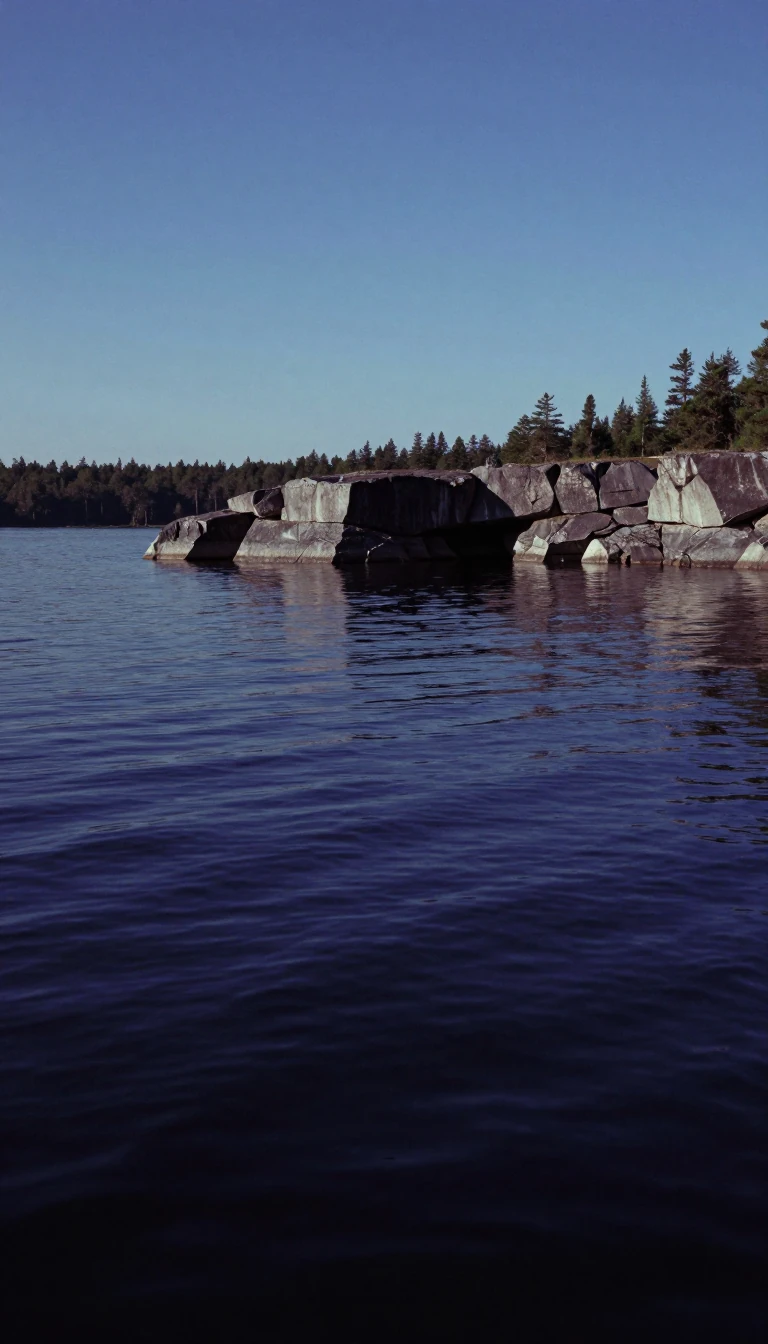
In short: The Acasta gneisses, found near Canada's Great Slave Lake, are among the oldest rocks on Earth. Radiometric dating places their formation between 4.0 and 3.9 billion years ago, offering a rare glimpse into the Hadean Eon and the early processes that shaped our planet's ancient crust.
The Acasta gneisses are a collection of granitic rocks located in the northwestern corner of the Canadian Shield. These formations are scientifically significant because they contain some of the oldest crustal material ever discovered. While the bulk of the rock dates to approximately 4.0 billion years ago, researchers have identified a single relict zircon grain within the complex that is 4.2 billion years old. This discovery suggests that the rocks originated from the melting and remelting of even older basaltic material, a process driven by intense tectonic activity during the early Archean Eon.
Understanding the history of these rocks requires complex geochemical analysis. The primary method for establishing their age is the uranium-lead technique, which has consistently placed the gneisses at least 3.8 billion years old, with some estimates reaching as high as 3.96 billion years. These rocks are not uniform; they represent a heterogeneous assemblage that has undergone repeated cycles of magmatic intrusion and thermal metamorphism over hundreds of millions of years. This long history of transformation makes them a vital record of how Earth's early surface evolved from a molten state into a stable crust.
Despite their importance, much of the Acasta Gneiss remains a mystery. The region is remote and largely obscured by a thick layer of glacial deposits, meaning only a small fraction of the total area has been studied in detail. Furthermore, the status of these rocks as the absolute oldest on Earth is occasionally debated, as other ancient formations, such as the Isua belt in Greenland, provide competing evidence of early geological history. Nevertheless, the Acasta gneisses remain a cornerstone for geologists seeking to reconstruct the conditions of the Hadean Eon and the emergence of the first continental landmasses.
The study of these rocks is not merely an academic pursuit; it provides a window into the fundamental mechanics of planetary formation. By examining the chemical signatures trapped within these ancient crystals, scientists can infer the temperature and pressure conditions that existed billions of years ago. As research continues, the Acasta gneisses remain the primary benchmark for dating the early Earth, serving as a physical bridge to a time when our planet was still in its infancy.
Opens the Intellect+ feed with this card first. Swipe up for the next one.
Sources
- Summary by Intellect · source: Acasta gneiss | rock | Britannica
- Also: Acasta Gneiss
To cite this card, link to https://intellectplus.co.uk/app/nature-acasta-gneiss.
How we source, check and correct cards: Editorial standards.
General information, not professional advice. Spotted an error? Flag the card or see corrections and complaints.
Intellect Plus is a visual educational discovery platform for exploring fascinating facts and ideas. Brain Food, Not Brain Rot. What is Intellect Plus?
Related
More in Geology · More in Nature · Latest · A–Z · All topics
