Beneath Canada's North lies a 4-billion-year-old fragment of Earth's earliest continental crust.
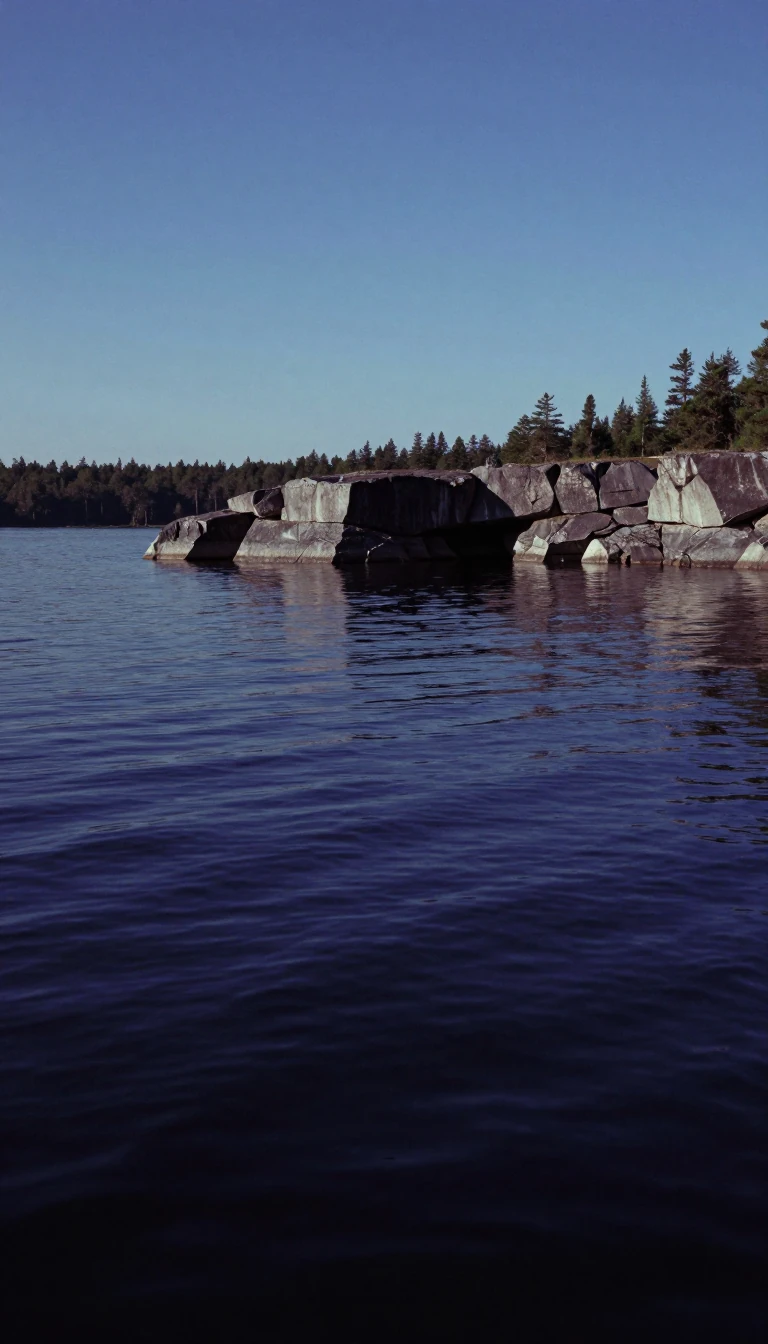
In short: The Slave Craton is a geological time capsule containing some of the oldest rocks ever discovered. Spanning 300,000 square kilometers, this ancient block of the Canadian Shield offers a rare, exposed window into the Hadean and Archean eons, revealing how the planet's first continents were forged and stabilized.
The Slave Craton, located in the Northwest Territories and Nunavut, is a cornerstone of the North American palaeocontinent, Laurentia. Its basement complex, specifically the Central Slave Basement Complex, hosts the Acasta Gneiss. Dated at approximately 4.03 billion years old, these rocks are among the oldest on Earth. Intriguingly, zircon xenocrysts found within these gneisses suggest even older origins, with dates reaching 4.2 billion years. These crystals imply that crustal reworking—the process of melting and reforming existing crust—was already active during the Eoarchean, potentially pointing to the existence of continental granite as early as the Hadean Eon.
The craton's structural evolution is defined by a complex history of volcanic and sedimentary deposition, notably the Yellowknife Supergroup, which accumulated over 300 million years. This sequence includes the Central Slave Cover Group, a layer of fuchsitic quartzites that marks a global peak in quartzite production between 3.1 and 2.8 billion years ago. The stability of the craton itself is attributed to a deep, thick continental lithospheric mantle, which protected the crust from thermal erosion. Evidence for this thick root is found in the presence of diamonds, with some mantle-derived specimens dating back to between 3.5 and 3.3 billion years.
Geologists continue to debate the craton's assembly, particularly the nature of its eastern boundary. Whether the Eastern Slave Province formed through the rifting of an existing landmass or the accretion of an island arc terrane remains unresolved. By 2.6 billion years ago, the Slave had collided with the larger Sclavia supercontinent, only to break away between 2.2 and 2.0 billion years ago. Following a period of drifting, it eventually accreted with the Rae Craton during the Taltson–Thelon orogeny, cementing its place within the foundation of North America.
Opens the Intellect+ feed with this card first. Swipe up for the next one.
Sources
- Summary by Intellect · source: Slave Craton
To cite this card, link to https://intellectplus.co.uk/app/nature-slave-craton.
How we source, check and correct cards: Editorial standards.
General information, not professional advice. Spotted an error? Flag the card or see corrections and complaints.
Intellect Plus is a visual educational discovery platform for exploring fascinating facts and ideas. Brain Food, Not Brain Rot. What is Intellect Plus?
Related
More in Geology · More in Nature · Latest · A–Z · All topics
