Sea stars and acorn worms belong to one surprisingly close family tree
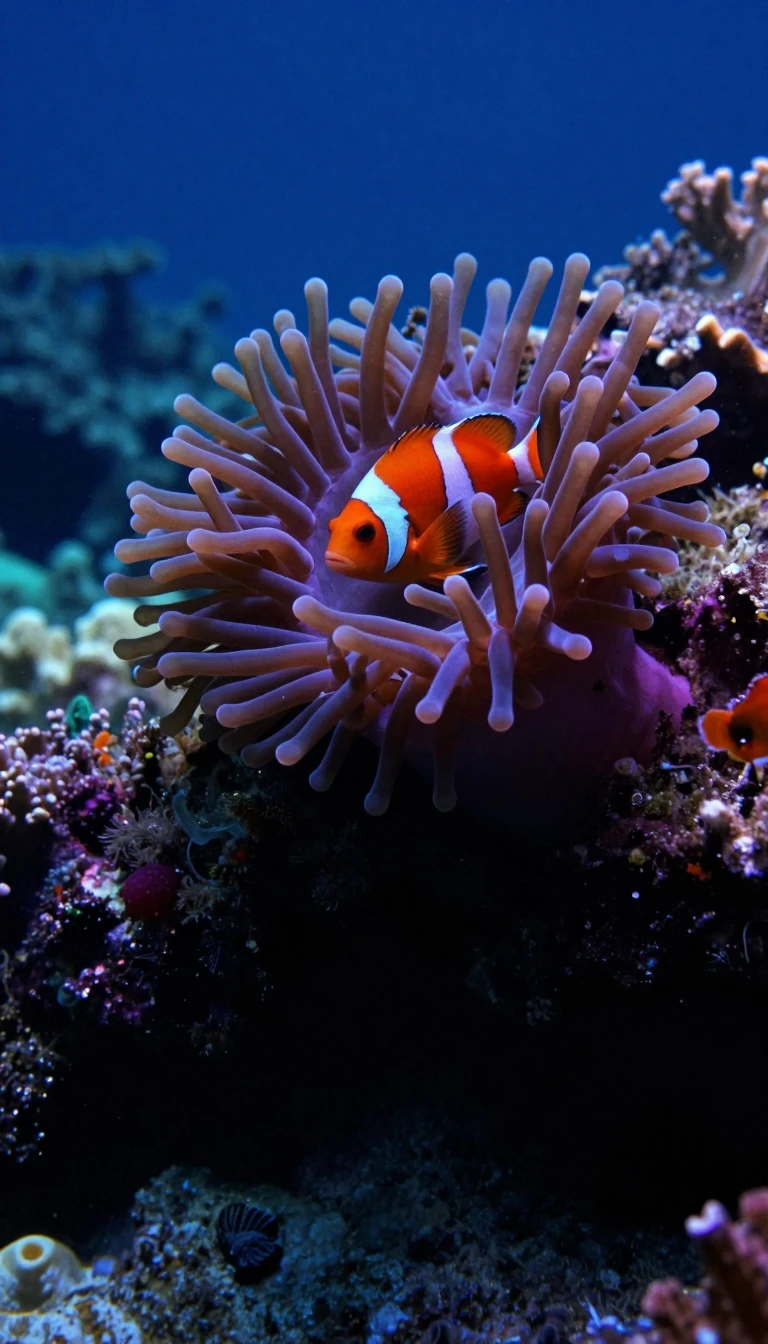
In short: Sea stars, sea urchins, acorn worms and their relatives are grouped together as Ambulacraria. Their larvae share a ciliated band used for both eating and getting around, a clue to kinship noticed long before modern genetic tools. The group's history reaches back more than half a billion years.
Ambulacraria is a clade of invertebrate phyla made up of two living branches. One is the echinoderms, a family of animals that includes starfish-like forms, spiny urchins, serpentine brittle stars, leathery cucumber-shaped holothurians, feathery crinoids and stalked sea lilies. The other is the hemichordates, which contain acorn worms and the colonial pterobranchs. Together these two are sometimes called the lower deuterostomes. Deuterostomes form a larger branch of animals that also contains the chordates, the group holding vertebrates such as humans, along with a few extinct Vetulicolia. The name traces to a Latin word meaning a walk lined with trees, and it was coined by Élie Metchnikoff, who observed that these animals' larvae share a folded, hair-covered band that serves both feeding and movement. He also saw resemblances in the internal body cavities of echinoderms and hemichordates, along with their larvae, which pointed toward a shared origin.
The exact arrangement is still under study. Analyses of the evolutionary tree place the split between echinoderms and hemichordates at roughly 533 million years ago, but such dates depend on the methods used. Scientists also disagree about where Xenacoelomorpha, a small group of simple worm-like animals, belongs. Some researchers place it outside the group as a more basal branch of early animals, while others argue that the most reliable methods make it a sister lineage to Ambulacraria. Fossils complicate matters further. The extinct Cambroernida has recently been recognised as part of the ambulacrarian stem group. Its anatomy hints that the ancestral deuterostome had gill slits but lacked the extra gill bars seen in hemichordates, and that it had no tail behind the anus, a feature that later appeared independently in chordates and hemichordates. Several other fossil forms, including Vetulocystida and Yanjiahella, still have uncertain placements.
Development shows a shared plan. An egg divides into a hollow ball of cells, which then folds into a three-layered gastrula. Several lineages, including sea stars, sea cucumbers, feather stars and acorn worms, pass through a dipleurula larva, whereas sea urchins and brittle stars pass through a pluteus larva. Each lineage then produces its own specialised larval types. Because of these common patterns, some researchers suggest that the adult body of the last shared ancestor of these animals may have looked much like the dipleurula larva, a hypothetical ancestor often simply called dipleurula.
Opens the Intellect+ feed with this card first. Swipe up for the next one.
Sources
- Summary by Intellect · source: Ambulacraria
To cite this card, link to https://intellectplus.co.uk/app/nature-ambulacraria.
How we source, check and correct cards: Editorial standards.
General information, not professional advice. Spotted an error? Flag the card or see corrections and complaints.
Intellect Plus is a visual educational discovery platform for exploring fascinating facts and ideas. Brain Food, Not Brain Rot. What is Intellect Plus?
Related
More in Bilateria, others · More in Nature · Latest · A–Z · All topics
