Why does water appear blue, and what makes it turn green, red, or black?
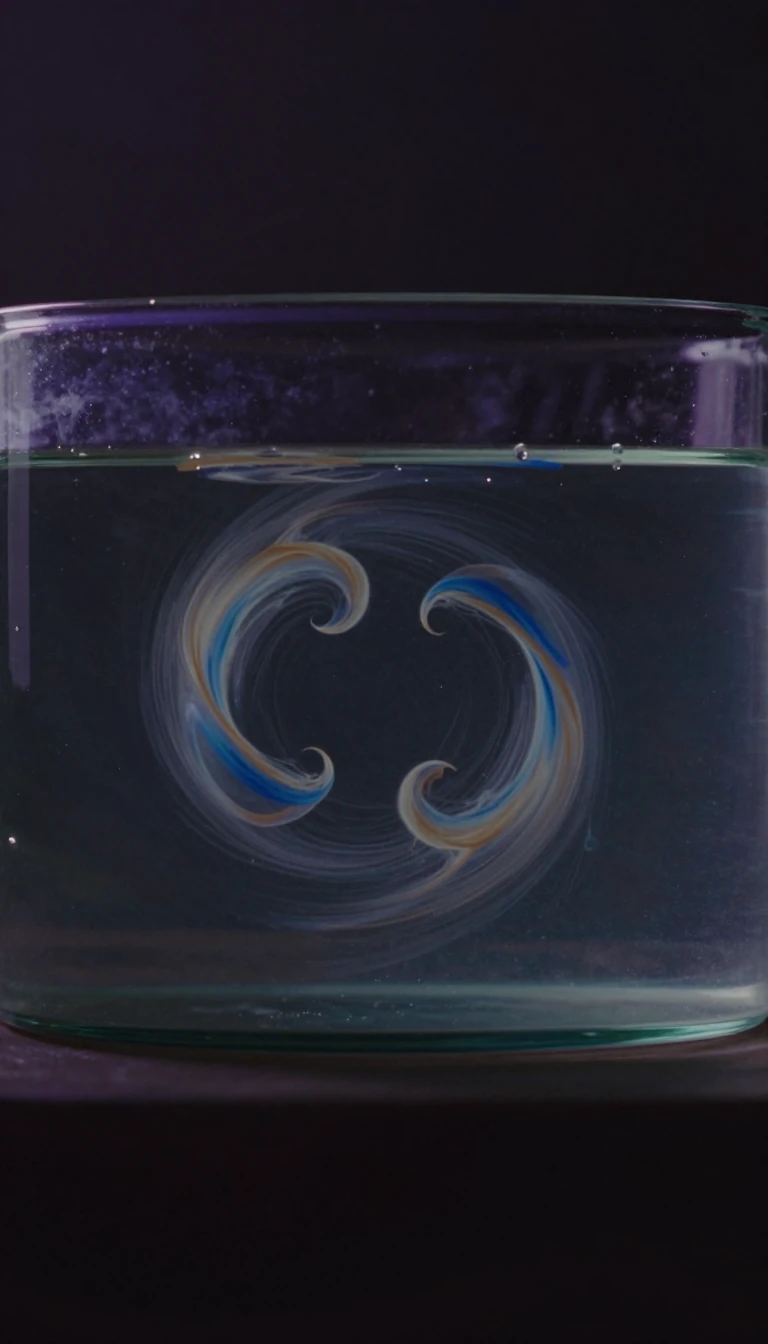
In short: While small amounts of water seem colorless, pure water is intrinsically sky blue. This color arises from the selective absorption of red light wavelengths. However, the water we see in nature is rarely pure, with suspended particles, dissolved organic matter, and light scattering creating a spectrum of different hues.
The intrinsic blue color of water is a result of molecular vibrations. Water molecules absorb light in the red part of the visible spectrum, specifically due to the harmonic vibration of O-H bonds. In liquid water at 20 °C, these vibrations are red-shifted by hydrogen bonding, causing absorption at 740 nm and 660 nm. Because this absorption is weak, a significant path length—often a meter or more—is required to perceive the blue hue. Interestingly, heavy water (D2O) lacks this characteristic color because its vibrational transitions have lower energy, shifting absorption further into the infrared.
Beyond intrinsic absorption, the appearance of natural water bodies is heavily influenced by scattering and reflection. While sky reflection contributes to the color of oceans and lakes, it is not the sole cause; swimming pools with white bottoms appear cyan even indoors. Light scattering by suspended particles is essential, as it redirects light back to the surface. Without this scattering, deep water would appear black because all light would be absorbed within a few tens of meters. Suspended matter can also shift the perceived color toward green, while dissolved compounds like tannins can turn water brown.
Water color serves as a diagnostic tool for physical and chemical conditions. For instance, green tints may indicate algae or copper leaching, while red hues can signal iron rust. Black water, often accompanied by a sulfur odor, may indicate bacterial growth in water heaters set below 49 °C. Understanding these indicators allows for easier identification of water quality issues, though the presence of color does not automatically render water undrinkable. Filtration can remove particulate matter, but dissolved substances often require more complex treatment methods like coagulation to be cleared.
Opens the Intellect+ feed with this card first. Swipe up for the next one.
Sources
- Summary by Intellect · source: Color of water
To cite this card, link to https://intellectplus.co.uk/app/nature-color-of-water.
How we source, check and correct cards: Editorial standards.
General information, not professional advice. Spotted an error? Flag the card or see corrections and complaints.
Intellect Plus is a visual educational discovery platform for exploring fascinating facts and ideas. Brain Food, Not Brain Rot. What is Intellect Plus?
Related
More in Earth science · More in Nature · Latest · A–Z · All topics
