Earth is not a perfect clock, and its rotation speed is constantly shifting
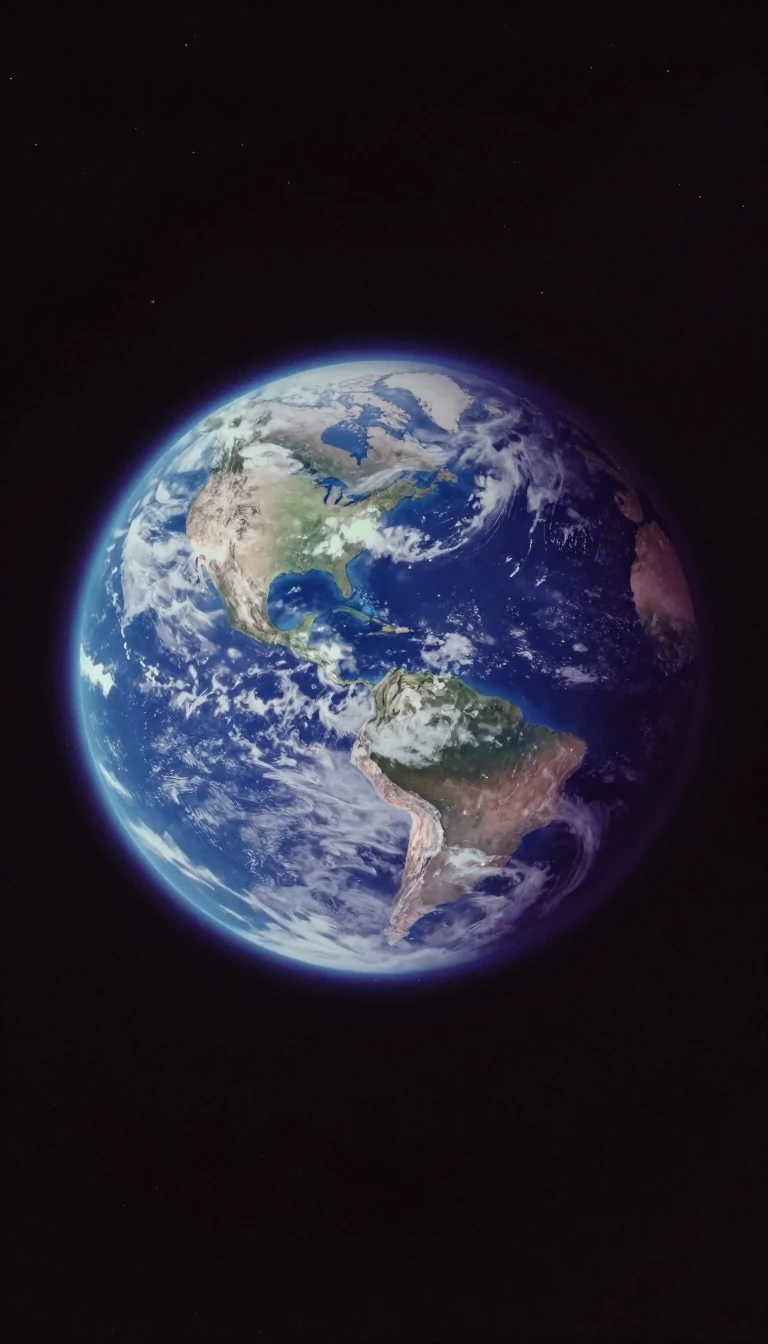
In short: We assume a day is exactly 24 hours, but Earth’s spin is a restless, fluctuating process. Tidal friction from the Moon is slowing us down over eons, yet recent shifts in our core, oceans, and even melting ice are causing the planet to spin faster, forcing engineers to reconsider our timekeeping.
Earth does not rotate at a constant rate. While tidal interactions with the Moon have historically acted as a brake, gradually lengthening the day from about 21 hours some 600 million years ago to our current 24-hour standard, the planet is subject to complex, short-term fluctuations. These are driven by the movement of the molten core, atmospheric tides, and the redistribution of mass across the surface. For instance, the massive water storage in the Three Gorges Dam has been calculated to lengthen the day by 0.06 microseconds, while the 2004 Indian Ocean earthquake shortened it by 3 microseconds.
The most surprising recent trend is a subtle acceleration. After decades of consistently turning slower than 86,400 seconds per day, Earth began to speed up around 2020. On June 29, 2022, the planet completed a rotation 1.59 milliseconds faster than the standard 24-hour day, setting a new record. This phenomenon is linked to the conservation of angular momentum: as polar ice melts, the Earth becomes slightly more spherical, pulling mass closer to its center of gravity and causing the planet to spin faster, much like a figure skater pulling in their arms to increase their rotation speed.
These variations matter because our global timekeeping infrastructure relies on extreme precision. Atomic clocks show that the modern day is about 1.7 milliseconds longer than it was a century ago, a trend observed through historical eclipse records dating back to the 8th century BCE. Because the Earth's rotation is not perfectly synchronized with the steady tick of atomic clocks, engineers are now debating the necessity of a 'negative leap second' to keep our UTC timekeeping aligned with the planet's actual, unpredictable pace.
Opens the Intellect+ feed with this card first. Swipe up for the next one.
Sources
- Summary by Intellect · source: Earth's rotation
To cite this card, link to https://intellectplus.co.uk/app/nature-earth-s-rotation.
How we source, check and correct cards: Editorial standards.
General information, not professional advice. Spotted an error? Flag the card or see corrections and complaints.
Intellect Plus is a visual educational discovery platform for exploring fascinating facts and ideas. Brain Food, Not Brain Rot. What is Intellect Plus?
Related
More in Physical geography · More in Nature · Latest · A–Z · All topics
